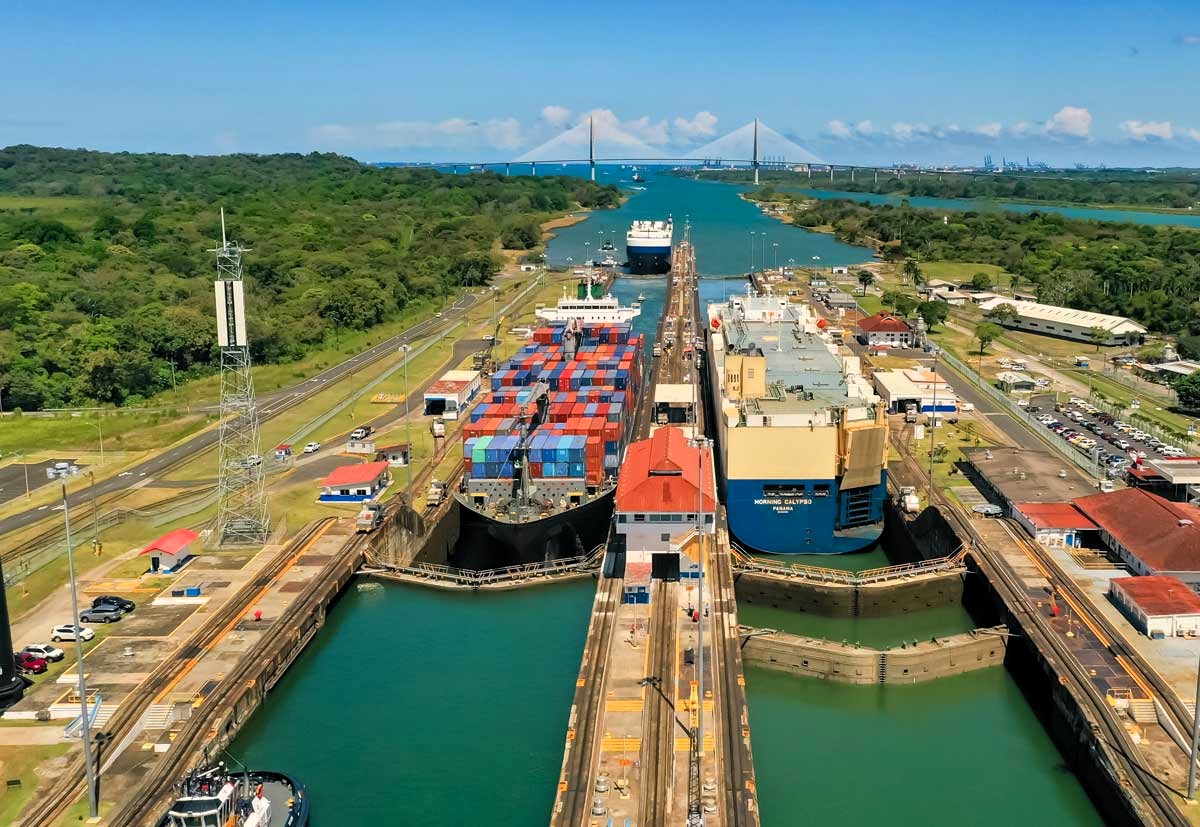

The lush valleys of Western Panama, including the communities of Tres Hermanas, El Zaino, and La Arenosa, are central to a heated debate over the future of the Panama Canal. The $1.6 billion Rio Indio reservoir project, designed to secure freshwater supplies for the canal amid intensifying droughts, could displace over 2,000 residents and affect thousands more. While some see the project as a vital response to climate change, it has sparked concerns about environmental degradation and social upheaval.
The Canal’s water crisis
The Panama Canal is pivotal to global trade, facilitating 2.5% of maritime commerce and contributing 3.1% to Panama’s GDP. However, its reliance on freshwater for lock operations makes it vulnerable to climate-induced droughts. Last year marked the third driest in the canal’s 110-year history, exacerbating the need for a reliable water source. The Rio Indio project promises to address this by creating a reservoir capable of sustaining 15 additional vessel transits daily during the dry season, benefiting Panama’s 4.5 million residents and its strategic maritime position.
Environmental and social costs
Despite its touted benefits, the project has sparked fierce opposition from environmentalists and affected communities. Critics, including aquatic ecology experts, warn of significant biodiversity loss and the disruption of river ecosystems, which are critical in mitigating climate impacts. Additionally, the deforestation required for the dam could have long-term environmental repercussions.
The social dimension is equally fraught. Activist groups like Countrymen Coordinator for Life highlight the challenges of resettlement, including the potential for displaced families to face poverty and loss of livelihoods, as seen in similar projects worldwide. Concerns over inadequate compensation and transparent planning are reminiscent of Panama’s troubled history with relocation for infrastructure projects, such as the Darién Province hydroelectric dam.
Balancing development and community needs
The Panama Canal Authority (ACP) has pledged to prioritize community engagement, promising fair compensation and programs to maintain or improve the quality of life for those displaced. These include livestock preservation, vocational training, and local economic initiatives like agroforestry and ecotourism. However, trust remains fragile due to past failures to deliver on such promises.
Alternatives and future outlook
A proposal to transfer water from the Bayano reservoir, which would avoid displacement, has gained traction among activists and residents. However, the ACP deems it less viable due to logistical and financial constraints. Both projects may ultimately be needed to future-proof the canal against climate challenges, underscoring the urgency of comprehensive water management.
Meanwhile, Panama faces mounting pressure to reconcile its environmental goals with infrastructure development. Protests over other controversial projects, like the First Quantum Minerals mine, show the growing influence of community activism in shaping national policy.
Conclusion
As the Panama Canal grapples with the twin challenges of water security and community displacement, the Rio Indio dam embodies the complex trade-offs of modern development. Its success will hinge on transparent planning, inclusive dialogue, and a genuine commitment to minimizing harm—a litmus test for Panama’s approach to sustainable growth in an era of climate uncertainty.