

New dynamics are emerging in Northern Greece’s port landscape following the agreement for A.P. Moller Capital to acquire a majority stake in Euroports. The Danish investment group’s indirect entry into Kavala’s commercial port, the Philippos II Terminal, raises the prospect of a gradual shift in the existing balance of container and other cargo traffic serving the Balkan hinterland.
The development is particularly significant because A.P. Moller Capital belongs to the broader A.P. Moller Group, which also includes Maersk, the world’s second-largest container shipping company, with an established presence at the Port of Thessaloniki and a significant share of the Balkan container transport market.
The agreement, announced on 28 September 2026, provides for the acquisition of a majority stake in Euroports, one of Europe’s major operators of bulk and general cargo terminals. Euroports manages more than 50 terminals across ten European countries and China, handling over 70 million tonnes of cargo annually. Completion of the transaction remains subject to the necessary regulatory approvals.
The Greek dimension of the acquisition centres on the Philippos II commercial port in Kavala, where Euroports has been responsible for terminal operations since January 2025 under its cooperation agreement with GEK TERNA.
This presence now takes on greater strategic significance, connecting Kavala, through Euroports, to an international investment group with interests spanning maritime transport, port infrastructure and supply chain management.
Kavala’s €36 million bet on the Balkan hinterland
Euroports’ involvement in the Port of Kavala is linked to the sub-concession of the Philippos II commercial port, which took effect on 24 January 2025.
The 40-year sub-concession agreement provides for €36 million in investments to upgrade port infrastructure, equipment and services. The concessionaire is a special purpose vehicle (SPV) named SARISA Port, while Euroports serves as the terminal operator.
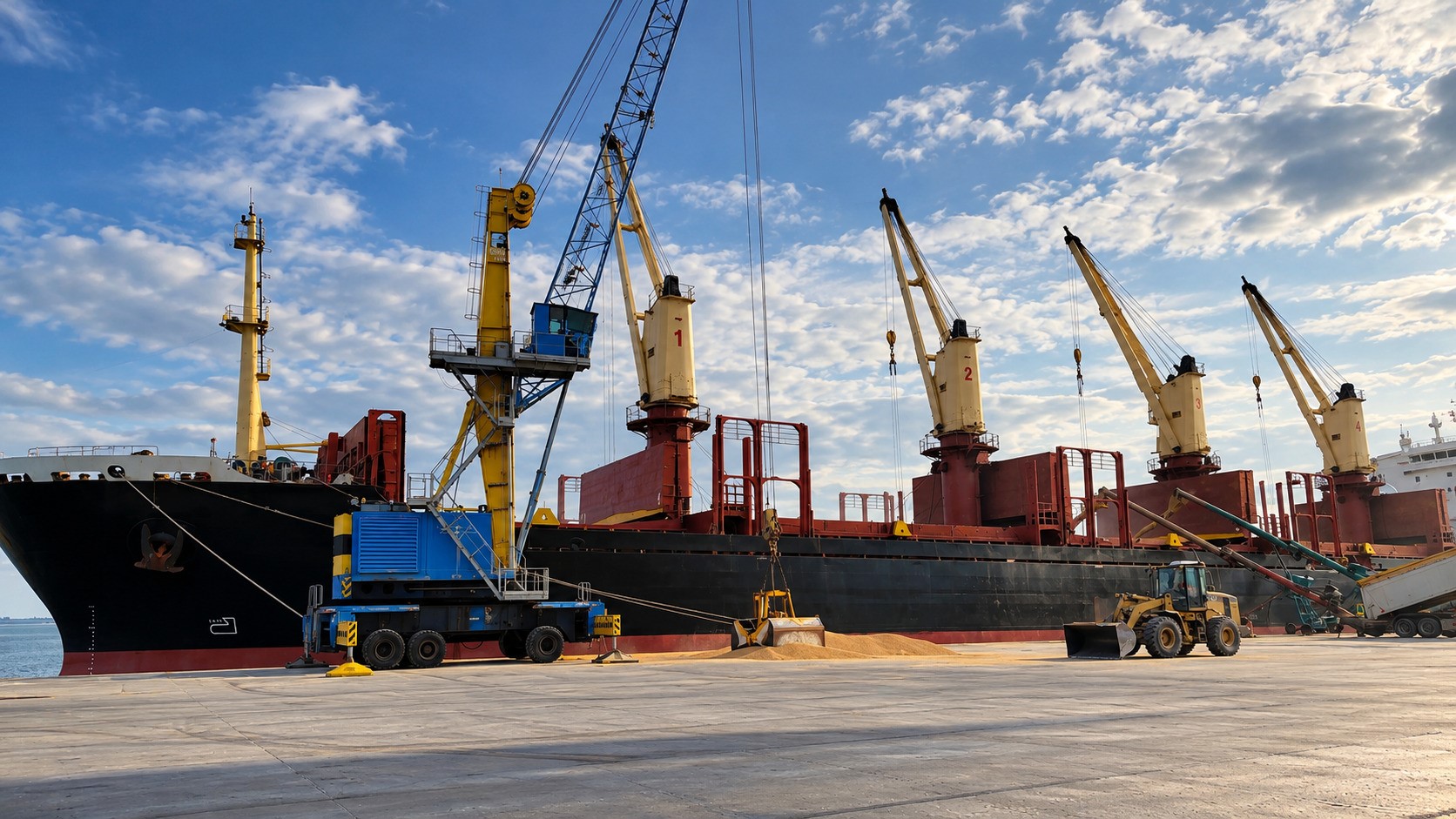
The facility covers approximately 180,000 square metres and features two quays measuring 610 and 315 metres, with a published maximum vessel draught of 12.5 metres. Existing equipment includes two mobile harbour cranes, while the port can handle minerals, fertilisers, agricultural products, general cargo and containers.
Euroports has already identified Kavala’s geographical position as a competitive advantage, highlighting opportunities to develop freight corridors towards Bulgaria and other Southeastern European markets.
A decisive factor will be the future railway connection linking the port to the national rail network through the Nea Karvali–Toxotes project. Once completed, this connection could substantially strengthen Kavala’s competitiveness by facilitating the movement of larger cargo volumes towards the Balkan hinterland.
The Maersk factor: could container calls shift from Thessaloniki?
The acquisition of Euroports becomes particularly significant when examined alongside Maersk’s existing operations in Northern Greece.
The Danish shipping company already serves Thessaloniki through regular container vessel calls, using the port as a gateway to Balkan markets and Northern Greece’s established hinterland.
According to shipping industry sources, the new circumstances have prompted consideration of a possible gradual redistribution of some of Maersk’s existing vessel calls between Thessaloniki and Kavala in the future.
The same sources do not indicate that Maersk intends to withdraw from Thessaloniki or increase the total number of its services in Northern Greece. Instead, the scenario involves a potential redistribution of existing operations between two ports with different operational characteristics.
If implemented, such a development could progressively alter the distribution of cargo flows, establishing Kavala as a second point of service within Maersk’s Northern Greek network.
The prospect is particularly noteworthy because the investment arm of the broader A.P. Moller Group is acquiring a majority stake in the company operating Kavala’s terminal facilities.
However, A.P. Moller Capital and Maersk are separate corporate entities, and no joint operational strategy involving Kavala has been officially announced.
Two ports, one hinterland: a new competitive equation
The potential introduction of regular container vessel calls at Kavala would mark a significant development for Northern Greece’s port system.
Thessaloniki currently enjoys substantial advantages in infrastructure, cargo volumes, rail connectivity and established relationships with international shipping companies. Its position as a principal gateway to the Balkan hinterland is not challenged simply by the emergence of a new investment structure in Kavala.
Nevertheless, the development of a second port option could gradually alter the competitive balance, particularly if some of Maersk’s existing vessel calls and cargo volumes were redirected to Philippos II.
For the Thessaloniki Port Authority (ThPA), such a development could reduce cargo-handling activity associated with Maersk. The actual impact would depend on the number of vessel calls potentially transferred, the container volumes involved and the port’s ability to attract alternative cargo flows.
For Kavala, meanwhile, potential integration into a regular liner shipping network would represent a significant departure from its current emphasis on bulk and general cargo handling.
Euroports’ new ownership structure does not automatically imply a transfer of operations. It does, however, create a business environment in which potential synergies and the strategic utilisation of different port facilities become increasingly relevant.
The central question is whether Northern Greece is moving towards a more competitive port system, with two gateways increasingly competing for access to the same Balkan hinterland.
In this context, A.P. Moller Capital’s agreement to acquire Euroports represents a development extending well beyond Kavala itself. It connects a regional Greek port to a powerful international investment network and creates opportunities for new commercial initiatives.
Whether these developments ultimately produce a substantial redistribution of cargo-handling activity will depend on future investments, technical capabilities, infrastructure connectivity and the commercial decisions that follow. For now, one thing is clear: A.P. Moller Capital’s prospective presence in Kavala introduces a new strategic variable that other participants in Northern Greece’s port market can no longer afford to ignore.
George S. Skordilis is Editor-in-Chief of geo-trends.eu.