
KEY TAKEAWAYS
- More than half the globe around a table: Together with the nine BRICS member states, representatives of 36 governments attended, corresponding to over half of the world’s population and nearly half of global output. Attendees included the United Nations Secretary General Antonio Guterres.
- Behind the BRICS+ summit: The 16th expanded BRICS summit in Kazan delivered major news. This analysis focuses on developments preceding these; not-quite-behind-the-curtain developments that form aspects of the background to Kazan.
- Russia’s precious metal strategy: The Russian Federation plans to accumulate $51.5 billion in silver, platinum, palladium, and other metals by 2025, expanding beyond gold to diversify its reserves and challenge the Western financial system.
- China and Russia’s economic coordination: Both nations are accumulating physical metals, straining Western paper markets like COMEX, where 450–500 short contracts exist for every ounce of silver available, potentially leading to financial instability in the West.
- Shift from financialization: Unlike the West’s reliance on stock market performance and inflated asset prices, China and Russia focus on economic growth through industrialization, productivity, and tangible assets.
- EU tariffs on Chinese electric vehicles: Europe is divided on tariffs of up to 45% on Chinese EVs, which could backfire on nations like Germany, threatening its automotive industry.
- BRICS+ summit and a multipolar future: The Kazan summit highlights a global shift towards a multipolar world, with Russia and China leading efforts to move away from U.S.-led Western economic hegemony.
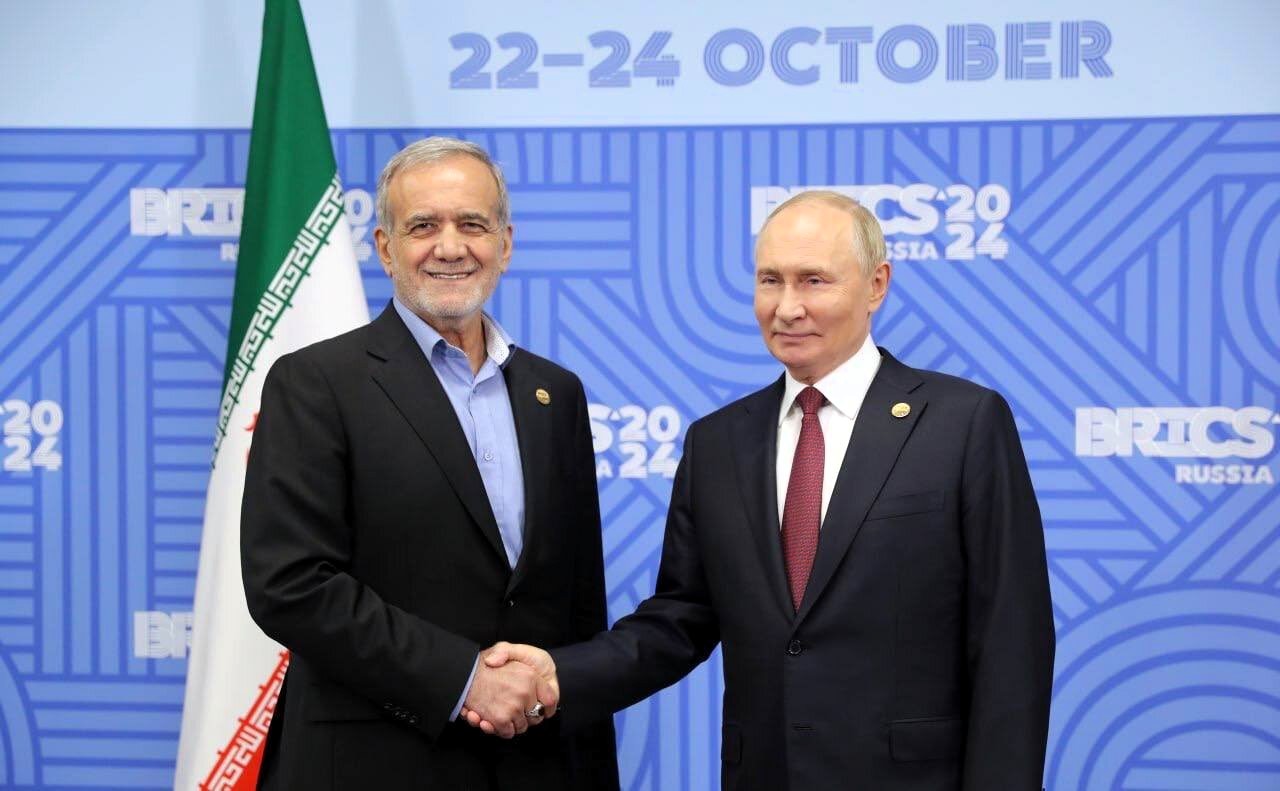
The 16th annual BRICS summit (22 to 24 October 2024, Kazan, Tatarstan, Russian Federation), now in its newly expanded format encompassing Brazil, Russia, India, China, South Africa, Egypt, Ethiopia, Iran, the United Arab Emirates, and observers/applicants including Turkish President Recep Tayyip Erdoğan, held significant importance in the evolving multipolar world and its interconnected archipelago of new international institutions. Together with the nine BRICS member states, representatives of 36 governments (aspirant members, etc.) participated, corresponding to over half of the world’s population and nearly half of global output. Notably, no Western countries, such as the United States, Canada, or members of the European Union, were present—but attendees included the United Nations Secretary General Antonio Guterres. The summit focused on promoting multi-vector cooperation among the participating countries and upholding the United Nations system; the Kazan Declaration, named after the meeting location, emphasized the importance of international rules and processes. The declaration also implicitly criticized the United States and its allies for acting outside of the UN system, including the imposition of sanctions and the weaponisation of the U.S. dollar’s status as the world’s leading reserve currency. Although many Western media spoke of the summit as a “gathering of Putin’s pals,” it is crucial to note not only the disparity of such descriptions with the stakes at play, but also the fact that the Russian Federation and its president hosted the summit in the context of BRICS’ annual rotating presidency: Brazil will take on the BRICS presidency on 1 January 2025, and the next summit shall take place in Brazil.
However, Russia’s and China’s imprints loom large over these developments, as they continue to challenge the financial and geopolitical dominance of the West. In recent years, these two nations have been strategic in their approach to accumulate precious metals and resources, leveraging their reserves to undermine the financial markets of the Western economies. With Russia’s plans to expand its precious metals reserves, including silver, platinum, and palladium, and China’s steady focus on industrial growth, their collective efforts reveal a long-term strategy aimed at reshaping the global financial landscape. This analysis focuses on developments preceding the Kazan summit; not-quite-behind-the-curtain developments that form aspects of the background to Kazan.
Russia’s strategic accumulation of precious metals
Russia has long been preparing for a shift away from reliance on the U.S. dollar. Since being cut off from the SWIFT banking system in 2014, the country has focused heavily on de-dollarization. By accumulating gold reserves over the last decade, Russia has positioned itself to protect its economy from Western financial pressure. However, a recent announcement from the Russian Finance Minister indicates that the country plans to expand its reserves beyond gold, adding silver, platinum, and palladium to its strategic holdings. This move is expected to result in the accumulation of around $51.5 billion in precious metals by 2025.
In what is merely an indicative example, in bilateral trade with India, Russia receives rupees for oil exports—but rather than holding excess rupees, it converts them into more stable assets like silver, gold, and other metals; by purchasing precious metals, Russia is reducing its reliance on the U.S. dollar and increasing its reserves of universal monetary assets.
This development is not just a response to internal economic needs; it is also a direct challenge to the Western financial system. By increasing their holdings of precious metals, Russia is contributing to the strain on the Western markets, particularly paper markets such as COMEX and LBMA. These markets rely heavily on derivative trading rather than physical holdings, and the depletion of physical metal reserves in the West will further destabilize them.
China and Russia’s coordinated financial pressure on the West
China, too, has been active in accumulating precious metals, especially silver, as part of its broader strategy to secure real assets. Both Russia and China understand the long-term value of these metals, not just for industrial use, but as a hedge against the volatility of fiat currencies and paper markets. Their coordinated efforts to drain the West’s physical metal reserves place increasing pressure on Western financial institutions, many of which are overexposed to short positions in silver. According to reports, there are as many as 450-500 short contracts per ounce of silver available for sale on COMEX.
The imbalance between physical supply and derivative contracts could lead to financial instability if Russia and China continue their purchases; Western banks may face margin calls on their short positions, further exacerbating the financial strain. This is a clear indication that both nations are seeking to accelerate the decline of the Western financial system, leveraging the vulnerabilities in the paper market system to their advantage.
The shift away from financialization
A fundamental difference between the economic strategies of the West and the global South, led by China and Russia, lies in the focus on financialization. Over the last 40 years, the West—particularly the United States—has increasingly equated economic success with stock market performance. This financialization has led to the hollowing out of real economic growth, as asset prices have become disconnected from the actual fundamentals of the companies they represent. In contrast, nations in the global South, such as China and Russia, prioritize real economic growth through industrialization, innovation, and productivity.
China’s approach is especially telling. While Western analysts often focus on the performance of Chinese stock markets, China itself views its stock market as secondary to the real economy. The country’s emphasis on manufacturing, production, and exports demonstrates a commitment to long-term economic stability, rather than short-term financial gains. This is a critical departure from the West’s reliance on inflated asset prices to prop up its financial system.
The tariff battle and Europe’s internal struggles
As the West grapples with these shifting economic realities, it is also facing internal divisions, particularly in Europe. The European Union’s recent decision to impose tariffs of up to 45% on Chinese electric vehicles has sparked significant controversy. Germany, home to major automotive producers like Mercedes and Volkswagen, has been especially vocal in its opposition. These companies manufacture a large portion of their vehicles in China, and the new tariffs would essentially amount to taxing their own products upon re-entry into Europe.
The European Commission, likely under pressure from the United States, pushed for these tariffs as part of a broader strategy to weaken China’s economy. However, the decision has divided Europe, with many nations abstaining from the vote or quietly opposing the measure. The backlash from European corporations may ultimately force the Commission to reconsider its position, as the tariffs threaten to further damage an already fragile European economy.
The multipolar future in the works: energy, resources, and commodities-based growth
At the heart of the expanded BRICS summit in Kazan is the question of the future global order. As Russia and China continue to push their agenda of multipolarity, the West is increasingly on the defensive. The global South’s focus on real assets—such as energy security, food security, and industrial productivity—stands in stark contrast to the West’s dependence on financialization and asset inflation.
Russia’s strategic accumulation of precious metals and China’s industrial prowess are just two examples of how these nations are positioning themselves for a future where real growth and tangible assets matter more than financial speculation. As the world shifts towards this multipolar reality, the Kazan summit emerges as a key moment in determining the direction of global economic power.
The coming years will likely see further moves by both Russia and China to solidify their positions in the global economy. Whether through the establishment of new commodities exchanges, greater industrial investments, or continued pressure on Western financial markets, these nations are preparing for a world where the dominance of the U.S. dollar and the Western financial system is no longer guaranteed. It would be a euphemism to stress that implications abound.
* Sotiris Mitralexis holds a doctorate in political science and international relations; he works at University College London as a research fellow.