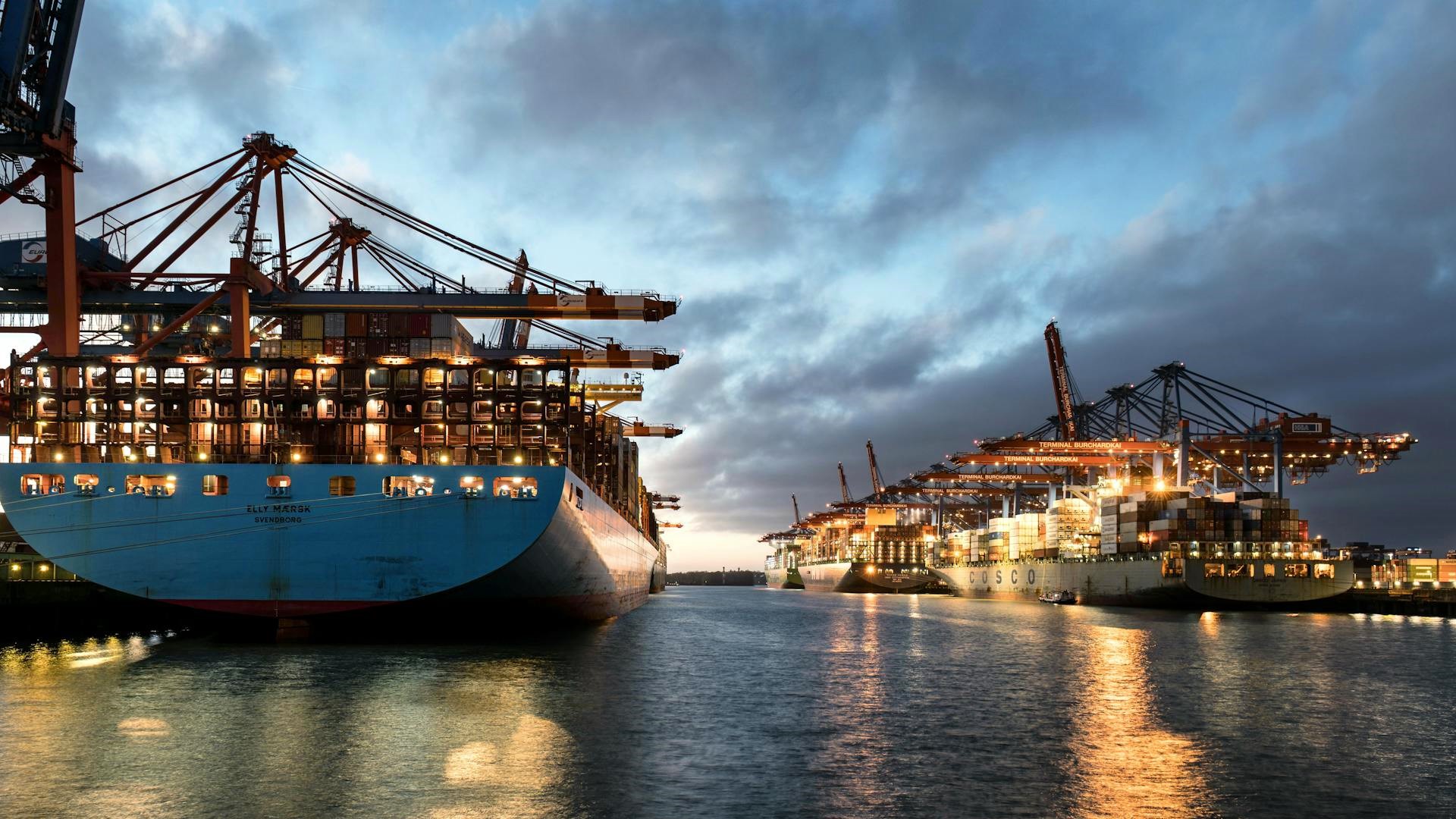

The global shipping industry, a linchpin of international trade, has faced unprecedented disruptions in recent years. From the COVID-19 pandemic to the Suez Canal blockage and the ongoing Red Sea crisis, these events have reshaped trade routes and sparked significant challenges for logistics and supply chains.
The slow repositioning: COVID-19’s ripple effects
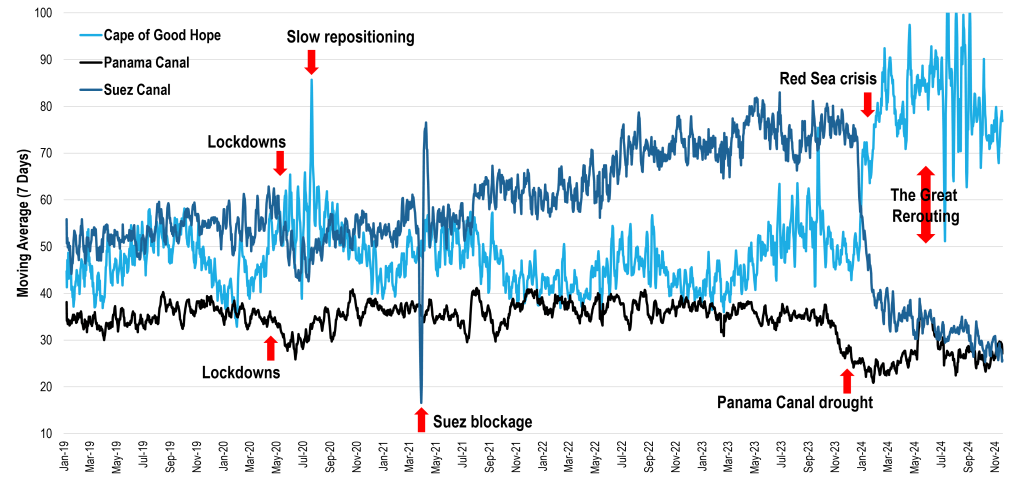
In early 2020, the COVID-19 pandemic brought the world to a standstill. Lockdowns and plummeting demand led to a temporary decline in transits at major maritime chokepoints like the Suez and Panama Canals. With idle capacity at unprecedented levels, shipping companies adopted a strategy termed “Slow Repositioning.” By reducing speeds and opting for longer routes—such as via the Cape of Good Hope—they minimized canal toll costs while adjusting to reduced cargo volumes.
This period revealed the economic sensitivity of global shipping to demand shocks. Reduced toll revenue at key canals underscored the vulnerability of infrastructure-dependent revenue models. For shippers, flexibility in route selection proved a valuable strategy during periods of demand fluctuation.
The Suez Canal blockage: A week that changed everything
The March 2021 grounding of the Ever Given in the Suez Canal caused a near-complete halt in traffic through this vital trade artery. The incident, which lasted six days, stranded over 400 vessels and delayed goods worth billions of dollars. Analysis from The Times highlights how this event exposed the fragility of just-in-time supply chains dependent on seamless maritime transit.
The subsequent backlog created ripple effects across global trade. Shipping costs surged as delayed vessels strained available capacity. Ports worldwide experienced congestion, and industries reliant on timely deliveries, such as automotive and electronics, faced production delays. The Suez Canal Authority responded with efforts to expand capacity and deepen channels, but the incident underscored the need for contingency planning in maritime operations.
Post-pandemic trade surge: Capacity challenges
As global economies rebounded in 2022, shipping volumes surged. The Suez Canal saw a sharp increase in traffic, highlighting its strategic importance. However, capacity constraints at ports and canals struggled to keep pace. MarketWatch noted that higher shipping rates and extended delivery times became the new normal, complicating efforts to stabilize global supply chains.
This phase also saw increased investment in alternative infrastructure. Ports invested in automation and technology to improve throughput, while shipping lines explored vessel design enhancements to maximize cargo capacity. Despite these efforts, the reliance on a few key routes remained a critical vulnerability.
Water scarcity in Panama: Nature’s role in trade disruptions
The Panama Canal faced its own crisis in late 2023 when low rainfall reduced water levels, limiting its capacity to handle transits. This environmental challenge emphasized the growing role of climate change in maritime trade. Shipping companies rerouted vessels, often at higher costs, to avoid delays.
Such events call for sustainable solutions, including investments in water management systems and exploring alternative routes. As the Wall Street Journal reported, the integration of data-driven water usage strategies can enhance canal resilience and reduce the impact of future climate-induced disruptions.
The Red Sea crisis and the “Great Rerouting”
The ongoing Red Sea crisis, which began in late 2023, has had a profound impact on global shipping. Increased geopolitical tensions and security risks have led to a sharp decline in Suez Canal traffic—more than 60% according to data from IMF PortWatch. This has resulted in a phenomenon known as the “Great Rerouting,” where vessels bypass the Suez Canal in favor of the Cape of Good Hope, adding significant time and cost to shipments.
Reuters highlights how this event underscores the importance of geopolitical stability for maritime trade. While rerouting absorbed some overcapacity in the shipping market, it also highlighted the fragility of heavily trafficked routes. The shift placed additional strain on global logistics networks and raised questions about long-term trade route diversification.
Lessons learned: Building resilience in maritime trade
The recent spate of global shipping disruptions offers valuable insights:
- Diversification of routes: Reducing reliance on a few key canals by developing alternative trade routes can enhance resilience. Investments in Arctic shipping lanes and the expansion of secondary ports are promising steps forward.
- Infrastructure modernization: Aging infrastructure, such as the Suez and Panama Canals, requires regular upgrades to accommodate larger vessels and increasing volumes. Advanced forecasting tools and automation can mitigate congestion risks.
- Climate adaptation: Climate change poses an existential threat to maritime trade. Sustainable practices, such as improved water management and eco-friendly ship designs, are critical to mitigating environmental risks.
- Geopolitical stability: Ensuring secure and stable maritime corridors requires international collaboration. Strengthened naval patrols and anti-piracy measures can mitigate risks in conflict-prone regions.
- Technological integration: The adoption of real-time tracking and predictive analytics can improve operational efficiency and decision-making during crises. Leveraging big data to anticipate and respond to disruptions is essential for future resilience.
Conclusion
The interconnected nature of global shipping means that disruptions in one region can ripple across the entire world. Events like the COVID-19 slowdown, the Suez Canal blockage, and the Red Sea crisis highlight the importance of proactive planning, infrastructure investment, and technological adoption. As the industry adapts to these challenges, the lessons learned will pave the way for a more resilient and efficient global maritime trade network.