

Lloyd’s of London holds a commanding position in the global marine cargo insurance market, accounting for 23.15% of total market revenue in 2025, according to figures published by Pristine Market Insights. Its share is nearly four times that of Chubb, which ranks second with 6.23%, followed by Japan’s Tokio Marine with 5.27%.
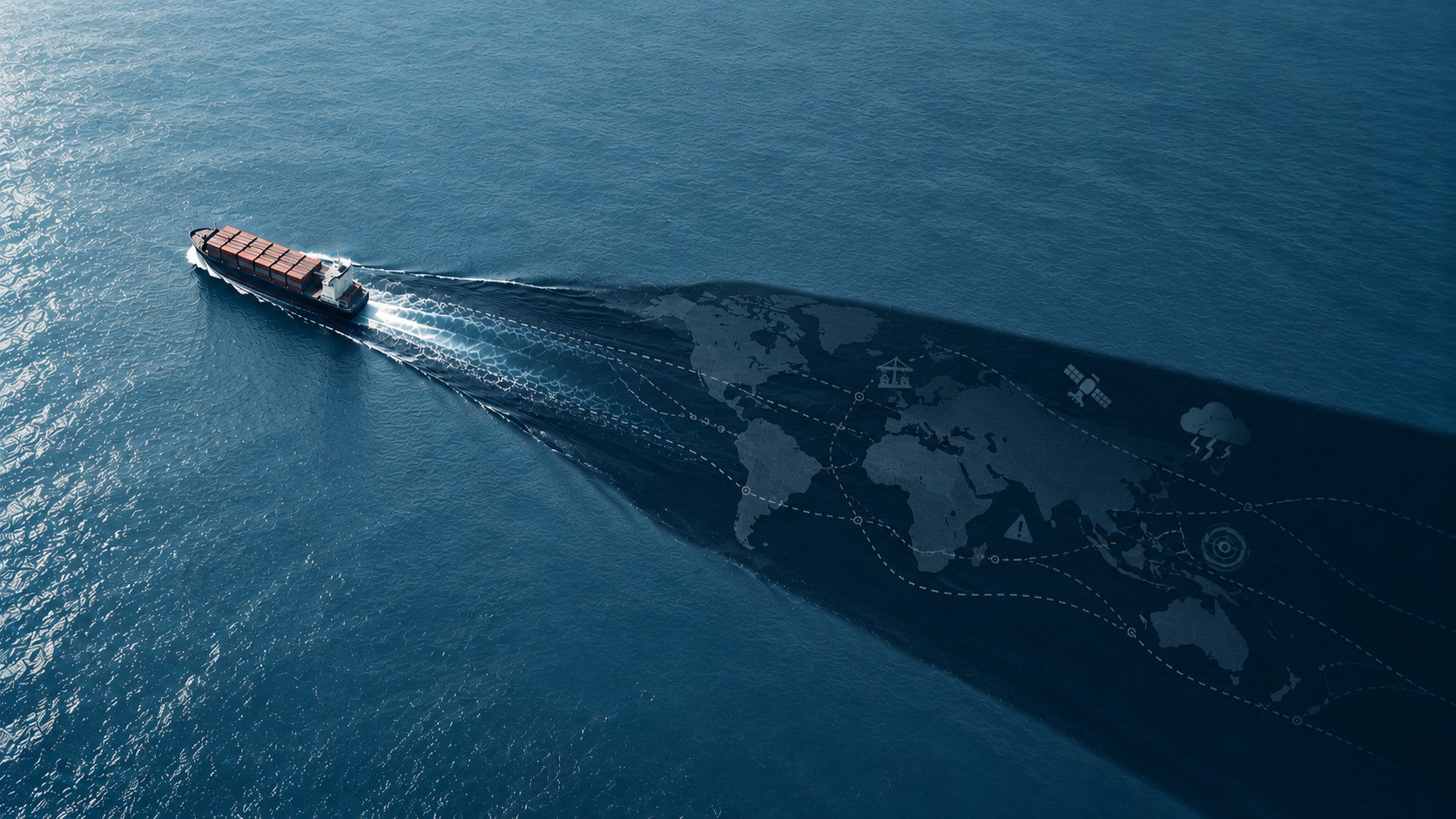
The figures highlight the continuing importance of London as an international marine insurance center at a time when geopolitical instability, longer shipping routes and disruptions to global supply chains are changing how insurers assess and price cargo-related risks.
The findings form part of the Marine Cargo Insurance Market Outlook 2026–2036, a study examining the competitive structure of the industry and the developments expected to influence marine cargo insurance over the coming decade.
China’s PICC ranks fourth with a 4.32% market share, followed by AXA with 4.13% and Allianz with 3.93%. Zurich Insurance Group accounts for 3.64%, while Japan’s MS&AD holds 3.43%.
Berkshire Hathaway follows with 3.29%, Munich Re with 3.13%, HDI with 2.93% and American International Group (AIG) with 2.84%. Other significant participants include QBE with 2.69%, Sompo with 2.64% and Fairfax Financial Holdings with 2.05%.
Generali accounts for 1.97%, Swiss Re for 1.94%, Liberty Mutual for 1.93% and Travelers for 1.77%. The remaining market participants collectively represent 18.72% of global marine cargo insurance revenue.
The figures reveal a market characterised by the strong presence of major international insurance groups alongside a substantial number of smaller and specialised providers.
However, the ranking requires careful interpretation. Lloyd’s operates as an insurance marketplace comprising multiple underwriting syndicates rather than a single insurance company. The figures also include insurance and reinsurance groups, making direct comparisons between individual participants more complex.
Red Sea disruptions reshape marine cargo insurance pricing
Beyond market shares, the study identifies significant changes in the way marine cargo risks are evaluated.
The disruption of shipping through the Red Sea has become a major factor influencing insurance conditions, particularly as vessels are rerouted around the Cape of Good Hope.
Although these diversions reduce exposure to security threats in the Red Sea, they extend voyage durations and increase the time cargo remains exposed to potential damage, deterioration or operational disruption.
Longer journeys may also involve additional transshipment operations, port congestion and changes to delivery schedules, creating further complications for cargo owners and insurers.
For shipments continuing through high-risk maritime areas, war-risk exposure remains an important consideration, often requiring specific insurance arrangements and additional policy provisions.
According to Pristine Market Insights, these developments are increasing demand for route-specific insurance coverage and more flexible policy endorsements.
Insurers are paying closer attention to vessel characteristics, cargo types, voyage routes and intermediate ports when determining the conditions under which risks can be accepted.
The implications extend beyond the immediate cost of insurance. Changes in routing and transit times can affect the overall risk profile of a shipment, particularly when goods are transported through multiple logistics hubs.
High-value cargo and cold chain risks drive specialised coverage
Another important development concerns the growing complexity of insuring temperature-sensitive and high-value cargo.
Pharmaceutical products, seafood and perishable food shipments require carefully controlled transport conditions. Equipment failures, refrigeration interruptions or unexpected delays can result in substantial financial losses.
Insurers are increasingly relying on temperature-monitoring systems and connected sensors to establish the circumstances under which cargo damage occurs.
These technologies provide more detailed records of shipment conditions, allowing insurers to assess claims with greater accuracy and helping cargo owners demonstrate whether agreed transport requirements were maintained.
Specialised insurance coverage is also becoming more important for batteries, electronic equipment and other high-value manufactured goods.
Such shipments present different risk characteristics depending on their technical specifications, packaging, storage conditions and transport requirements.
The increasing value of cargo moving through international supply chains has also brought greater attention to accumulation risks.
A major incident at a large container terminal or transshipment hub can simultaneously affect goods belonging to numerous cargo owners, potentially generating substantial insurance claims from a single event.
As a result, insurers are strengthening their monitoring of cargo concentrations at major ports and logistics facilities.
AI, cyber threats and sanctions redefine cargo risk assessment
Digitalisation is introducing further changes to marine cargo insurance.
The use of artificial intelligence and advanced data analysis allows underwriters to examine vessel information, shipping routes, commodity characteristics and historical risk patterns in greater detail.
Digital insurance certificates are also helping streamline documentation procedures for international shipments, reducing administrative delays and facilitating the exchange of information between participants in the transport chain.
At the same time, the growing digital connectivity of vessels and logistics systems is raising questions about cyber-related losses and the extent to which such events are covered under traditional marine cargo policies.
Sanctions compliance has become another important element of risk assessment.
Insurers must increasingly examine the origin and destination of shipments, as well as the parties involved in their transportation, to ensure compliance with applicable international restrictions.
The study also highlights the development of parametric insurance products, under which payments may be triggered by predefined and objectively measurable events, subject to the conditions of the policy.
These arrangements differ from conventional insurance mechanisms, where compensation generally depends on establishing and assessing an actual insured loss.
Meanwhile, demand is growing for integrated policies covering multimodal transportation, reflecting the fact that many international shipments involve sea transport combined with rail, road or inland logistics operations.
Global trade faces a new era of cargo insurance risks
For shipping companies, freight forwarders, cargo owners and international trading businesses, these developments are making insurance arrangements more closely connected to the operational planning of individual shipments.
Cargo value remains important, but voyage duration, routing decisions, intermediate ports and the technical requirements of transported goods are increasingly relevant to underwriting decisions.
The Marine Cargo Insurance Market Outlook 2026–2036 examines more than 40 companies operating in the sector, including some of the world’s largest insurance and reinsurance groups.
While the publicly available material provides a detailed breakdown of market revenue shares for 2025, it does not disclose the industry’s total revenue or numerical growth forecasts through 2036. Those figures are included in the full commercial report.
The available findings nevertheless point to a market in which established insurance centers and major international groups continue to play a leading role, while changing trade patterns are generating demand for increasingly specialised insurance solutions.
For the maritime industry, the central issue is no longer simply securing protection against physical cargo loss or damage. It is ensuring that insurance arrangements adequately reflect the operational, geopolitical and technological risks associated with each shipment.
As global trade routes continue to evolve, the ability to identify, assess and price these risks will remain an important factor in the cost and reliability of international maritime transportation.
George S. Skordilis is Editor-in-Chief of geo-trends.eu.