
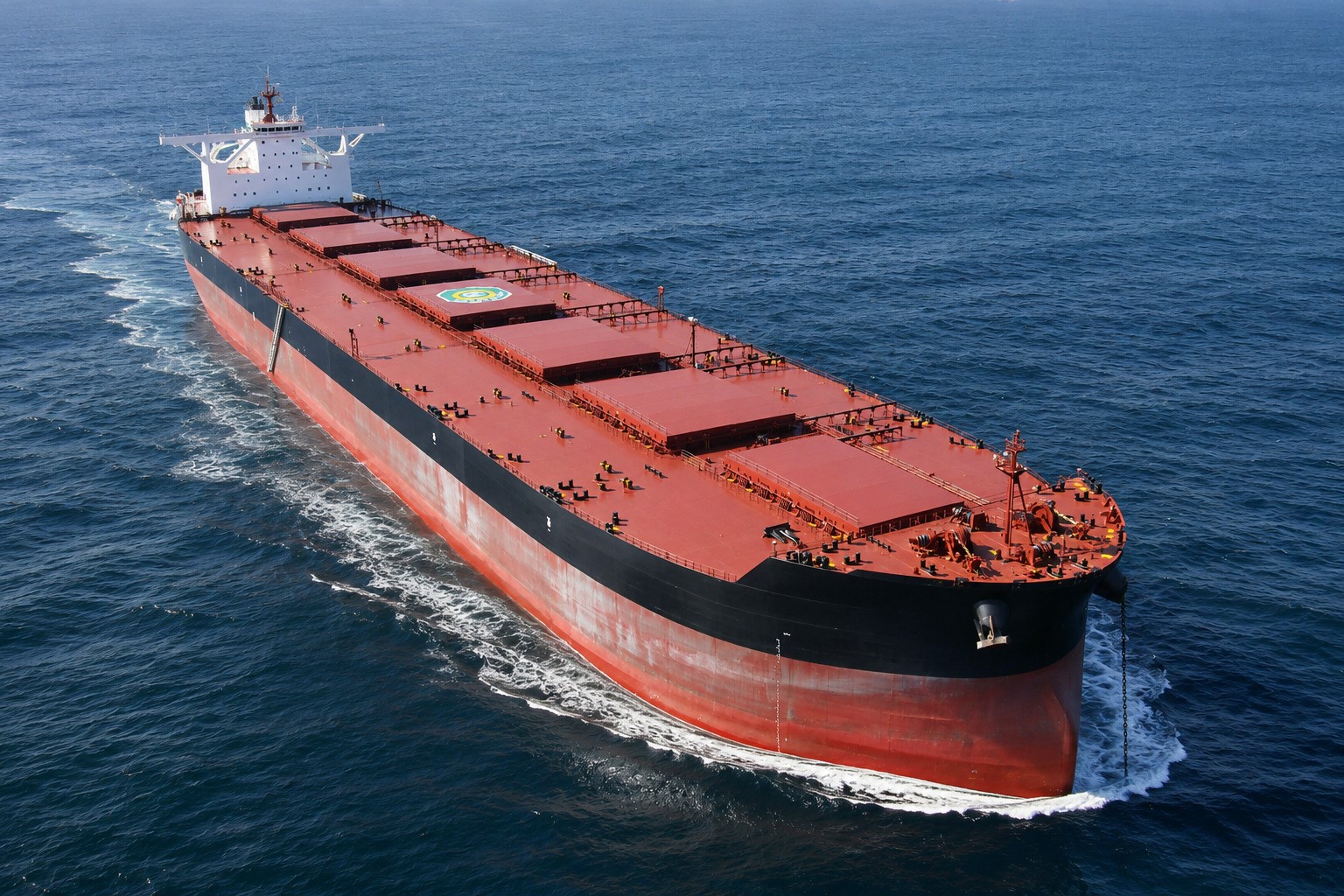

The dry bulk market maintained its upward momentum for another week, with Capesizes leading the advance. While larger vessels benefited from stronger miner activity and tightening tonnage availability in key Atlantic markets, the smaller segments recorded more measured gains. Regional disparities, however, remain pronounced, suggesting that the next phase of the market’s performance will depend less on broad-based sentiment and more on the balance between cargo demand and vessel supply across individual trading areas.
The dry bulk market continued to build on the positive momentum established over recent weeks, with all major vessel segments posting weekly gains. Capesizes came closest to recording a double-digit increase, while the smaller sizes advanced at a more moderate pace.
More specifically, Capesize earnings rose by 8.64% week on week, followed by Kamsarmaxes with a gain of 5.73%, Handysizes up 2.32% and Ultramaxes edging 1.14% higher. Reflecting this broad-based improvement, the Baltic Dry Index (BDI) added 175 points over the week, closing at 2,980 points on Friday, 13 November.
Although the overall direction remains positive, the underlying market picture is far from uniform. Stronger mining activity, limited prompt tonnage and healthy cargo volumes provided support in several key regions, while pockets of oversupply, seasonal holidays and geopolitical uncertainty continued to weigh on other trading areas.
A closer examination of the individual vessel segments and geographical markets offers a clearer picture of where the current strength is coming from and where the next opportunities and challenges may emerge.
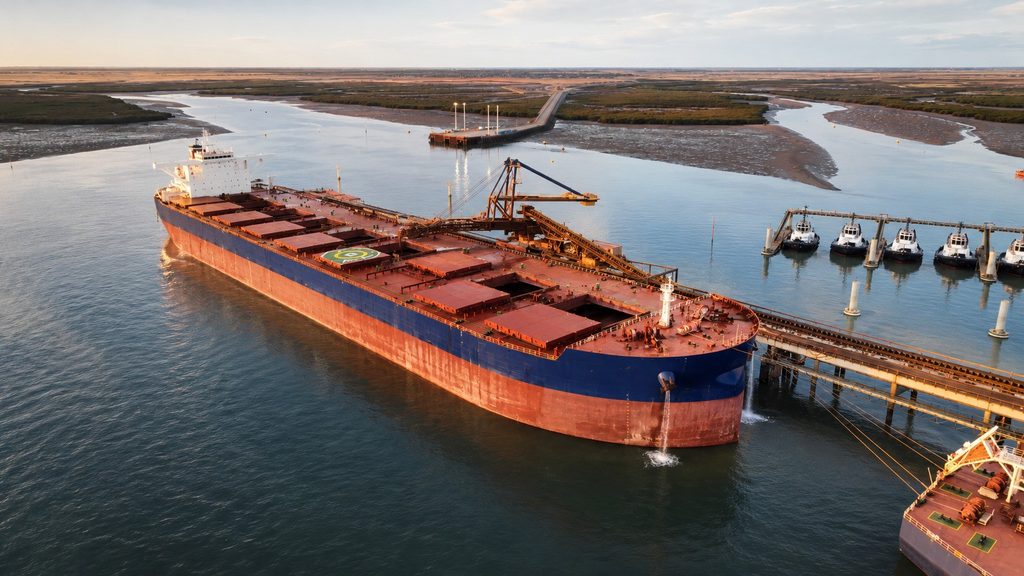
Capesize | Asia accelerates as the Atlantic splits
Asia: miners fuel the freight rally
The Asian market maintained a firm upward trajectory, with all major routes recording gains. Increased activity from mining companies translated into stronger cargo demand, providing direct support to freight levels.
On the key Australia–China route (C5), the index closed on Friday at US$14.56 per tonne, reflecting the strength of the Pacific market.
The latest performance highlights the importance of sustained miner activity in underpinning Capesize sentiment. Provided cargo availability remains firm, the Pacific is well placed to retain its supportive role in the wider market, although the sustainability of current levels will ultimately depend on fresh fixture volumes and the positioning of available tonnage.
Atlantic: northern strength, southern weakness
The Atlantic presented a more divided picture, with contrasting performances between the northern and southern basins.
In the North Atlantic, sentiment remained positive, supported by stronger demand for both fronthaul voyages to Asia and transatlantic employment. The South Atlantic, by contrast, experienced some loss of momentum, with the key Brazil–China route recording a decline.
By Friday, the Brazil–China route (C3) stood at US$35.21 per tonne. Meanwhile, the Europe-to-Asia route (C9) closed at US$74,610 per day, while transatlantic round voyages (C8) reached US$48,250 per day.
The divergence between the two Atlantic basins is worth watching. Northern strength is being supported by a broader range of employment opportunities, whereas the southern market remains more exposed to fluctuations in Brazilian cargo volumes. A sustained recovery in C3 activity would therefore be an important factor in determining whether the current Capesize rally can broaden further.
Kamsarmax | Atlantic scarcity, Pacific oversupply
Atlantic: tight tonnage strengthens owners’ hand
The Atlantic Kamsarmax market continued to move upwards, underpinned by stronger demand for transatlantic voyages and a relatively tight supply of vessels for the coming period.
Nevertheless, the picture was not entirely straightforward. The growing availability of tonnage in Northern Europe emerged as a source of concern, potentially limiting the scope for further gains in that particular area.
Further south, the market maintained its positive momentum, with the supply of open vessels for December remaining restricted. This tighter position provided a degree of support to owners and helped sustain freight levels.
Indicative rates were assessed as follows:
- ECSA–Far East: US$20,000–22,000 per day, delivery Asia.
- Europe–Asia: US$28,000–30,000 per day, delivery Europe.
- Transatlantic round voyages: US$18,500–20,500 per day, delivery Gibraltar.
The South Atlantic continues to benefit from a relatively constrained tonnage list, particularly for December positions. Should this imbalance persist, owners are likely to retain a degree of negotiating leverage. In Northern Europe, however, the expanding vessel supply warrants a more cautious assessment of the market’s immediate upside.
Asia: too many ships, too few cargoes
The Asian Kamsarmax market faced a less favourable supply-demand balance. A shortage of fresh cargoes from Australia, Indonesia and the North Pacific resulted in an accumulation of open tonnage, placing downward pressure on freight rates.
Rates for round voyages within Southeast Asia and the Far East were assessed at US$21,000–23,000 per day, delivery Far East.
The contrast with the Atlantic is notable. While limited vessel availability has supported earnings in parts of the western hemisphere, the Asian market has been dealing with the opposite problem. Unless cargo enquiry improves across the principal loading regions, the concentration of available tonnage is likely to remain a constraint on further rate recovery.
Ultramax | Freight opportunities diverge across regions
Southeast Asia & Far East: fresh cargoes, persistent pressure
The Southeast Asian Ultramax market opened the week on a relatively subdued note. However, the emergence of fresh cargoes provided a modest boost to activity and helped improve market sentiment.
Backhaul employment offered additional support, although the growing number of available vessels continued to exert pressure on freight levels.
Ultramax rates for voyages between Southeast Asia and the Far East were assessed at US$19,500–21,000 per day.
Further north, the Far Eastern market began the week on a quieter footing, partly reflecting the holiday-related slowdown in Singapore. At the same time, North Pacific (NOPAC) employment and westbound voyages failed to offer particularly attractive returns to owners.
Indicative Ultramax rates stood at:
- NOPAC round voyages: US$20,000–21,500 per day.
- Voyages to India: US$28,500–30,000 per day.
- Atlantic backhaul voyages: US$21,500–23,000 per day.
The market continues to show a clear distinction between the availability of employment and its relative attractiveness to owners. While fresh cargoes have helped prevent a sharper deterioration in Southeast Asia, the wider availability of tonnage remains a limiting factor. A more convincing recovery will require sustained cargo support rather than isolated fixtures.
Middle East Gulf & West Coast India: holidays and geopolitics weigh on activity
The Middle East Gulf and West Coast India markets remained relatively quiet.
In India, holidays at the beginning of the week slowed commercial activity, while uncertainty surrounding geopolitical developments in the Gulf continued to weigh on market sentiment.
Ultramax rates for voyages to the Far East were assessed at US$14,500–16,000 per day, delivery West Coast India (WCI).
The subdued performance reflects a combination of seasonal and structural factors. While holiday-related inactivity is temporary, geopolitical uncertainty can have a more persistent effect on owners’ willingness to commit vessels to particular trading areas. A meaningful improvement will therefore depend on both the return of normal market activity and greater clarity surrounding regional risk.
U.S. Gulf: Mediterranean demand drives freight higher
In the Atlantic, and particularly in the U.S. Gulf, the Ultramax market strengthened on voyages across the Atlantic, with Mediterranean-bound employment providing the most notable support.
By contrast, demand for voyages to Asia remained limited.
Ultramax freight rates were assessed at:
- Transatlantic voyages: US$38,000–39,500 per day.
- Voyages to Asia: US$33,500–35,000 per day.
The relative strength of the Mediterranean trade has been an important feature of the market. Provided this cargo flow remains active and prompt tonnage does not build excessively, the U.S. Gulf should retain a supportive foundation. However, the comparatively weaker Asian demand continues to limit the breadth of the recovery.
East Coast South America (ECSA): Mediterranean cargoes lift earnings
The ECSA market found its principal source of support in cargoes destined for the Mediterranean, which helped lift freight levels. Cargo availability for Asian destinations, on the other hand, was more limited.
Rates for Ultramax vessels were assessed at:
- Southeast Asia and China: US$32,500–34,000 per day.
- Transatlantic voyages to the Mediterranean and Europe: US$35,500–37,000 per day.
The market’s performance underlines the importance of destination flexibility. Mediterranean-bound cargoes have offered owners more attractive employment opportunities, while the relatively thinner Asian cargo flow has restricted competition for tonnage on eastbound routes. Continued support from the Mediterranean trade will be important in sustaining current earnings.
Europe & Mediterranean: northern resilience meets southern pressure
The European market continued along the positive trajectory established over recent weeks. Although the number of available vessels increased slightly, the additional tonnage had little meaningful impact on the freight levels achieved in concluded fixtures.
Rates were assessed at:
- Local round voyages: US$22,500–24,000 per day.
- Scrap shipments to the Mediterranean: US$35,000–36,500 per day.
- Voyages to Asia: US$26,500–28,000 per day.
The Mediterranean, by contrast, surrendered some ground during the week as the supply of available tonnage increased. Nevertheless, several cargoes destined for the U.S. Gulf and West Africa stood out, providing pockets of activity in an otherwise softer market.
An indicative Ultramax fixture from the Mediterranean to Asia was assessed at US$24,000–25,500 per day, delivery Çanakkale. Rates for voyages across the Atlantic stood at US$12,000–13,500 per day, while intra-Mediterranean employment was assessed at US$18,500–20,000 per day, excluding war zones.
The European and Mediterranean markets are therefore moving along different trajectories. Northern Europe continues to demonstrate resilience, with a modest increase in tonnage failing to undermine achieved rates. The Mediterranean, meanwhile, remains more sensitive to changes in vessel availability. Unless fresh cargo demand absorbs the additional tonnage, the region may struggle to regain lost ground in the near term.

Handysize | Tight vessel supply keeps freight firm
Europe: scarce tonnage sustains owners’ leverage
The European Handysize market extended its positive run, supported by a limited number of available vessels and a satisfactory volume of cargoes for November.
The tonnage list in the Baltic remained particularly tight, prompting charterers to look further afield and consider vessels positioned in the Western Mediterranean.
For the larger vessels within the segment, freight rates were assessed at:
- Round voyages: US$22,000–23,500 per day.
- Scrap shipments to the Mediterranean: US$30,500–32,000 per day.
- Transatlantic voyages: US$15,000–16,500 per day.
The Mediterranean continued to command firm freight levels. Increased trading risk in the Black Sea reduced the number of owners willing to commit their vessels to the area, effectively restricting available supply and supporting rates.
For larger Handysize vessels of more than 36,000 dwt, indicative rates stood at:
- Intra-Mediterranean voyages: US$17,500–19,000 per day.
- Voyages to Europe: US$14,500–16,000 per day.
- Voyages across the Atlantic: US$11,500–13,000 per day.
- Voyages to Asia: US$21,000–22,500 per day, delivery Çanakkale.
The European Handysize market continues to benefit from a favourable supply-demand balance. The tight Baltic tonnage list and the willingness of charterers to extend their search into the Western Mediterranean are clear indications of the pressure on prompt availability. In the Mediterranean, meanwhile, the risk premium associated with Black Sea trading continues to influence owners’ positioning decisions. Unless vessel availability increases materially, these factors should provide a degree of support to freight levels in the near term.
U.S. Gulf: tight supply outweighs weak cargo demand
The Handysize market in the U.S. Gulf maintained its positive direction despite relatively subdued activity and a limited number of fresh cargoes.
The improvement was driven primarily by restricted vessel availability rather than a significant increase in cargo demand.
For larger vessels within the segment, rates were assessed at:
- Voyages across the Atlantic: US$19,500–22,000 per day.
- Voyages to Asia: US$17,500–19,000 per day.
The market’s resilience in the face of limited fresh enquiry highlights the influence of vessel supply on current rate formation. However, without a more substantial improvement in cargo volumes, the scope for a sustained acceleration remains dependent on the continuation of tight tonnage availability.
East Coast South America (ECSA): firm rates extend the Atlantic rally
The ECSA Handysize market opened the week on a firm footing, with freight rates maintaining the upward trajectory established during the previous week.
Transatlantic voyages to Europe and the Mediterranean were assessed at US$28,000–29,500 per day, while voyages to Asia were concluded at US$26,500–28,000 per day.
The region’s positive start provides further evidence of the strength of the Atlantic Handysize market. With rates holding firm across both westbound and eastbound employment, ECSA remains one of the more supportive areas for owners. The continuation of this trend, however, will depend on maintaining sufficient cargo enquiry to absorb the available fleet.
Asia, Middle East Gulf & India: Asian strength Meets western slowdown
Across Asia, both northern and southern markets recorded upward movements, supported by satisfactory cargo demand and a limited supply of available vessels.
Further west, conditions in the Middle East Gulf and India were considerably quieter, largely due to the Diwali holiday and the public holiday in Singapore. In addition, Bahri Week in Dubai kept a number of market participants away from their offices, contributing to the slower pace of business.
Market interest was concentrated primarily on steel cargoes, particularly those destined for the Atlantic.
For larger Handysize vessels, freight rates were assessed at:
- Far East and NOPAC round voyages: US$19,000–20,500 per day.
- Southeast Asia–China voyages: US$18,000–19,500 per day.
- West Coast India–China voyages: US$11,500–13,000 per day.
The Asian Handysize market continues to benefit from a relatively favourable balance between cargo demand and vessel supply. The softer conditions further west, meanwhile, appear largely linked to temporary holiday-related disruptions and reduced commercial activity. The key question will be whether the return to normal trading patterns translates into stronger cargo enquiry, particularly for steel shipments and Atlantic-bound employment.
Market outlook | The rally continues, but not every trade wins
The latest weekly performance confirms that the dry bulk market remains on an upward footing, with all four principal vessel categories registering gains. However, the underlying drivers differ considerably across vessel sizes and geographical regions.
Capesizes continue to draw support from mining activity in Asia and stronger northern Atlantic demand, although the weakness in the Brazil–China route highlights the importance of maintaining a balanced cargo flow across the Atlantic. Kamsarmaxes, meanwhile, face a clear geographical divide: tighter tonnage in the South Atlantic contrasts with the growing availability of open vessels in Asia.
The Ultramax segment remains particularly sensitive to regional imbalances. Stronger employment in the U.S. Gulf, ECSA and parts of Europe is being offset by subdued activity in the Middle East Gulf, West Coast India and sections of the Far East. For Handysizes, the combination of limited prompt tonnage, satisfactory November cargo volumes and continued trading risks in the Black Sea has provided a firmer foundation for freight levels.
Looking ahead, the market’s ability to extend its gains will depend on whether cargo enquiry can keep pace with the available fleet. In the Atlantic, the persistence of limited tonnage in selected regions should continue to underpin rates, while any recovery in Asian cargo volumes would help ease the pressure currently affecting parts of the Pacific market. Seasonal holidays and geopolitical developments will remain important variables, particularly in the Middle East and Mediterranean.
The broader outlook remains cautiously constructive. The market has demonstrated an ability to absorb additional vessel availability in certain regions without losing its upward direction. Nevertheless, the latest figures also make clear that a rising BDI does not translate into uniform strength across every trade. Owners with favourable vessel positioning and access to the stronger cargo corridors are likely to remain better placed to capture the available upside.
For charterers and owners alike, the next phase will be defined by careful positioning, close monitoring of regional tonnage lists and a disciplined assessment of cargo flows. The market is moving in the right direction, but the strongest returns are likely to remain concentrated in those segments where supply and demand are most effectively aligned.
Legal disclaimer
This report is provided solely for general informational purposes and does not constitute investment or commercial advice. The information herein is based on sources believed to be reliable but is not guaranteed for accuracy or completeness. Any actions taken based on this content are the sole responsibility of the reader.