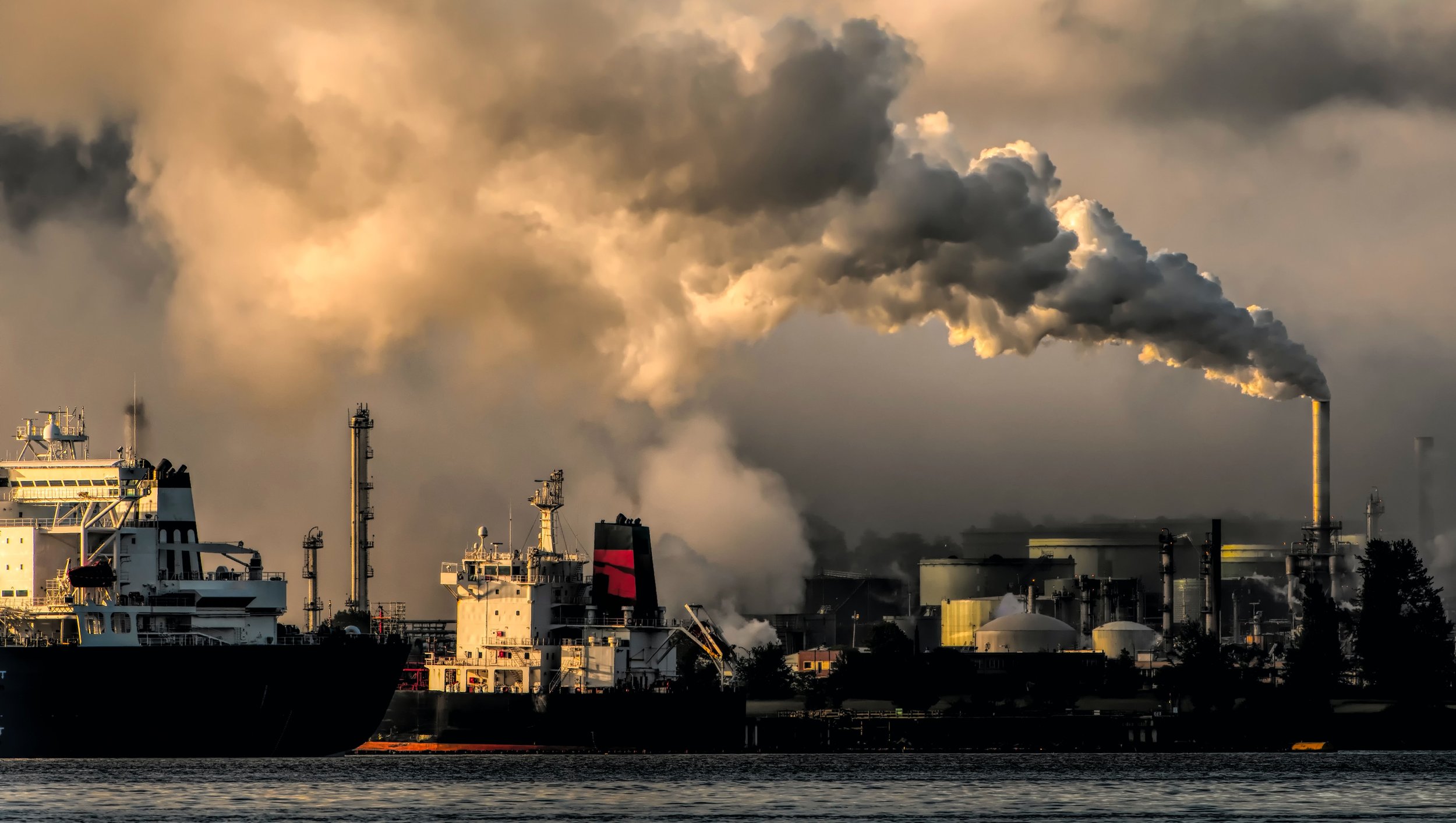

In the chaos of President Trump’s “America First” economic vision, global shipping—one of the industries crucial to our green future—is quietly being pushed to the edge of collapse. The U.S. withdrawal from the International Maritime Organization’s (IMO) climate talks this month is not just a political statement; it’s a death knell for a generation-defining transformation in the maritime sector.
President Trump’s withdrawal from the IMO’s decarbonization negotiations over emissions pricing and green fuels has been framed as another battle in the war against “globalist” policies, but the true cost of this move will not be paid solely in political points. If the U.S. continues down this path, it may undermine the maritime industry’s ambitious efforts toward decarbonization.
The IMO’s 2023 strategy, aimed at achieving net-zero emissions from shipping by 2050, is no small feat. The agreement involves a comprehensive plan, including new fuel standards, emissions pricing systems, and the introduction of alternative fuels. It is the kind of international consensus that could provide shipping with a coherent path forward, driven by collective policy and economic momentum. However, this fragile consensus faces its first real test, and the Trump administration’s response to these climate initiatives looks set to turn the tide in favor of fossil fuel industries.
A “new” world order with a wrecking ball
Trump’s trade war, often dismissed as an act of populist theater, is more strategic than it appears. As Matt Kenney, head of Laureate Communications, explains in his analysis on splash247.com, the president’s tariff agenda isn’t just about hurting other nations; it’s about reshaping global economic relationships and weakening international frameworks that challenge American dominance.
Kenney argues that the goal of the administration is not merely to protect domestic industries but to reshape the entire global trading system. The introduction of tariffs isn’t an isolated event; it’s part of a larger strategy that could culminate in the creation of a new Bretton Woods-style agreement—a “Mar-a-Lago Accord.” This vision would realign the world’s economies, with countries that align with U.S. interests and dollar supremacy placed in the “green bucket” and required to adhere to policies designed to serve American economic and geopolitical goals.
Shipping, however, sits at the crossroads of this geopolitical upheaval. Kenney warns that global shipping is not the target of this strategy, but it will likely be one of its first casualties. The cost of tariff disruptions is felt immediately in shipping—a sector that relies on precise and often fragile global supply chains. The imposition of tariffs on key shipping infrastructure and machinery, particularly from Asia, drives up costs, while decreasing trade volumes could push operators further away from pursuing the green investments required to achieve decarbonization goals.
Tariffs, trade wars, and the green cost of U.S. protectionism
The economic disruptions caused by rising tariffs are compounded by the cost of retrofitting vessels with green technologies. Dual-fuel ships that can operate on LNG, methanol, or ammonia are more expensive than traditional vessels, and tariffs make these upgrades even less economically viable. Additionally, tariffs imposed on materials or machinery used in shipbuilding—particularly from China, which dominates global shipbuilding—create new barriers to sustainable maritime development.
The longer this “green vs. tariff” standoff persists, the more likely we are to see a splintering of the maritime industry into two separate systems. On one side, the European and American systems—attempting to embrace decarbonization and aligning with green fuel protocols—may become increasingly incompatible with China’s growing influence in alternative fuels. China, already investing heavily in methanol and developing its own green fuel infrastructure, could build an entirely parallel maritime system that ignores Western regulations, leaving global shipping caught between two opposing forces.
If this bifurcation occurs, it’s likely that the entire global green shipping strategy will falter. Without a unified approach to decarbonization, different global regions may implement divergent standards for carbon reporting, fuel certifications, and emissions trading systems. Mutual recognition of these efforts will weaken, making it harder to build a cohesive strategy that could lead to a decarbonized maritime sector.
Make the Atmosphere Go Away
Ironically, the very policies designed to “Make America Great Again” are putting the country’s future competitiveness at risk. While Trump’s tariff policies aim to protect American industry, they may end up undercutting the very industries poised to drive the next wave of industrial innovation. Green technologies, including clean fuels, advanced engines, port electrification, and carbon capture systems, are not niche interests—they are key components of a global industrial revolution.
By pulling out of crucial climate discussions, the Trump administration is inadvertently sabotaging industries that will create the jobs of tomorrow, jeopardizing not only the health of the planet but also American economic growth in the long term. The maritime industry—once a key driver of the industrial revolution—is now at the mercy of an economic strategy that seems willing to sacrifice the future in the name of short-term political victories.
As Kenney notes, a new global order that prioritizes America’s financial dominance may sound appealing to nationalists, but it cannot function without reliability, trust, and international collaboration. The tariff war has already undermined multilateral systems, and if it continues, it will collapse even the most promising efforts to decarbonize the maritime sector. In making the atmosphere go away, Trump might just end up making the global green transition disappear entirely.