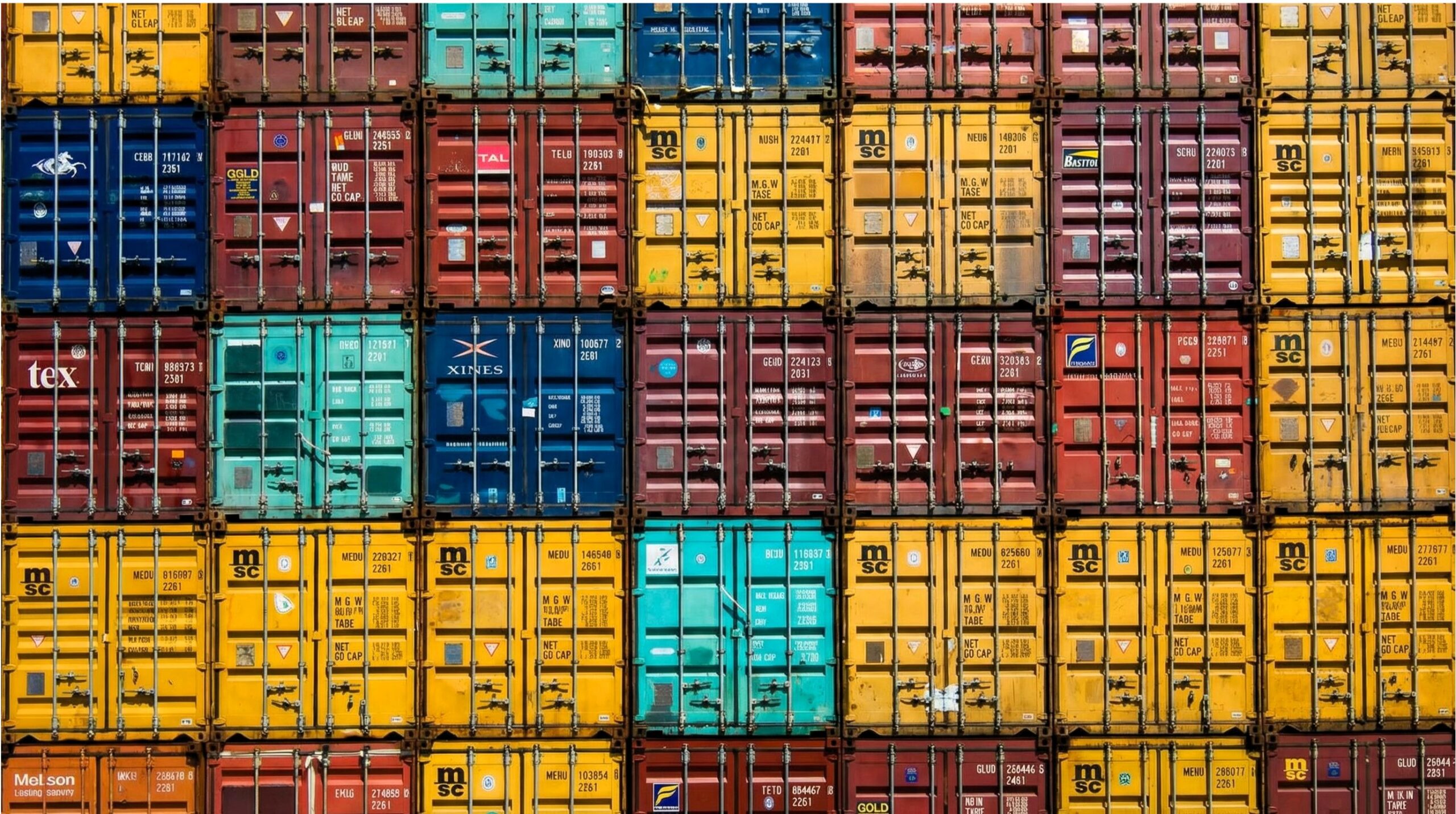

The shipping container is a triumph of industrial anonymity. It looks identical whether it carries trainers from Guangdong or Parmesan from Emilia-Romagna. And it conceals, rather elegantly, one of the more consequential ownership structures in global commerce. The logo painted on the side tells you very little about who actually owns the box. In over half of all cases, the answer is not the shipping line whose name adorns the hull. The answer is a leasing company—and increasingly, a private equity fund that manages it.
Container leasing now accounts for more than 58% of all active containers in global circulation—54 million TEU leased in 2023 alone, according to industry data. In market terms, the sector is valued at $7.74 billion in 2026 and is forecast to reach $11.34 billion by 2035, growing at a compound annual rate of 4.3%. Asia–Pacific alone drives 47% of that growth, powered by container throughput out of China, Japan, and Southeast Asian ports. That growth is structural, not cyclical. Carriers prefer to lease because it converts a capital expenditure into an operating cost, freeing balance sheets for the things that actually depreciate quickly—like green-fuel vessels that cost $200 million apiece. The result is that container leasing has quietly become the connective tissue of global trade, woven into every route from the Pearl River Delta to the Port of Rotterdam.
58% of all active containers globally are leased, not owned, by the shipping lines that operate them—54 million TEU in 2023 alone. Container leasing is the financial backbone of maritime trade
The big three: Who actually owns the fleet
Three names control the overwhelming majority of the container leasing market, and all three have recently undergone ownership changes that tell you exactly where the smart money is going.
Triton International (prefix: TRLU) built itself into the world’s largest container lessor with a fleet of over seven million TEU across more than 90 countries. In September 2023, Brookfield Infrastructure Partners completed its acquisition of Triton in a transaction with a total enterprise value of approximately $13.3 billion, paying shareholders $85 per share. Brookfield did not buy Triton because it collects steel boxes. It bought it because Triton generates infrastructure-grade cash flows—predictable, contracted, and largely uncorrelated with the volatility of freight rates.
Stonepeak followed the same logic, but moved faster. In March 2024, the New York-based alternative investment firm $7.4 billion enterprise value acquisition of Textainer Group (prefix: TGHU), paying common shareholders $50 per share in cash. Stonepeak then moved immediately to expand. In December 2025, it completed Textainer’s acquisition of Seaco—formerly owned by China’s Bohai Leasing—for an equity purchase price of $1.75 billion, creating a combined fleet of approximately 8.3 million cost equivalent units (CEU). That makes Textainer-Seaco, on a CEU basis, the largest container leasing entity in the world—larger even than Triton.
Florens (prefix: FSCU), the Asian heavyweight backed by Chinese conglomerate Bohai Leasing’s broader network, manages a fleet of 4.8 million TEU—roughly 9% of total market activity. Its strength lies in proximity to the world’s dominant export base, which makes securing long-term contracts with Chinese carriers considerably easier.
The financials: Infrastructure returns inside a metal box
The reason Brookfield and Stonepeak paid so much for these businesses is visible in the numbers. Container leasing generates returns that most industrial sectors would consider fantastical.
| Metric | Triton (2024) | Textainer (2023, pre-acquisition) |
|---|---|---|
| Revenue | $1.60 billion | $770 million |
| Adjusted EBITDA Margin | 78.5% | 83.6% |
| Net Income | $518 million | — |
| Fleet Utilisation | 97.0% | 99.3% (Q4 2023) |
| Operating Cash Flow | $1.11 billion | $644 million (adj. EBITDA) |
EBITDA margins above 78% are not unusual in software. They are extraordinary in an EBITDA margins above 78% are not unusual in software. They are extraordinary in an industry that physically owns millions of tonnes of corrugated steel. The secret is the contract structure. Master leases typically run five to fifteen years, which means revenue is contractually locked in well before a single container touches a dock. Carriers carry the utilisation risk; lessors carry the asset. And because the assets are standardised and globally tradable, they retain residual value in ways that, say, an Airbus A380 does not.
Container leasing, in short, has the economics of a toll road dressed in the clothes of a logistics company
The privatisation of both Triton and Textainer is itself informative. Removing these entities from public markets reduces transparency, extends the investment horizon beyond quarterly earnings cycles, and—as we shall see—insulates strategic decisions from regulatory scrutiny at a moment when that scrutiny is intensifying.
The geopolitical fault lines
Here is where container leasing stops being a niche financial story and starts being a national security concern.
The U.S. Trade Representative’s January 2025 Section 301 investigation established, with uncomfortable clarity, that China controls 95% of global shipping container production and 86% of the world’s supply of intermodal chassis. Three Chinese manufacturers—primarily CIMC—produce nearly every container that Western leasing companies purchase and deploy. Triton, Textainer, Brookfield, and Stonepeak all buy their boxes from Beijing-adjacent factories. The landlord, it turns out, rents from the tenant’s government.
Washington is not amused. On April 17, 2025, the USTR formalised its Section 301 action, introducing port fees on Chinese-operated vessels and Chinese-built ships entering U.S. ports. Beginning October 14, 2025, Chinese vessel operators face a charge of $50 per net ton per port entry, rising to $140 per net ton by April 2028. Operators of Chinese-built vessels—regardless of nationality—face a parallel fee of $18 per net ton, equivalent to $120 per container discharged, scaling to $250 per container by 2028.
The knock-on effects for container leasing are considerable. If the fees make Chinese-built vessels economically unviable on U.S. routes, carriers will demand more equipment built outside China—equipment that simply does not exist at scale. South Korea and Japan build ships; they do not manufacture containers in meaningful volumes. Lessors who want to grow their U.S.-route fleets face a sourcing problem with no obvious short-term solution.
Meanwhile, the Textainer-Seaco transaction is particularly interesting in this context: Seaco was previously owned by China’s Bohai Leasing, a Shenzhen-listed entity. Its acquisition by Stonepeak effectively pulled a substantial portfolio out of Chinese ownership at exactly the moment Washington began legislating against Chinese maritime dominance. Coincidence or strategy is, as they say, left as an exercise for the reader.
The Red Sea crisis adds a further layer. Houthi attacks on commercial shipping since late 2023 have forced carriers to reroute around the Cape of Good Hope, adding nine to fourteen days to Asia–Europe voyages. Longer routes mean more containers per unit of cargo, which tightens the available supply of leased equipment—and therefore strengthens the pricing power of lessors. In a market where utilisation already sits above 97%, any supply constraint translates almost immediately into rate increases.
The privatisation of strategic infrastructure
The consolidation of container leasing into the hands of a small number of private equity-backed platforms is, in geopolitical terms, a structural shift that governments have barely begun to process. The top five lessors now control roughly 78% of the leased global fleet. Two of those five—Triton and Textainer—are held by firms with no obligation to disclose their decision-making to public shareholders or regulators, beyond minimum statutory requirements.
This matters because container leasing is not merely a financial service. It is the mechanism by which physical trade capacity gets allocated across the world’s shipping lanes. Decisions about where to deploy containers, which shipping lines receive preferential access to fleet expansions, and how aggressively to pursue new equipment during geopolitical disruptions—these are decisions with real consequences for importers, exporters, and governments. They now rest in the hands of infrastructure funds whose primary obligation is to their limited partners in Bermuda, New York, and Cayman.
None of this is sinister by design. Brookfield and Stonepeak are rational actors deploying capital into a sector with durable, high-margin returns. But the architecture they are building—privately owned, globally distributed, structurally essential, and manufactured almost entirely in China—sits at the intersection of finance, logistics, and geopolitics in ways that regulators and policymakers are only beginning to map.
The containers themselves are agnostic. They carry whatever pays. It is the ownership structures around them, and the governments trying to reshape those structures, that now carry the real weight.