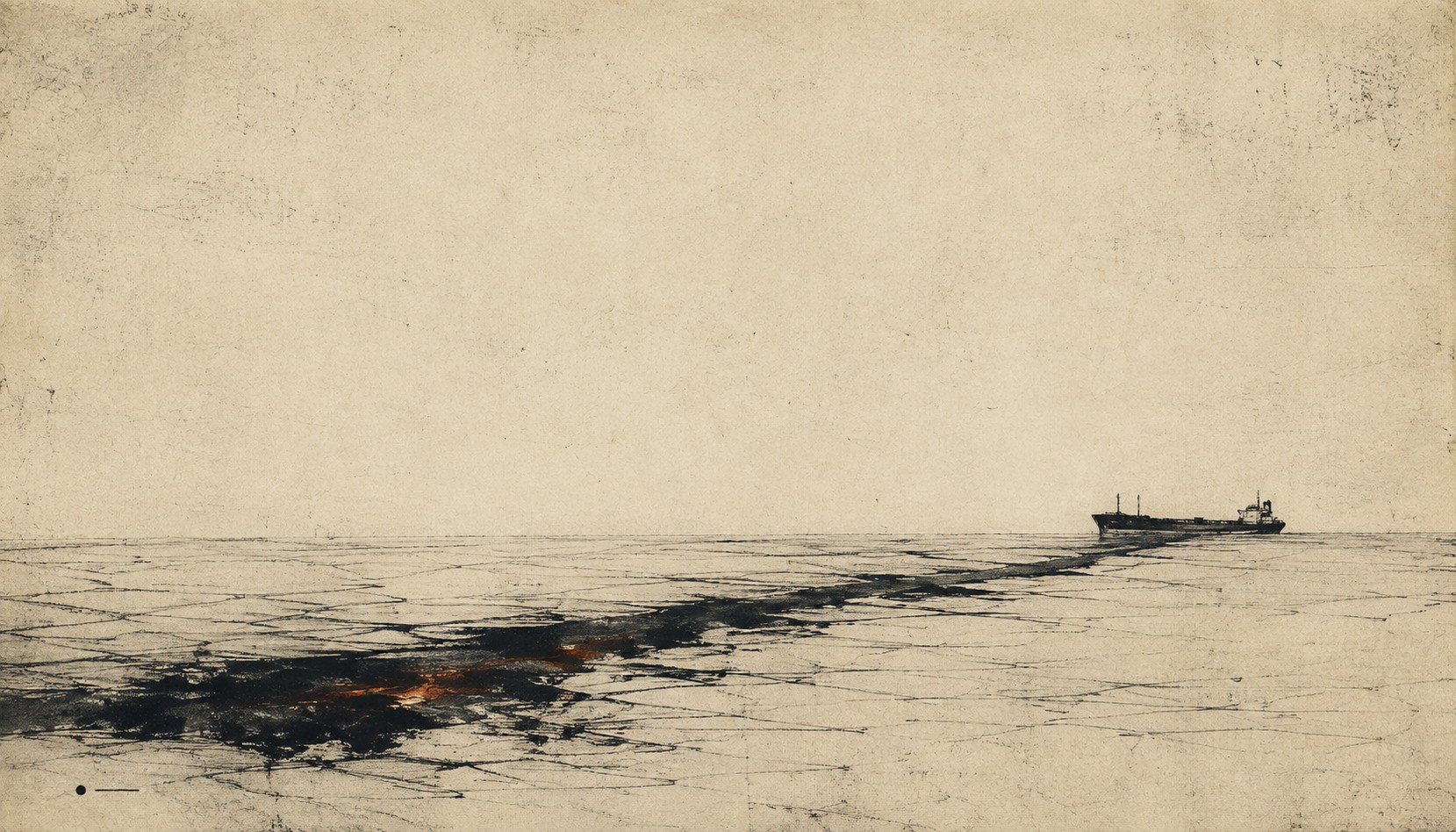

It was a cold November evening in Hamburg, one of those nights when the city seems to belong more to the sea than to the people living in it. A damp mist covered the streets, the wind coming from the harbor carried the familiar smell of salt, oil, and wet steel, and the lights from the cranes and vessels disappeared into the darkness like distant memories from another world.
I had travelled to Hamburg for the traditional Eisbein celebration, one of those evenings when the old streets come alive, when historic pubs fill with laughter, music, food, and stories, and when strangers sitting at the same table slowly become companions because, in places like Hamburg, conversations have a way of finding their own direction.
Especially near the harbor, conversations eventually return to the sea.
They speak about voyages, storms, distant ports, ships that never returned, and moments when a few seconds changed the lives of many people forever.
That evening I found myself inside an old maritime pub, one of those places that seem to have been built not only with wood and stone, but also with the memories of thousands of sailors who passed through its doors. The walls were covered with photographs of old vessels, faded maps, and images of men who had spent their lives following the horizon. The wooden tables carried the marks of decades, and the voices around me blended with the sound of glasses touching the bar.
In a quiet corner sat a sailor.
He was not the kind of man who demanded attention. He spoke little, observed much, and had that particular expression often found in people who have spent many years at sea — a look that suggests they have seen things they do not always need to explain.
When he discovered that I was involved in shipping, he smiled.
“Then perhaps you would like to hear a story,” he said.
“Not one of those stories written simply in a report or recorded in a file. A real sea story. One of those stories sailors carry inside them for years, because some nights at sea never truly end.”
He took a slow sip from his glass, looked toward the window where the harbor lights reflected on the wet streets outside, and continued.
“This happened in the 1990s, in Southeast Asia, in one of the busiest maritime areas in the world. A place where thousands of ships pass every year, where oceans become highways, and where a normal voyage can turn into a nightmare before anyone has time to understand what is happening.”
He paused.
“The strange thing about disasters at sea is that they rarely announce themselves. They do not always begin with a violent storm or a warning from nature. Sometimes they begin during an ordinary night, during an ordinary watch, when everyone believes everything is under control.”
And then he began to tell me.
That night, somewhere in the warm and dark waters of Southeast Asia, a large tanker was making its passage through one of the busiest shipping routes in the world.
From a distance, it would have looked like nothing more than a small collection of lights moving slowly across an endless black ocean. But for those on board, it was an entire world made of steel, machinery, and human lives.
The vessel carried a huge cargo of oil, a valuable shipment worth millions, but to the crew it was simply another voyage. Another watch. Another night away from home.
They were seafarers doing what generations of sailors had done before them: trusting their training, their experience, their instruments, and each other.
Somewhere nearby, another large commercial vessel was also navigating through the same waters.
Two enormous ships moving through a vast sea.
Two crews following their routines.
Two bridges where officers watched the darkness ahead.
At first, nothing seemed unusual.
The engines were working normally. The navigation equipment was operating. The radar showed the presence of another vessel. The officers were aware of the traffic around them.
The information existed.
The danger, however, was hidden inside that information.
Because at sea, seeing something is not always enough.
You must understand what you are seeing.
You must recognize what may happen before it happens.
You must act before a dangerous situation becomes impossible to correct.
The two vessels began to close the distance.
Slowly.
Almost silently.
And perhaps that was the most dangerous part.
There was no dramatic warning. No sudden alarm telling everyone that they were approaching disaster.
Only a gradual change.
A situation developing minute by minute.
A series of decisions, assumptions, and delayed reactions that slowly brought two enormous ships toward the same point in the ocean.
On both bridges, eyes moved between the radar screens and the dark horizon.
The officers knew another vessel was there.
They were experienced men.
They were not careless.
But the sea has a cruel lesson: sometimes a disaster is not caused by one terrible mistake. Sometimes it is created by several small moments when the right decision comes just a little too late.
As the distance decreased, the situation became more serious.
The time available became shorter.
The options became fewer.
The final avoidance actions were taken.
Commands were given.
The engines responded.
The rudders moved.
The people on the bridges fought against the inevitable with everything they had.
But a large vessel is not a small boat.
It cannot simply turn away from danger in an instant.
A ship carrying thousands of tons of steel has its own momentum, its own power, its own stubborn resistance against sudden change.
And sometimes that momentum becomes the strongest enemy.
The final moments before a collision at sea are difficult to describe.
Time seems to behave differently.
Seconds feel like minutes.
Minutes disappear like seconds.
The other ship grows larger.
The horizon disappears.
The human mind understands what is coming before the body can accept it.
And then came the impact.
The collision was violent.
Two massive structures of steel met in the darkness, and the sound must have travelled across the water like a warning from the ocean itself.
For a moment there was silence.
The kind of silence that exists when people are trying to understand what has just happened.
And then came the alarms.
The emergency lights.
The shouting.
The movement of people running through corridors that had suddenly become unfamiliar.
But the collision itself was only the beginning.
The true nightmare came afterwards.
The oil began escaping into the sea.
Within moments, the dark waters around the vessels changed forever.
The ocean, which for centuries had swallowed storms and extinguished flames, became part of the fire.
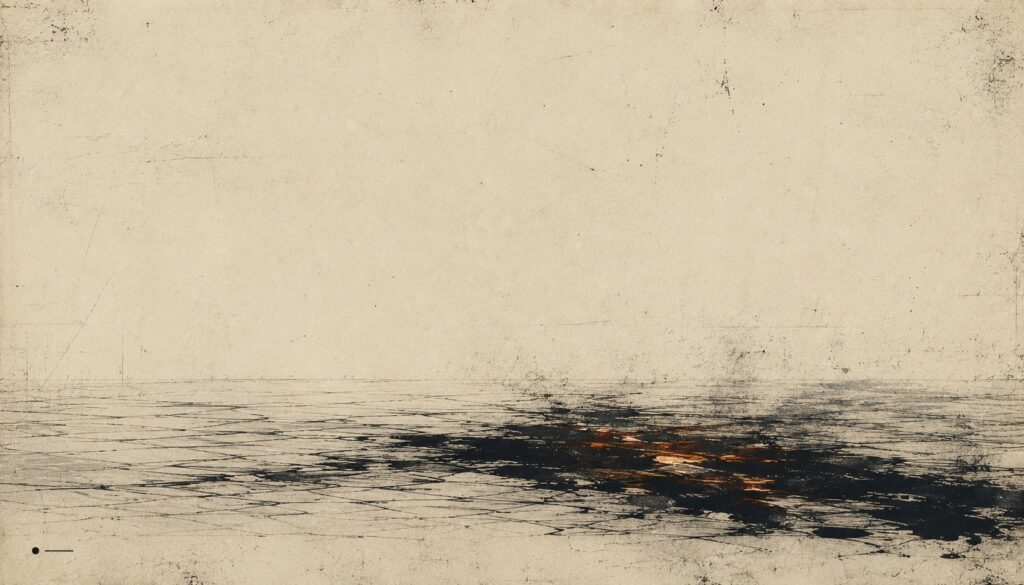
The sea caught fire.
It was an image that seemed impossible.
Flames moving across the water.
Black smoke rising into the night sky.
A giant vessel surrounded by a burning ocean.
A scene that looked less like reality and more like something from a nightmare.
But there was nothing imaginary about it.
There were people inside that nightmare.
Men who, only minutes earlier, had been thinking about their next meal, their families, their next port, or the end of their voyage.
Now they were fighting simply to survive.
A tanker fire is not like a normal fire.
It is alive.
It moves.
It grows.
It takes control of places that moments before were familiar and safe.
The corridors, the working areas, the spaces where sailors lived their daily lives became dangerous paths through smoke and heat.
The crew tried to fight the disaster, but there are moments at sea when a person understands the difference between controlling a situation and simply trying to escape it.
The hardest decision for any sailor is the moment when he must abandon his ship.
A vessel is never just steel.
It is a home for months.
It is where people sleep, work, eat, and wait for the day they return to their families.
Leaving it behind is not simply leaving a machine.
It is leaving a part of your life.
But the sea has one absolute rule:
Human life comes first.
Rescue operations began as nearby vessels moved toward the burning area.
For those approaching from a distance, the scene must have appeared unreal — a huge ship in the middle of the ocean, surrounded by flames, with thick black smoke rising into the night.
But behind that terrible image were human beings.
People fighting fear.
People searching for friends and colleagues.
People hoping that every familiar face would appear among the survivors.
The tragedy of that night was measured not only in damaged steel and lost cargo.
It was measured in human lives.
Several members of the crews did not survive.
They were men who had left home to do a difficult but honorable job, men who expected another normal voyage and never imagined that their final journey would end beneath the flames of a burning sea.
Those who survived carried away more than physical injuries.
They carried memories.
The sound of alarms.
The smell of smoke.
The sight of the ocean burning around them.
Memories that remain long after the wounds disappear.
When the sailor finished his story inside that Hamburg pub, the world around us continued as normal.
People were laughing.
Glasses were being raised.
Music was playing.
The celebration of Eisbein continued.
And yet, for a few moments, I felt as if we were no longer sitting in Hamburg.
I felt as if we were somewhere far away, in the darkness of Southeast Asia, watching those flames reflected on the water.
The sailor looked at me and said quietly:
“You know what people forget about ships? They always talk about size. About engines. About technology. About steel.”
He paused.
“But in the end, every ship carries people.”
“People who make decisions. People who feel fear. People who try to do their best when everything around them is falling apart.”
Outside, Hamburg continued beneath the November rain.
The harbor lights continued shining.
Ships continued arriving and departing, carrying cargoes toward every corner of the world.
And I thought about something every true sailor understands:
Every ship carries two kinds of cargo.
One is stored inside its holds.
The other lives inside the memories of those who travelled on her.
Some stories disappear with time.
Others refuse to sink.
They continue travelling from port to port, from sailor to sailor, like a quiet voice coming from the ocean itself.
A reminder that the sea can be the greatest companion of mankind…
but when it chooses to reveal its power, it remains the most unforgiving force on Earth.

Disclaimer
This text is a literary narrative and a work of creative interpretation, inspired by personal accounts and oral stories. It does not constitute an official record, technical report, expert opinion, or verified historical account. Any references to persons, vessels, incidents, or events are used solely for narrative purposes. This content is intended exclusively for entertainment and reading purposes and should not be considered technical, operational, professional, or advisory information.