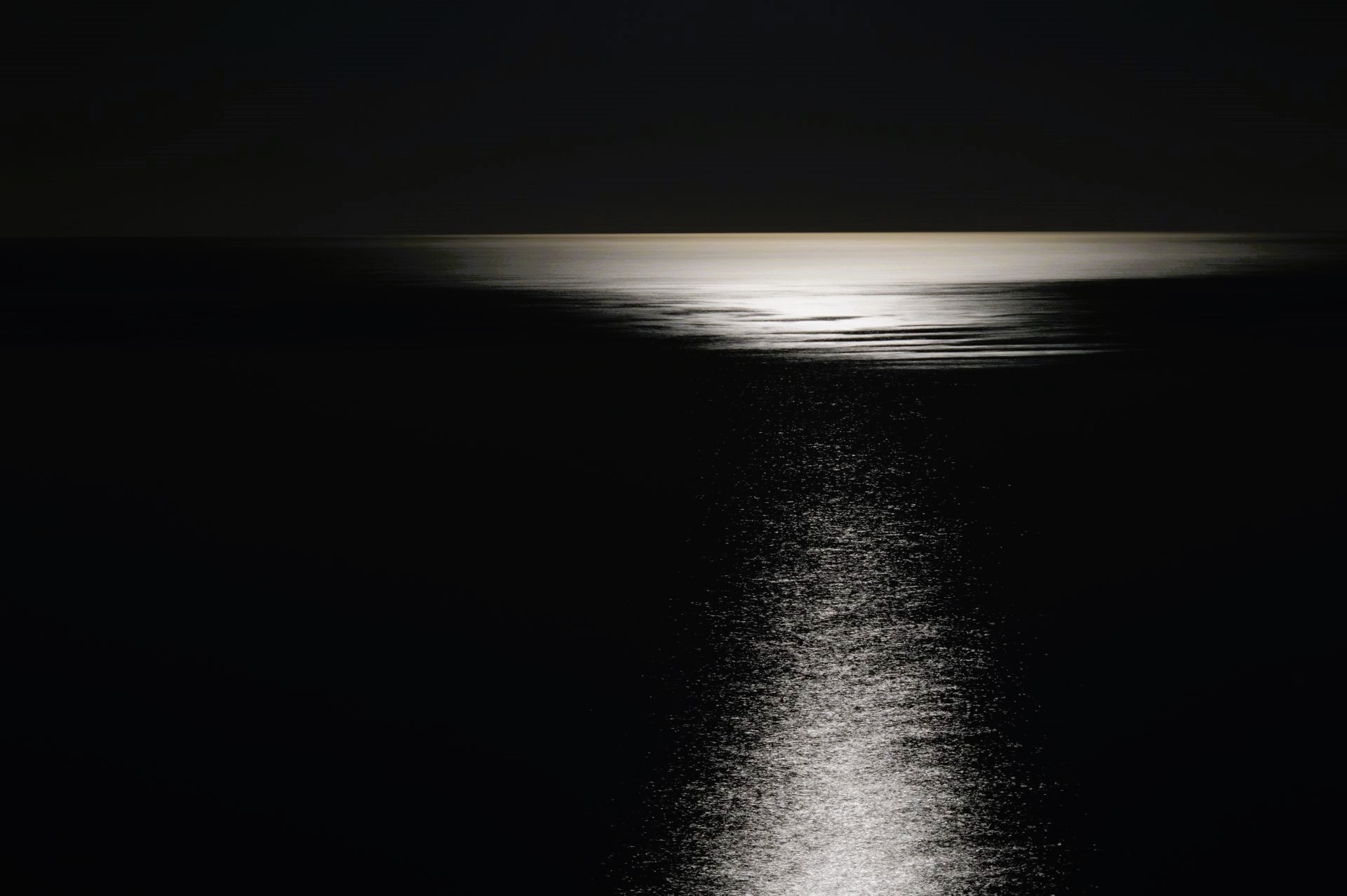

Although spending most of my professional life surrounded by ships, I have never considered myself a seafarer in the traditional sense of the word.
For almost four decades, shipping is at the centre of my professional life. Through chartering, ship management and the countless commercial decisions that connect vessels, cargoes, owners, charterers and global markets, I am deeply engaged with the maritime industry on a daily basis. Ships are not distant objects moving across the oceans; they are complex living systems that require knowledge, experience, coordination and the commitment of hundreds of people to successfully complete every voyage. My continuous involvement in shipping keeps me closely connected to the challenges, changes and realities of the maritime world, where every day brings new decisions, new perspectives and new lessons from the sea.
Over the years, I have had the privilege of spending time on board different vessels, not as a member of the crew, but in order to understand the reality behind the commercial side of shipping. I wanted to see with my own eyes what happens beyond contracts and emails, beyond voyage calculations and chartering decisions. I wanted to understand the world of the people who actually operate the ships, who stand on the bridge during the quiet hours of the night, who supervise loading and discharging operations, who deal with weather, machinery, delays and unexpected situations far away from the comfort of land.
Those experiences gave me enormous respect for seafarers.
They also reminded me that knowing about ships is not the same as knowing the sea.
A person may understand charter parties, cargo operations, vessel performance and commercial risks, yet still remain an outsider to the unique relationship that develops between a sailor and the ocean.
That relationship is something I have always observed with admiration because, long before shipping became my profession, the sea was already part of my family history.
The sea before the profession
My father was a Master Mariner, and many members of my family spent their lives connected with ships. One of my grandparents, uncles, cousins and close relatives carried the same profession, and as a child I grew up surrounded by stories that came from places that seemed almost unreal.
Our conversations were often filled with names of oceans, ports and distant routes. I heard about storms in the middle of nowhere, long passages where the horizon remained unchanged for days, difficult manoeuvres, unexpected problems, friendships formed between people of different nationalities and religions and those strange moments that every experienced sailor seems to collect during a lifetime at sea.
At that age, I listened to those stories simply as adventures.
Later, as I became involved in shipping myself, I began to understand something deeper.
The stories sailors carry
The sea creates a different kind of memory.
A person working in an office may remember a difficult negotiation, a challenging project or an important decision. A sailor remembers the night when the wind changed unexpectedly in the middle of the Atlantic, the morning when the engine room became silent in open water, the moment when a distant light appeared on the horizon and nobody knew exactly what it was.
The ocean has a way of transforming ordinary moments into permanent memories.
Most of the stories I heard throughout my life had explanations. Sometimes the answer was technical. Sometimes it was simply experience correcting fear. Sometimes, after many years, the details had become slightly different from the original event, as happens with all human memories.
But there were always a few stories that remained different.
Not because they involved something supernatural.
In fact, professional sailors are among the least superstitious people I have ever known. The sea does not reward imagination when reality demands action. A strange noise in the engine room must first be investigated. A warning alarm must first be understood. A difficult situation must first be solved.
The ocean teaches discipline.
It teaches respect.
It teaches that emotion without judgement can be dangerous.
And yet, almost every experienced captain eventually has one story that he tells quietly, usually after years have passed, when the conversation turns to unusual moments at sea.
It is almost always introduced in the same way.
“There was one night…”
Not a dramatic night.
Not a night of a storm or an emergency.
Just one night when something happened that remained unanswered.
There was one night…
The story that follows is one of those stories.
I first heard it from an experienced captain whose career represented everything associated with traditional seamanship. He had spent decades commanding vessels across some of the world’s most demanding routes. He had crossed oceans when weather forecasting was far less advanced than today, when communication with shore was limited and when the responsibility of command depended even more heavily on personal judgement and experience.
He was not someone who exaggerated.
He was not interested in creating mystery.
When he told the story, he did not present it as proof of anything unusual. He simply described what he had seen and admitted that he still did not have a complete explanation.
Before beginning, he smiled and said something that I never forgot:
“The sea doesn’t need ghosts. It is mysterious enough on its own.”
Then he started describing a night watch in the North Atlantic.
A night that began like every other night at sea.
And ended with a question that followed him for the rest of his life.
The night watch
The voyage had been completely ordinary until that moment.
There was nothing in the weather forecast, nothing in the condition of the vessel and nothing in the routine of the crew that suggested the night would become memorable. The ship was moving steadily across the North Atlantic, following her planned route with the quiet confidence of a vessel that had performed the same task countless times before.
This is something people who have never spent time offshore often find difficult to understand. A ship at sea is not simply a machine travelling from one port to another. After enough days away from land, the vessel becomes an entire world of its own. The crew develops a rhythm that follows the heartbeat of the ship itself. The vibration of the engines becomes part of everyday life. The movement of the hull beneath your feet becomes something you no longer consciously notice. The sounds of pumps, generators and machinery blend into a familiar background that almost feels comforting.
A sailor does not merely work on a ship.
For long periods of time, he lives inside her.
The captain told me that every vessel has its own character. Some ships feel restless, constantly reminding the crew of their presence through vibrations and unusual sounds. Others seem almost silent, moving through the water with a confidence that makes those onboard feel as if the ship understands her own purpose.
That particular night, the vessel was behaving perfectly.
The sea was calm for the North Atlantic. The wind had weakened, the swell was moderate and the ship was making good progress. The majority of the crew was asleep, leaving only those responsible for the night watch awake on the bridge.
For a sailor, the middle watch is a unique experience.
Between midnight and early morning, the world seems suspended between two realities. The working day has ended, but the new one has not yet begun. There are no distractions, no activity from ports, no voices from people ashore. There is only the ship, the ocean and the immense darkness surrounding them.
Around three o’clock in the morning, something changed.
Not suddenly.
Not dramatically.
There was no storm approaching. No alarm sounded. No machinery failed.
The sea simply felt different.
When he described that moment, he struggled to explain exactly what he meant. This is common among experienced seafarers. They often notice things that are difficult to translate into words because their awareness is built from years of observation rather than from one single event.
A sailor learns the sea through thousands of small details.
The way the wind touches the bridge windows.
The rhythm of the waves against the hull.
The sound of the engines when everything is normal.
The silence that appears when something is not.
It is not intuition in the mysterious sense of the word. It is experience stored so deeply that the mind recognises patterns before the conscious thought process begins.
That night, the wind had almost disappeared.
The waves had become unusually regular.
The darkness around the vessel seemed heavier.
He remembered standing on the bridge and looking outside, trying to identify what had created that strange feeling. Everything appeared normal. The navigation lights were working. The engines continued their steady operation. The instruments showed no abnormal readings.
Nothing was wrong.
And yet something felt different.
He later told me that perhaps the most unsettling part was not what he saw, but what he felt before anything happened.
The feeling that the ocean had become too quiet.
Not silent.
A ship at sea is never truly silent. Even in the calmest conditions, there is always movement. The deep vibration of the engines travels through the steel structure. Ventilation systems operate continuously. The vessel cuts through the water with a sound that becomes almost invisible after enough hours onboard.
But there is another type of silence.
A silence created not by the absence of sound, but by the absence of distraction.
The kind of silence that makes a person suddenly aware of how small a human being is when surrounded by thousands of kilometres of open water.
He returned to the navigation console and looked at the radar.
At first, everything seemed completely normal.
Then a small contact appeared on the screen.
His first assumption was simple.
Another vessel.
There was nothing unusual about that. The world’s oceans may appear empty when viewed from land, but they are crossed every day by thousands of ships carrying energy, raw materials, food and manufactured goods. The North Atlantic, in particular, remains one of the great maritime highways of the planet.
A radar contact was not a reason for concern.
But as he watched the screen, something began to feel unusual.
The contact appeared.
Then disappeared.
A few seconds later, it appeared again.
The distance remained almost unchanged.
He checked the information available.
No AIS identification.
No vessel name.
No transmitted signal.
No visual confirmation.
Following normal procedure, he called the other officer on watch and together they examined the data carefully.
Their first reaction was not fear.
It was professional curiosity.
Equipment can produce errors. Radar can be affected by atmospheric conditions. Reflections can create false echoes. Experienced navigators know that technology, despite its importance, is never perfect.
The logical explanation was always the first one they searched for.
They adjusted settings.
They reviewed the display.
They compared the radar information with other navigation systems.
Nothing appeared abnormal.
The strange contact disappeared again.
For a moment, they believed the matter was finished.
The second ship
Then it returned.
And this time, the radar showed something that neither of them would ever forget.
It was not another ship.
It was theirs.
The display showed a second vessel moving behind them.
A vessel with the same characteristics.
The same dimensions.
The same course.
The same speed.
It appeared as if another identical ship was silently following them across the Atlantic in the darkness.
For a few seconds, neither man spoke.
Not because they were afraid.
Because they were trying to understand.
The human mind is remarkably good at finding explanations, but only when the information available fits within the boundaries of what it already knows. On that bridge, in the middle of the Atlantic, two experienced officers were suddenly confronted with information that belonged nowhere inside their understanding of reality.
The ship existed.
They knew where they were.
They knew their speed.
They knew their heading.
But the radar was showing something that should not exist.
And the most unsettling part was not that the system was wrong.
The unsettling part was that, for a brief moment, the system was completely convinced that it was right.
The first instinct of any experienced seafarer when confronted with something unusual is not to believe it.
It is to investigate it.
A sailor’s confidence does not come from assuming that everything is predictable. It comes from knowing how to respond when something is not. The sea rewards those who remain calm, and it punishes those who allow confusion to replace judgement.
So the officers did what their training demanded.
They checked everything.
The radar was examined again. The settings were reviewed carefully. Different ranges were selected. The information was compared with the vessel’s position, speed, heading and all available navigation systems. They looked through the bridge windows, searching the darkness for any indication that another vessel might actually be nearby.
There was nothing.
Only the ocean.
The same endless Atlantic that had surrounded them before the strange contact appeared.
The same darkness.
The same quiet movement of water beneath the hull.
The second image remained on the screen for only a short time before disappearing once again.
And this time, it did not return.
The remainder of the watch passed without incident.
The ship continued her voyage. The engines continued their steady rhythm. The crew continued their routines. The sun eventually rose over the horizon, bringing with it the familiar reassurance of daylight.
By morning, the mystery had already begun to transform into something different.
A story.
This is something unique about life at sea. Events that would dominate conversations ashore often become quiet memories onboard. A difficult storm, an unexpected malfunction or a moment of uncertainty may be discussed briefly, then absorbed into the endless collection of experiences that every sailor carries.
The ocean teaches people not to exaggerate.
It also teaches them not to forget.
Beyond the radar
When the captain told me this story, he did not focus on the strange radar image. He did not speak about it with excitement or attempt to create an atmosphere of mystery.
Instead, he focused on something much deeper.
The experience had reminded him how dependent human beings are on the instruments they create.
We often believe that technology allows us to see reality exactly as it is.
But perhaps technology does something more subtle.
Perhaps it creates a translation of reality.
A radar does not show the ocean itself.
It shows a signal interpreted by a machine.
A navigation system does not show where we are in some absolute sense.
It calculates our position according to a complex network of measurements.
A chart is not the sea.
It is humanity’s attempt to transform the sea into something we can understand.
And maybe this is why the ocean has always fascinated those who spend their lives crossing it.
Because it constantly reminds us that our understanding of the world is powerful, but never complete.
Today, the relationship between ships and technology has become even more complex. Modern vessels are surrounded by systems that earlier generations could never have imagined. Satellites monitor weather patterns. Artificial intelligence assists with route optimisation. Predictive systems analyse engine performance and identify potential problems before they become serious. Digital platforms connect vessels with shore-based operations in real time.
Shipping has become safer, faster and more efficient because of these developments.
There is no doubt about that.
But efficiency is not the same as wisdom.
Information is not the same as understanding.
A computer can analyse millions of data points in seconds. It can identify patterns invisible to the human eye and calculate probabilities with extraordinary accuracy.
But can it understand the feeling of an experienced officer standing on a bridge at three o’clock in the morning, sensing that something in the atmosphere has changed before any instrument confirms it?
Can an algorithm understand the difference between an ordinary night at sea and that rare moment when every instinct tells a sailor to pay closer attention?
Perhaps one day it will.
Perhaps technology will eventually become so advanced that even these subtle human perceptions can be measured, analysed and reproduced.
But there will always remain something unique about the human relationship with the sea.
Because the sea is not only a physical environment.
It is an experience.
It changes people.
It removes the illusions created by civilisation and places human beings face to face with their own limitations. Far from land, surrounded by nothing but water and sky, even the most experienced sailor understands that control is always temporary.
A ship can be designed with incredible precision.
A voyage can be planned with extraordinary detail.
A captain can have decades of experience.
And still, the ocean remains something larger.
Not because it is hostile.
Because it is indifferent.
It does not challenge humanity.
It simply exists.
That is perhaps the most difficult lesson for modern society to accept.
We have become accustomed to believing that every problem has a solution, every question has an answer and every unknown can eventually be transformed into something measurable.
The sea quietly disagrees.
Not through violence.
Not through resistance.
Simply through its existence.
The story of the radar contact may have been caused by a technical error. It may have been an unusual atmospheric phenomenon. It may have been a combination of factors that created a rare and temporary illusion.
All of those explanations are possible.
And perhaps one day, one of them will be proven correct.
But the reason this story has remained with me is not because of what appeared on that radar screen.
It is because of what disappeared afterwards.
The certainty.
That brief moment when two experienced professionals, using some of the most advanced tools available to them at the time, were reminded that every human attempt to understand reality is still only an interpretation of something much greater.
The captain never considered the event a mystery that needed to be solved.
He considered it a reminder.
A reminder that confidence is necessary, but humility is essential.
That technology should be trusted, but never worshipped.
That knowledge should always be pursued, but wisdom begins with recognising what we do not know.
The ocean’s greatest lesson
Several years after sharing this story with me, the captain passed away.
Like many seafarers of his generation, he left behind countless memories that will never appear in official records. No company report documented them. No navigation log recorded them. No database preserved them.
Yet they remain alive because sailors have always carried the history of the sea through stories.
Perhaps that is the true reason these stories matter.
They are not really about strange radar echoes, unexplained moments or impossible events.
They are about the human experience of standing at the edge of the known world and accepting that beyond that edge there will always be something we cannot completely understand.
Every sailor eventually learns this.
The sea does not reveal all its secrets.
It does not owe us explanations.
It does not adjust itself to our desire for certainty.
It simply continues.
Wave after wave.
Voyage after voyage.
Carrying ships, cargoes, memories and generations of people who have looked into the darkness of the horizon and wondered what exists beyond what they can see.
And perhaps that is the greatest lesson the ocean offers.
We do not cross the sea because we have conquered it.
We cross the sea because we have learned to respect it.
We do not sail because we understand every mystery.
We sail because we accept that some mysteries are part of the journey itself.
And somewhere, in the quiet hours of another night watch, with the engines turning steadily beneath the deck and the stars disappearing into an endless horizon, every sailor eventually hears the same silent message from the ocean:
The greatest distance we travel is not measured in nautical miles.
It is measured in the space between what we believe we know and what we are still capable of discovering.

Disclaimer
This text is a literary narrative and a work of creative interpretation, inspired by personal accounts and oral stories. It does not constitute an official record, technical report, expert opinion, or verified historical account. Any references to persons, vessels, incidents or events are used solely for narrative purposes. This content is intended exclusively for entertainment and reading purposes and should not be considered technical, operational, professional or advisory information.