
On 17 June, Donald Trump told the shipping world to start its engines. Three weeks later, standing next to NATO Secretary General Mark Rutte in Ankara, he said: “To me, I think it’s over. I don’t want to deal with them anymore. They’re scum.” Both statements came from the same president, about the same waterway, within 21 days. That whiplash is not a diplomatic curiosity. It is the operating environment that global shipping must plan around.
But this article is not really about the Strait of Hormuz. It is about something larger: what happens when a geopolitical crisis rewires economic geography, and why that rewiring does not unravel when the diplomats shake hands.
A deal on paper, a waterway in freefall
The memorandum signed in Versailles on 17 June committed Iran to reopening the Strait of Hormuz, with Washington lifting its naval blockade and granting Tehran a 60-day window to export oil without tolls. The ink dried. The ceasefire lasted less than three weeks.
On 7 July, three commercial vessels were struck in the Strait of Hormuz. Washington’s reading was straightforward: Iran broke a ceasefire week that Trump had publicly declared on 3 July to allow Khamenei’s funeral proceedings to pass without incident. Tehran’s reading was different. Iranian Foreign Minister Araghchi had already warned that final negotiations “will not commence if threats continue,” invoking paragraph 13 of the MoU, which requires a halt to all hostilities, including Israel’s ongoing military operations in Lebanon. As for the ships themselves, they appeared to be using the U.S.–Oman coordinated route rather than Iran’s designated corridor, which Tehran had repeatedly declared the only safe passage through the strait. Both readings are consistent with the available facts. That is precisely the problem for anyone trying to plan a cargo schedule: in a waterway where each party disputes the other’s version of the rules, “open”” and “closed” are not binary states.
The U.S. response was immediate. CENTCOM struck over 80 targets in Iran, the Trump administration revoked the sanctions waiver that had permitted Iranian oil sales, and the naval blockade was reinstated. As the CFR noted on 8 July, the ceasefire is now on the verge of complete collapse, with any prospect of restoring normal traffic an open question.
Beneath the diplomatic wreckage sit two harder problems. First: the IMO estimated 80 mines still in the Strait of Hormuz’s primary navigation channel, the Traffic Separation Scheme. The Chief of Naval Operations, Admiral Daryl Caudle, confirmed they remain, telling Bloomberg that Iran’s mining strategy was deliberately designed to channel ships into sea lanes close to Iranian shores, making toll collection easier to enforce. Second: Iran is not trying to reopen a free corridor. It is trying to monetize one. According to the CFR, Iranian officials believe the Strait of Hormuz could generate up to $40 billion a year in fees , roughly equal to the country’s entire annual pre-war oil export revenues. Those are not bargaining chips. They are structural incentives to maintain control regardless of what any memorandum says.
The industry’s hesitation is not fear. It is economics. Shipping companies do not avoid risk. They price it. What they cannot price is unpredictability: a corridor where a ceasefire collapses in three weeks, where mines sit in the main channel, and where one party to the deal believes the waterway is worth $40 billion a year in permanent rent. A spokesman for the International Chamber of Shipping told NPR in June that confidence among carriers builds gradually, not on command. As of 8 July, that confidence is being rebuilt from a lower floor than anyone anticipated.
The industry has already run this experiment
Container lines do not need a hypothetical. They lived it on the Red Sea. Maersk began a structural return to the Suez Canal in January, framing it as a calculated test of improving conditions. By April, the carrier was rerouting ships back around the Cape of Good Hope, citing “unforeseen constraints arising from the wider operating environment.” Hapag-Lloyd held its Cape routing throughout and watched its caution get vindicated.
The financial cost was concrete. Maersk reported a $153 million loss in its Ocean division for Q4 2025 as the industry grappled with the costly transition between Cape diversions and a tentative return to Suez. Although the company has since upgraded its 2026 earnings guidance on the back of stronger freight rates, that does not erase the lesson carriers learned: reopening a corridor is not the same as restoring confidence.
Carriers who got burned testing the Red Sea will not rush a second test through the Strait of Hormuz, a waterway that now combines active military exchanges, an uncleared minefield, and a host government with a $40 billion revenue ambition.
Africa did not wait for certainty
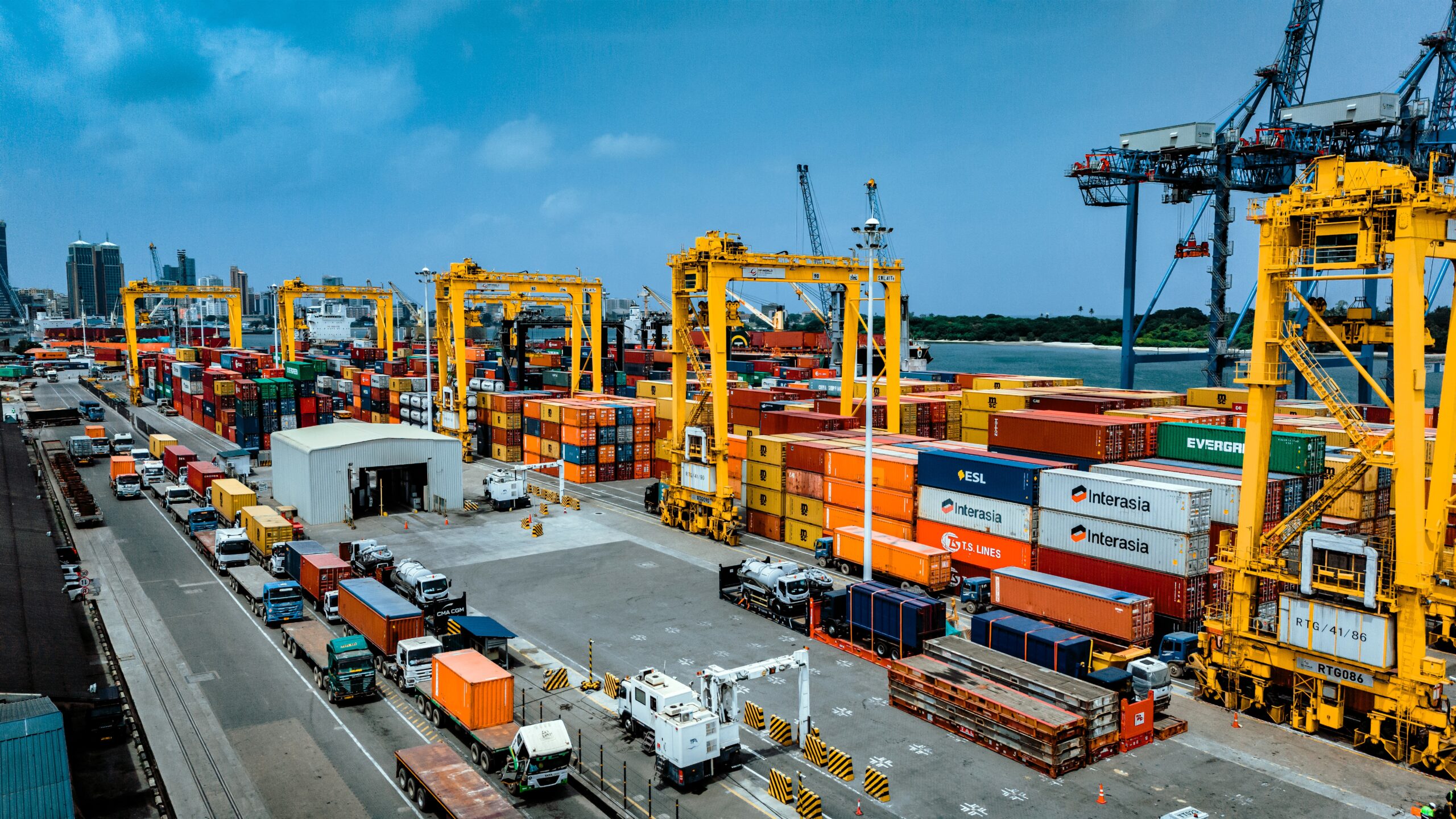
Crisis accelerated investment, and East African governments moved while the industry hesitated. Kenya’s Lamu Port, which opened in 2021 with three of its planned thirty-two berths complete, received 74 vessels in the first ten weeks of 2026, roughly a third of every call the port has logged since launch. Mombasa pulled in 60 vessels in a single fortnight against a normal-season average of 40, according to the Shippers Council of Eastern Africa. West Africa joined too: IMF PortWatch data shows that container traffic rounding the Cape has more than tripled over three years, with Lomé consolidating its position as the natural transshipment hub for Central and West Africa. As of 8 July, the same day Trump declared the deal over, the Kenya Ports Authority scheduled a combined 50 vessels across Mombasa and Lamu for the coming fortnight, describing the pipeline as evidence of “sustained maritime activity.” The traffic did not pause to read the diplomatic news.
Bloomberg’s reporting offers an important reality check. African ports captured only a sliver of the diverted cargo flows, with much of the value concentrated in bunkering and maritime services rather than container throughput. Industry analysts caution that long-term sustainability remains unproven, warning that the port risks a return to low utilisation once normal shipping patterns resume without the completion of the LAPSSET corridor. The headline vessel counts are real. Continental revolution, they are not. Not yet.
Locking in the gain
The interesting part is not the surge itself. It is what governments did with it. Kenya secured a $239 million African Development Bank commitment to complete the Mombasa–Kampala–Kigali road corridor, targeting a cut in transit time to Kigali from the current seven to ten days down to five or six. Tanzania moved on a separate track. Construction on the Tanzania–Burundi Standard Gauge Railway broke ground in August 2025, backed by $696 million in AfDB financing, targeting completion within six years and giving Dar es Salaam a direct rail link to Burundi’s mineral-rich interior. The first SGR freight services between Dar es Salaam and Dodoma launched in June 2025, the opening operational milestone of a corridor system that eventually connects the port to its landlocked neighbours..
Dar es Salaam’s DP World concession, which gives the operator full management of Terminal 1 under a 30-year BOT agreement, has cut cargo discharge times by more than 90% since April 2024, from over 300 hours to under 28 hours, while container ship waiting times at anchor have dropped from 46 days to near zero and monthly TEU throughput has doubled. Mombasa’s push is digital rather than concession-based: KPA is upgrading its Terminal Operating System and automating port gates, while DP World, which does not operate the port, launched a Port Community System in October 2025 expected to cut cargo clearance times by 30%. The port hit a record 45.45 million tonnes of throughput in 2025. Shipping agents still flag persistent vessel delays, and the Terminal OS upgrade sits at 40% completion. The work is unfinished, but the direction is fixed.
That distinction is the point. A berth absorbs an extra ship during a crisis. A railway, a customs platform, or a global terminal operator concession changes what a port can offer once shippers go back to comparing routes on cost and reliability alone.
What the next twelve months decide
Industry analysts have cautioned that neither Mombasa nor Dar es Salaam yet has the operational depth to absorb major container volumes at scale, infrastructure pledges notwithstanding. The numbers support the caution: Mombasa handled 2.1 million TEU in 2025 and does not rank among the global top 50 container ports; Dar es Salaam sits at roughly 1 million TEU, ninth in Africa. Long-term sustainability remains unproven at Lamu, and the same question applies to the larger ports further down the coast. BIMCO’s chief analyst Niels Rasmussen estimated in December 2025 that a full normalization of Suez Canal routing would cut containership demand by roughly 10%, as shorter voyages free up fleet capacity currently absorbed by the Cape detour. Fewer vessels in circulation means fewer opportunistic calls at emerging African terminals.
This is the real test for Lamu, Mombasa, Dar es Salaam and Lomé over the coming year. The Strait of Hormuz crisis bought these ports attention and capital. It did not buy them permanent demand. What happens once, and if, carriers judge the strait’s risk premium acceptable again will reveal which African gains were strategic and which were simply convenient.
The ports that spent the windfall on rail links, customs digitization and operators with global networks are betting that shippers, once exposed to a faster logistics corridor, will keep choosing it. The ports that simply enjoyed the extra vessel calls without changing anything underneath them are betting on nothing at all.
Diplomats reopened a waterway. Markets are deciding whether they reopen the trade.
The Strait of Hormuz can reopen with a signature. Trade geography cannot.