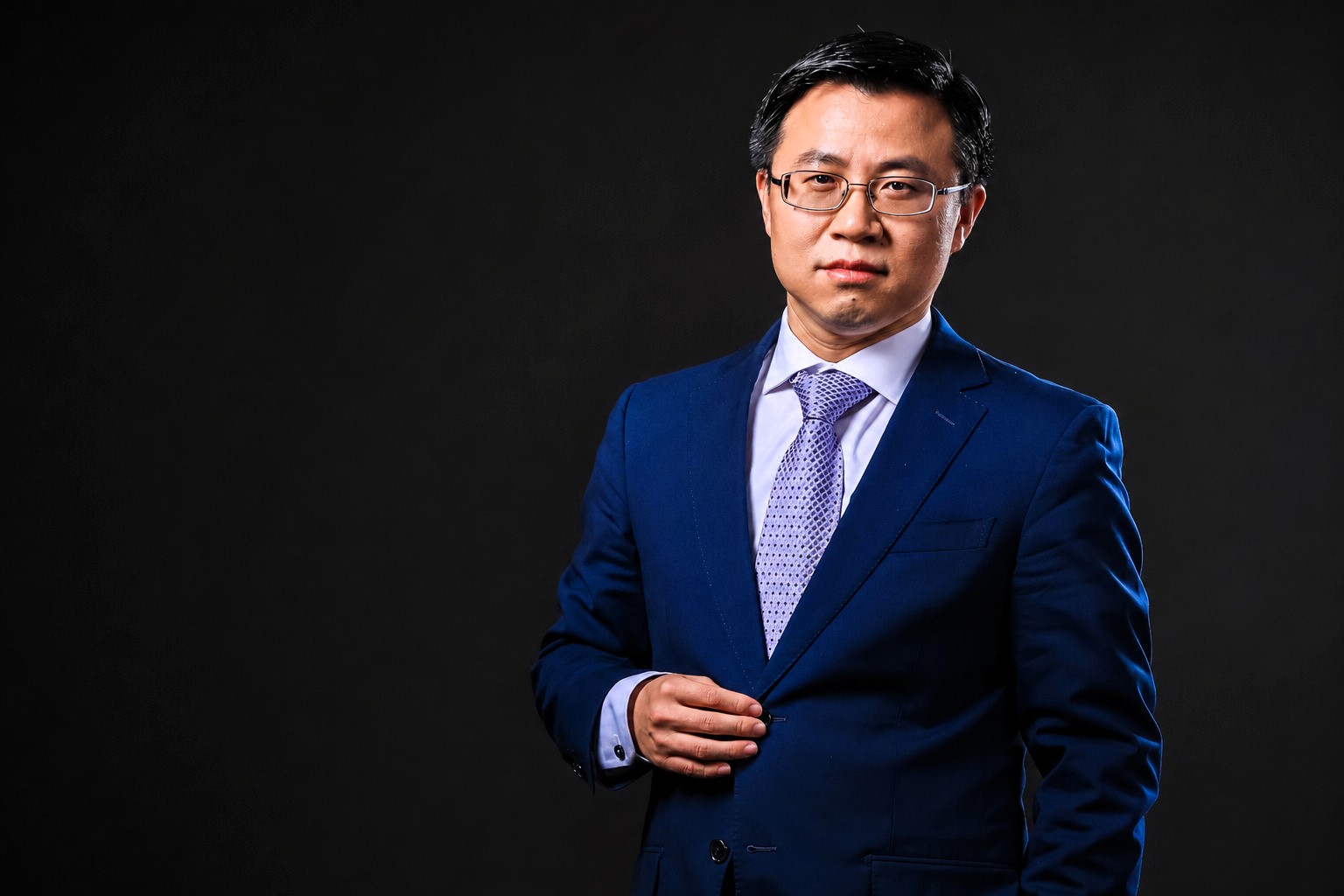

As U.S.–China relations enter a new and consequential phase, Wang Dong is among the most prominent voices articulating Beijing’s strategic thinking. Professor of International Relations at Peking University and a leading scholar of China–U.S. relations, Wang argues that the world is moving toward a new era of “reglobalization,” with China playing a central role in shaping global governance, economic integration, and digital development.
In his interview with GeoTrends, Dong outlines Beijing’s vision of a more stable and cooperative framework for managing competition with Washington, discusses the risks surrounding Taiwan and the Pacific, and explains why China sees initiatives such as the Belt and Road Initiative (BRI) while highlighting the Port of Piraeus as an example that addresses the EU’s criticism of “market distortion.”
– President Trump’s recent visit to China appeared to mark a new phase in U.S.–China relations. What, in your view, has changed most significantly in the relationship between the two countries over the past decade?
In the nine years leading up to President Trump’s visit to China, the global order underwent profound adjustments and restructuring, which laid a new foundation for the meeting between the two leaders. China’s economic and political influence on the global stage has been continuously growing, and the power dynamics and interaction environment between the two countries are no longer one-sided; instead, they present a more complex landscape of interdependence and competition.
The implications of China–U.S. relations have far exceeded bilateral considerations, becoming an important factor affecting global stability and development. This means that any significant interactions between the two countries will trigger chain reactions worldwide, particularly in geopolitical terms.
– During the summit, both sides referred to a “constructive China–U.S. relationship of strategic stability.” What does this concept mean?
The paramount political consensus achieved during the summit between President Xi Jinping and President Donald Trump is the establishment of a “constructive China–U.S. relationship of strategic stability.”
This constitutes an innovative enhancement of the conventional strategic stability framework, a conceptual construct originating from Cold War-era nuclear arms control centred on mutually assured destruction and bilateral nuclear restraint between Washington and Moscow, underpinned by four key pillars: proactive stability, healthy stability, routine stability and lasting stability.
In short, these four terms constitute China’s conceptual framework: proactive means pre-emptive risk management; healthy denotes balanced, mutually beneficial interactions; routine refers to regular institutional communication mechanisms; lasting stands for long-term sustainable bilateral stability.
– If this framework succeeds, what impact could it have on bilateral relations and the wider global economy?
Going forward, guided by the constructive China–U.S. relationship of strategic stability, bilateral economic and trade ties stand a fairly good chance of stabilising, with selective qualitative improvement limited to specific sectors such as agriculture and energy.
The two countries will shift from the previous pattern of pervasive competition and frequent frictions towards a new era of managed competition, expanded cooperation and mutually beneficial, win-win development. This transformation will introduce greater certainty into the global economy, a development of paramount importance amid prevailing global economic disarray, disrupted trade and investment flows, fractured supply and industrial chains, and muted growth worldwide.
– In what ways does Beijing seek to position itself at the centre of this new global framework?
In the context of unprecedented global change, the traditional model of globalization is facing significant challenges, while emerging economies such as China are reshaping the globalization process in new ways. “Reglobalization” refers to reforms of the globalization process led by emerging countries, represented by China, together with the resulting effects of model upgrading and expansion. China is playing a central role in the global “reglobalization” process, particularly in providing global public goods, promoting digital globalization, and fostering the coordinated development of regional integration and multilateralism.
Firstly, guided by the concept of a Community with a Shared Future for Mankind, China actively participates in global governance by providing global public goods in areas such as climate change and infrastructure development, offering Chinese solutions and wisdom to address global challenges.
Secondly, China’s strong competitive position in the global digital sphere, particularly in terms of digital technology, digital industries, and digital capabilities, provides a key driving force behind China’s leadership in “reglobalization”.
Lastly, within the framework of “reglobalization” China actively promotes regional economic integration through initiatives such as the BRI and the Regional Comprehensive Economic Partnership (RCEP), building a closer network of regional cooperation to create new drivers of growth for global trade and investment.
– During his meeting with Trump, President Xi reportedly invoked the theory of the “Thucydides Trap” — the idea that conflict can emerge when a rising power challenges an established one. Despite deep economic interdependence, what factors could still drive tensions between China and the United States in the Pacific, and how can escalation be avoided?
The core of the “Thucydides Trap” theory is that a rising power will inevitably challenge the existing hegemon, which, in turn, will respond to this perceived threat, making war unavoidable. To prevent China–U.S. relations from falling into this trap, the United States needs to correct the epistemological errors in its China policy and avoid perceiving China as an inevitable threat or competitor. Instead, it should adopt a more objective and rational perspective on China’s development and establish what I call a “new engagement consensus” based on mutual respect and equality.
Although the two countries’ economies are interdependent, a lack of such a consensus, coupled with insufficient respect for each other’s core interests, could still escalate tensions in the Pacific region.
The key mechanism for preventing escalation in China–U.S. relations and escaping the “Thucydides Trap” lies not in traditional military deterrence but in building trust and reducing the risk of miscalculation through diplomatic engagement and policy recalibration. The consensus on a constructive China–U.S. relationship of strategic stability reached during President Trump’s state visit to China represents an important evolution of the traditional strategic stability framework.
Moving beyond the minimalist objective of merely averting armed conflict, this new framework seeks to proactively manage bilateral dynamics, defuse confrontation through cooperative approaches, manage orderly competition, and accommodate legitimate differences between the two sides. It shifts China–U.S. relations from “risk-averse stability” towards “developmental stability”, laying out China’s proposed model for great-power relations.
– Could the Taiwan question ultimately become the defining point of friction between Washington and Beijing?
The Chinese leadership’s firm position on the Taiwan question stands as an unambiguous testament to China’s unwavering resolve to safeguard its national sovereignty and territorial integrity. Indeed, the Taiwan question emerged as the single most consequential issue on the agenda during President Trump’s visit to China.
China has been consistent and unequivocal on this point: the Taiwan question constitutes the foremost priority and the very core of China–U.S. relations — the absolute red line and the political bedrock upon which the entire bilateral relationship rests. It is, in the most direct sense, the defining variable in determining whether China–U.S. relations can attain what we have previously described as “constructive strategic stability.” Should the Taiwan question be managed with prudence and good faith, the broader bilateral relationship can be placed on a stable and predictable footing; should it be mishandled, the two countries risk sliding towards a confrontation neither side can afford.
On his flight back, and in an interview with Fox News, President Trump stated plainly that he had no desire to see Taiwan move towards independence. As he put it:
“I will say this: I’m not looking to have somebody go independent, and you know, we’re supposed to travel 9,500 miles to fight a war. I’m not looking for that. I want them to cool down, I want China to cool down.”
This straightforward declaration shattered what China views as the most dangerous illusion harboured by pro-independence forces and, more importantly, established a pivotal point of convergence between China and the United States: a shared commitment to opposing separatism and preserving peace and stability across the Taiwan Strait.
– Some analysts have described Taiwan as a potential geopolitical fault line of the 21st century. How do you respond to that argument?
Taiwan has been an inalienable part of China’s territory since time immemorial. From the standpoint of geopolitical reality, the Taiwan question is an issue entirely internal to China and categorically lacks the necessary preconditions to qualify as a so-called “international geopolitical fault line.” The Chinese government firmly upholds the One-China Principle and remains steadfastly committed to advancing the peaceful development of cross-Strait relations and achieving the complete reunification of the motherland.
At the present juncture, peace and stability across the Taiwan Strait unambiguously serve the fundamental interests of all parties concerned. It follows, therefore, that Taiwan not only has no grounds to evolve into the defining geopolitical fault line of the twenty-first century — it has no realistic possibility of doing so whatsoever.
Any assertion to the contrary reflects either a fundamental misreading or a deliberate mischaracterisation of what is, at its core, a matter of China’s sovereign internal affairs.
– Returning to the question of China’s expanding international role, is Beijing aiming to create a bipolar world divided between East and West, similar to the model once pursued by the Soviet Union, or is China attempting to build a different type of global order?
In 2021, I published an article in Foreign Affairs entitled “The Case for a New Engagement Consensus: A Chinese Vision of Global Order,” in which I introduced the concept of “G2RS” — a new engagement consensus premised upon a vision of the United States and China as a “G-2” of responsible stakeholders. In a “G2RS” world, China and the United States would continue to hedge against one another, yet manage their differences and compete in a calibrated, constructive and mutually accountable manner.
I have since refined this framework further, now characterising it as “a G2 nestled within a multipolarising world.” China is not seeking to construct a purely bipolar international order; rather, it is actively engaged in building a more diversified, inclusive and cooperative multilateral architecture.
In my assessment, the concept of a “Community with a Shared Future for Mankind” — championed by President Xi Jinping — most comprehensively and authentically articulates China’s vision of global order. This vision rests on three foundational pillars.
First, while fully acknowledging that nations differ in their political systems, development trajectories and cultural traditions, China advocates unconditional respect for the sovereignty of all countries and their inherent right to choose their own development path. This vision calls for an international order genuinely grounded in the principles of sovereign equality and mutual respect.
Second, the concept of a “Community with a Shared Future for Mankind” embodies the inseparable integration of responsibility and commitment. It holds that major powers bear a particular obligation to play a constructive and stabilising role in upholding the international order and addressing transnational challenges. Critically, China’s emphasis on its own responsibilities as a major power does not come at the expense of recognising the equal standing of all nations, large and small alike.
Third, the concept places enduring emphasis on long-term stability and sustainable development, advancing the principles of ecological civilisation and green development as indispensable components of a viable and just global future.
– Piraeus is China’s gateway to Europe. Today, with European scepticism on the rise, do you believe that the European component of the “Belt and Road Initiative” is losing momentum?
This is a highly perceptive observation. As a microcosm of China–Europe cooperation, the current development of the Port of Piraeus serves as a window onto the evolving trajectory of the Belt and Road Initiative (BRI) across Europe. Overall, while shifting European political tides have cooled enthusiasm for the BRI to some extent, developments at the Port of Piraeus demonstrate that, far from losing momentum, the project has emerged as a benchmark for the resilience of China–Europe cooperation, advancing along more pragmatic and localised lines.
Data shows that since COSCO Shipping took over operations in 2016, the Port of Piraeus’s annual container throughput has soared from 680,000 TEU to over 5.6 million TEU. Its global ranking has risen from 93rd to 25th, and it has become the fourth-largest container port in Europe.
The success of the Port of Piraeus stems from its operational efficiency and commercial viability. It demonstrates that the success of Chinese enterprises in Europe is a result of market forces rather than government subsidies. The case of the Port of Piraeus also helps address the EU’s criticism of “market distortion.”
Having taken root, become deeply integrated into the local economy, and developed solid market competitiveness, the Piraeus project has retained its growth momentum. Through steady evolution, it has grown into a “structural pillar” underpinning stable China–Europe relations amid volatile circumstances. This demonstrates that cooperation grounded in market principles and the core interests of all parties possesses strong inherent resilience.
– Another major issue is “digital globalization”. In areas such as artificial intelligence, data governance, and semiconductors, how can the U.S. and China move beyond pure competition and establish a framework for coexistence?
In the era of “re-globalization,” cross-border flows of intangible data factors have intensified, and “digitalization” has emerged as another defining feature of this “re-globalization” drive. Digital globalization is a complex issue that encompasses multiple dimensions, including technology, data, the economy, and governance. Artificial intelligence, data governance, and semiconductors are the core pillars of digital globalization.
China has built significant strengths in artificial intelligence, underpinned by advanced computing capabilities and a well-structured technology talent pool. The open-source strategies pursued by leading Chinese technology companies have served as a meaningful catalyst for the inclusive advancement of global AI technology — cultivating an open, collaborative, and self-reinforcing AI industry ecosystem whose influence has reverberated across the international landscape.
Looking ahead, China and the United States would be well served by establishing structured, high-level dialogue mechanisms dedicated to exchanging views on their respective AI policies, technical standards, and strategic development priorities. Such institutionalised communication would substantially enhance mutual understanding while reducing the risk of miscalculation and strategic misreading.
In parallel, deepening academic and industrial cooperation — through sustained collaboration and exchange between universities, research institutions, and industry actors in both countries — focused on non-sensitive AI applications and governance is not merely desirable but essential amid intensified technological competition and regulatory constraints.
Furthermore, in addressing shared global challenges such as climate change and public health, leveraging artificial intelligence and big data technologies as platforms for bilateral cooperation would powerfully demonstrate the untapped potential and enduring value of major-power collaboration within the context of digital globalization.
– Concluding, what will ultimately determine whether the relationship stabilises or deteriorates further?
The year 2026 marks a pivotal inflection point in the historical trajectories of both China and the United States. At this critical juncture, the two countries’ establishment of “constructive strategic stability” carries far-reaching contemporary implications. It indicates that the dominant paradigm of “strategic competition” — which defined China–U.S. relations across the “Trump 1.0” era and the Biden presidency — has been substantively superseded, reflecting a recalibration of bilateral ties towards a new development path and ushering in a historically consequential new chapter.
It follows, therefore, that the central question upon which the future trajectory of China–U.S. relations ultimately hinges — whether the relationship stabilises and matures, or deteriorates further — can be distilled into a single core framework: whether the two sides can successfully translate this emergent paradigm of “constructive strategic stability” from aspiration into durable practice. The realisation of this outcome, in turn, depends on several critical factors.
First, whether the two sides can consolidate economic and trade ties as the core stabilising pillars of bilateral relations. The agreement between the two sides to establish new mechanisms, such as a Trade Committee and an Investment Committee, is precisely aimed at creating regularised channels for managing disputes and identifying common interests.
Second, whether they can effectively manage competition in areas such as ideology, technology, and geopolitics.
Third, whether they can carry out pragmatic cooperation in areas of shared interest.
Fourth, whether they can “build bridges” to reshape people-to-people trust. People-to-people connectivity and non-governmental friendship are the fundamental factors that determine whether bilateral relations can achieve long-term and stable development. No matter how intense economic competition may be, or how complex political differences become, people-to-people exchanges and grassroots friendship can provide the strongest foundation for the relationship.
This is precisely the profound meaning of President Xi’s “four pillars” for U.S.–China relations: hope is in the people, the foundation lies in non-governmental exchanges, the future depends on the youth, and vitality thrives at the subnational level. As long as people remain closely connected and non-governmental friendship endures across generations, China–U.S. relations will be able to overcome temporary difficulties and achieve long-term, stable development.