

The U.S. and Israeli strikes devastated parts of Iran’s military and nuclear infrastructure. But rather than weakening the Islamic Republic politically, the war appears to have transformed the way it is governed. In place of a centralized, micromanaging supreme leader, a more effective collective leadership has emerged — one that is more assertive and more willing to take risks Tehran previously avoided.
The assassination of Ayatollah Ali Khamenei and the decimation of Iran’s military leadership have disrupted a system of centralized decision-making that had defined the Islamic Republic for decades. The consequences are already visible, from restrictions on shipping through the Strait of Hormuz to a willingness to escalate the regional conflict.
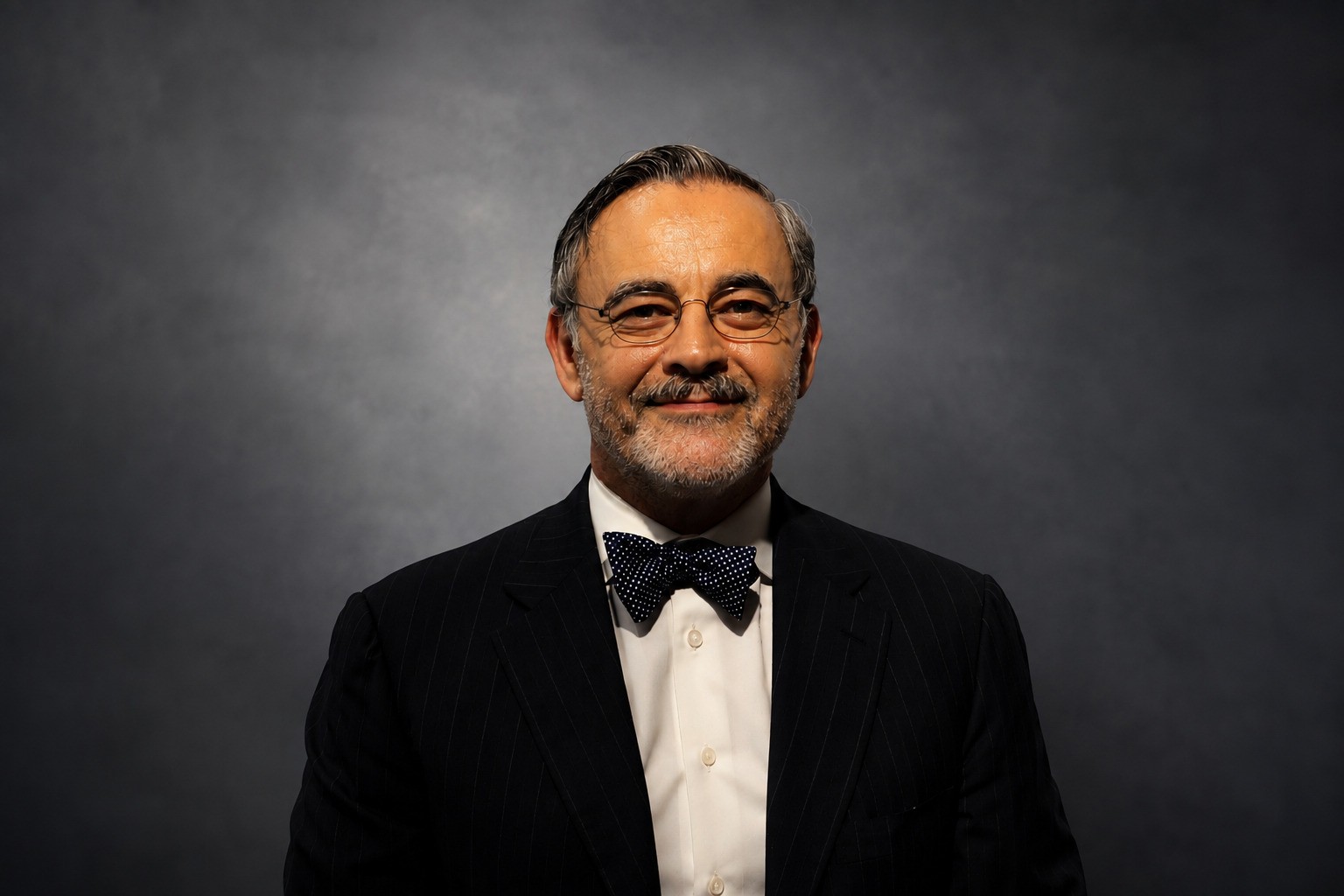
GeoTrends spoke with Ali Alfoneh, a leading expert on Iranian politics and senior fellow at the Arab Gulf States Institute, about this transformation. Alfoneh explains why war may have strengthened the regime rather than weakened it, why the IRGC has so far stopped short of seizing direct power, and why Tehran may now be betting that it can outlast Washington politically.
— In your recent “New York Times” article, “War Decimated Iran’s Leadership and Pushed Up a New Generation,” you examined the emergence of a new generation of Iranian leaders following the decimation of the country’s military leadership. What does this mean for Iran’s political future — greater radicalization or gradual modernization?
The assassination of Ayatollah Ali Khamenei has thus far produced a generally more effective, though also more assertive, Iranian foreign and security policy. Khamenei was a micromanager who interfered in nearly every government decision but avoided political responsibility by claiming that, as supreme leader, he stood above politics. When policies succeeded, he took credit; when they failed, he blamed the president.
These dynamics changed on February 28, 2026. Khamenei was assassinated, and his successor, Mojtaba Khamenei, has not been seen publicly. To fill the resulting power vacuum, a de facto collective leadership emerged, composed of the president, the parliamentary speaker, the judiciary chief, a representative of the Islamic Revolutionary Guard Corps, and a representative of the regular military.
Although the IRGC commander-in-chief and the parliamentary speaker appear to be the most influential members, Iran is now governed collectively, without the disruptive intervention of a micromanaging supreme leader who short-circuited policymaking while refusing to accept responsibility for its consequences.
That said, the regime has also become more assertive because it has shed Khamenei’s characteristic risk aversion. It has restricted shipping through the Strait of Hormuz and initiated a regional war — steps it never took under Khamenei.
— Do you see a coherent U.S. strategy behind the strikes on Iran’s strategic targets and nuclear facilities? If so, what is its ultimate objective?
U.S. behavior does not reflect coherent strategic thinking; rather, it demonstrates its absence. Washington now finds itself fighting to reopen the Strait of Hormuz, a problem that did not exist before February 28.
— There are growing concerns that strikes on Iran’s energy infrastructure and civilian facilities — including bridges — could further radicalize Iranian society. Could this paradoxically strengthen, rather than weaken, the regime’s control over society?
For the time being, the wartime state of emergency and the scarcity produced by the conflict have strengthened, rather than weakened, the regime’s control over Iranian society.
— If the IRGC is consolidating its position, is Iran moving from theocratic rule toward military dictatorship?
I believe the IRGC is consolidating its position within a regime whose commander-in-chief has not been seen since February 28 and which is engaged in an existential struggle. For now, however, the IRGC appears more interested in sharing power with civilian politicians than in assuming direct control and being held responsible for the regime’s failures.
In this respect, Iran increasingly resembles neighboring Pakistan, where the military determines strategy and distributes scarce resources, while civilian politicians are held responsible for the system’s shortcomings and may ultimately be imprisoned or assassinated.
— Reports suggest the United States has approached Iranian Kurdish groups about supporting an internal uprising. Given that ethnic minorities comprise nearly 40% of Iran’s population and only an estimated 10–15% strongly support the regime, how realistic is regime change — or even Iran’s fragmentation?
Unlike the United States, Israel has clearly defined strategic objectives. Prime Minister Benjamin Netanyahu is systematically pursuing the collapse of the regime in Tehran and the fragmentation of Iran through an Israeli- and U.S.-provoked, protracted civil war. For the time being, several external factors have prevented such a conflict.
These include Türkiye’s opposition to a Kurdish rebellion in Iran, Iranian threats to level Sulaymaniyah and Erbil, and Washington’s unwillingness to undertake a land invasion and occupation of Iran. Nevertheless, Israel may ultimately achieve its objective if Prime Minister Netanyahu once again succeeds in manipulating the U.S. President.
— Who has the greater capacity to sustain a prolonged conflict — the U.S. administration or the Iranian regime?
The two governments are operating according to fundamentally different timelines. President Trump wants to end the war as quickly as possible, whereas the regime in Tehran prefers to prolong it at least until the November 2026 midterm elections.
Tehran calculates that the Republican Party may lose its majority in the House of Representatives and perhaps also in the Senate. In Tehran’s assessment, President Trump would then face one of two choices: either he recognizes the election results and confronts impeachment by a Democratic majority, or he refuses to recognize them, citing alleged foreign interference, and plunges the United States into a constitutional crisis.
Under either scenario, Tehran expects the United States to become too consumed by its domestic political crisis to continue the war against Iran.