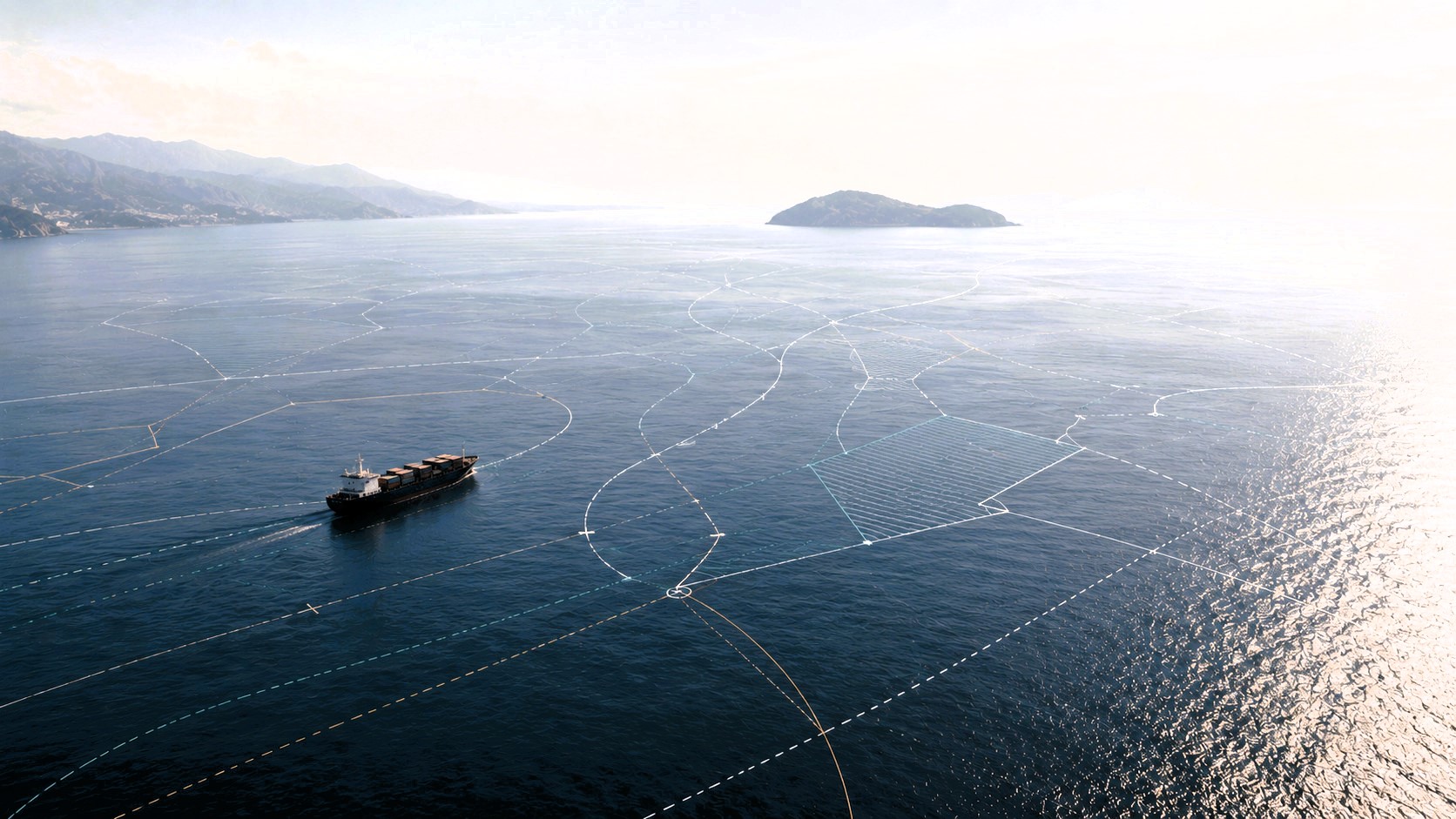

The Eastern Mediterranean is no longer arguing about influence. It is quietly redrawing who belongs inside the next trade map, and Ankara can see the lines being drawn.
Several developments over recent months have given that map firmer outlines than it has had in years: a bipartisan U.S. bill that names the region’s strategic partners and pointedly omits Türkiye; a public split between Washington’s ambassador in Ankara and a bipartisan bloc in Congress; Türkiye’s promotion of its own Iraq-to-Mediterranean corridor as a parallel rather than complementary route; and, most recently, Ankara’s move to codify its maritime claims across the Aegean and Eastern Mediterranean into domestic law. Read together, they reveal a pattern. The legal and political maps are hardening quickly. The physical infrastructure those maps are meant to govern is not. The gap between the two is where this contest will actually be decided — and where Türkiye’s anxiety lives.
The gateway act: further along than it looks
The legislative signal is real, and it is advancing. A House version of the Eastern Mediterranean Gateway Act — led by Representatives Brad Schneider (D-IL) and Gus Bilirakis (R-FL), with Chris Pappas (D-NH), Nicole Malliotakis (R-NY), and Dina Titus (D-NV) — passed the House Foreign Affairs Committee in January 2026 by a 45–2 vote, a margin that signals broad bipartisan support and keeps it on track for a possible floor vote. On 29 April 2026, Senators Cory Booker (D-NJ) and Dave McCormick (R-PA), both on the Senate Foreign Relations Committee, introduced a Senate companion. Neither chamber has yet passed the bill into law, but a 45–2 committee vote is not the profile of legislation that quietly dies.
What the bill says is unambiguous. It directs U.S. support toward ports, digital corridors, and strategic infrastructure; it reinforces the 3+1 framework (Greece, Israel, Cyprus, and the United States) and the East Mediterranean Gas Forum; and it positions the region as the Mediterranean anchor of the India–Middle East–Europe Economic Corridor (IMEC). The partners named are Greece, Cyprus, Israel, and Egypt. Türkiye is not mentioned.
The choice of partners is not arbitrary, and Senator McCormick’s framing made the logic explicit: he argued that Operation Epic Fury had shown the Eastern Mediterranean to be at the centre of the Middle East, and credited Greece, Cyprus, Israel, and Egypt with stepping up on defence, intelligence, and logistics “when it mattered most.” He cast the corridor as protection for trade and energy routes against Iran, China, “or other adversaries.” Epic Fury was the joint U.S.–Israeli military campaign against Iran launched on 28 February 2026 — paired with Israel’s own Operation Roaring Lion — in which Iranian Supreme Leader Ali Khamenei was killed in the opening hours and Iranian retaliation struck U.S. bases and Gulf states before a ceasefire took hold in early April. The bill, in that light, is part thank-you note and part forward commitment to the states Washington counted as reliable during the war.
The logic of exclusion — and its limits
Turkish commentary, led by the nationalist daily Aydınlık, has framed the bill as a warning shot and an attempt at strategic encirclement. The narrative of exclusion is real, but it is one-sided unless paired with the structural reasons Washington’s political class has cooled on Ankara.
Türkiye still possesses the Russian S-400 system that triggered its 2019 expulsion from the F-35 programme and CAATSA sanctions; under Section 1245 of the National Defense Authorization Act, it cannot rejoin unless the U.S. president certifies that the S-400 is neither possessed nor operable and poses no risk to the aircraft. It has maintained political channels with Hamas through and after October 2023. And when McCormick named the partners who “stepped up” during Epic Fury, Türkiye was conspicuously absent from a list of regional states — Greece, Cyprus, Israel, Egypt — that on most maps would naturally have included it. The framing of exclusion as pure American caprice is therefore unsustainable.
The framing of exclusion as straightforward, however, fails in the other direction. Türkiye remains a NATO member hosting Incirlik Air Base and the alliance’s southern anchor; it controls the Turkish Straits and shapes Black Sea security in ways no other actor can replicate; and its removal from the F-35 supply chain left a gap the programme has not fully closed. The clearest statement of this came not from Ankara but from Washington’s own ambassador, who has publicly argued that Türkiye remains a vital ally hosting key U.S. assets and that its continued estrangement chiefly benefits Russia. These facts do not erase the bill’s logic; they limit how far it can be pushed before it collides with American interests of a different kind — which is precisely why U.S. policy speaks in more than one voice.
Washington with more than one voice
That ambassador is Tom Barrack, who serves simultaneously as envoy to Türkiye and special envoy for Syria. At the Antalya Diplomacy Forum on 17 April 2026, he predicted the S-400 dispute would be resolved soon, said that from the president’s point of view Türkiye’s acceptance into the F-35 programme was “fine,” and called the impasse “insane,” to be solved through what he termed surgical diplomacy led by Secretary of State Marco Rubio. On Lebanon, he described the Israel–Hezbollah ceasefire as fragile — a “time out” in which the parties had proven “equally untrustworthy” — and argued that durable peace required political engagement with Hezbollah and Iran rather than the group’s elimination.
The pushback was immediate. Senator Rick Scott (R-FL) said publicly that Türkiye funds Hamas, hates Israel, and loves Russia and Iran, and that it would not be acquiring F-35s, F-16s, or other American platforms. Weeks later, around 13 May 2026, a letter began circulating in the House addressed to Rubio, asking him to clarify whether Barrack’s statements reflected official U.S. policy on both the F-35 question and the characterisation of Hezbollah, and warning of the ambiguity his remarks had introduced into positions Congress regards as settled by law. Barrack, in written answers to Fox News, framed his comments as pragmatic realism and insisted any S-400 resolution would fully satisfy Section 1245 through verifiable cessation of possession and operability.
Here the threads connect. Four of the five House sponsors of the Gateway Act — Bilirakis, Pappas, Malliotakis, and Titus, the co-chairs and vice-chairs of the Hellenic Caucus — are the same lawmakers who led the bipartisan letters in 2025 urging the administration to uphold CAATSA and reject Türkiye’s F-35 bid. The bill that omits Türkiye and the campaign to keep Türkiye out of the F-35 programme are not separate currents; they run through the same small group of legislators, working both levers at once. Against that sits Barrack, representing an executive branch personally invested in the Trump–Erdoğan channel. The divergence is less an aberration than the familiar pattern of an ambassador authorised to speak ahead of the legal envelope while Congress holds the statutory line. For Ankara, the practical effect is the same: it is unclear which Washington any given negotiation is with.
Ankara’s answer, Part one: the Development Road
Türkiye’s response runs in two directions. The first is eastward, and economic: rather than lobby its way back into IMEC, Ankara is building the alternative.
The Iraq–Europe Development Road, signed in quadrilateral form among Iraq, Türkiye, Qatar, and the UAE in April 2024, is a 1,200-kilometre highway-and-rail corridor running from the Grand Faw Port near Basra to the Turkish border at Faysh Khabur and onward into Türkiye’s network. Its headline cost is roughly $17 billion, though analysts widely expect the full figure to exceed $24 billion. First-phase freight capacity, targeted for 2028, is projected at 3.5 million containers and 22 million tonnes annually, rising toward 40 million tonnes by 2050. Backers argue it could cut Gulf-to-Europe transit by 10 to 15 days against the Suez route. Crucially, this is no longer paper alone: enabling works on the southern segment have begun, though the Grand Faw Port at its head remains only partly built.
The energy dimension sharpens the contrast. Türkiye has moved to terminate its 1973 Kirkuk–Ceyhan crude agreement — effective July 2026, in the wake of a 2023 international arbitration award of about $1.4 billion against Ankara — and to replace it with something larger. The old pipeline carried a capacity of roughly 1.5 million barrels per day; the line Ankara now proposes, running from Basra north through Haditha to Silopi and deliberately bypassing the Kurdistan Region, has been floated at around 2.2 million barrels per day. The timing is not incidental. During the Hormuz disruption of the Iran war, Türkiye’s energy minister pressed Baghdad on exactly this point, arguing that the closure proved Iraq needed an alternative outlet it had long been offered and declined.
The obstacles, however, are at least as concrete as the asphalt. Iraqi political stability is contingent; Iranian-aligned militias have credible disruption capacity; the Grand Faw Port remains unfinished; and the 2028 first-phase target looks ambitious against the project’s actual pace. IMEC, the corridor the Gateway Act exists to support, is in no better shape. It was announced in September 2023; the Gaza war began three weeks later and has degraded almost every Mediterranean–Israeli assumption underpinning it. The bill is advancing in part because IMEC needs reviving, not because it is thriving.
Ankara’s answer, Part two: the sea itself
The second direction points west, into the contested waters of the Eastern Mediterranean — and it is not about trade but about sovereignty. In mid-May 2026, Turkish officials and government-aligned media signalled that Ankara is preparing a unified “Blue Homeland” (Mavi Vatan) bill to consolidate its maritime claims across the Black Sea, Aegean, Marmara, and Eastern Mediterranean into a single legal framework, vesting much of the executing authority in the presidency. The draft was presented publicly on 12 May at a press conference hosted by Ankara University’s maritime-law centre, and Bloomberg reported the codification plan days later. No official text has yet been released — a point Athens has been careful to stress — so the bill is best read as an announced intention, not an enacted law.
Its relevance here is direct. The Blue Homeland doctrine, developed by Turkish admirals Cihat Yaycı and Cem Gürdeniz in the mid-2000s and pursued since 2019 through the Türkiye–Libya maritime memorandum and annual naval exercises, advances claims that overlap with the exclusive economic zones asserted by Greece and Cyprus — the very states the Gateway Act elevates. Türkiye is not a party to the UN Convention on the Law of the Sea and rejects the full maritime entitlement of Greek islands. Codifying that doctrine would put Turkish domestic law into direct contradiction with the maritime space on which the EastMed gas architecture and IMEC’s Mediterranean leg depend.
The Greek response is the tell. Rather than react to an unconfirmed draft, Athens has chosen deliberate restraint: the foreign ministry spokesperson said on 20 May that Greece would assess the bill only once an official text existed, calling the Blue Homeland a baseless doctrine and the Aegean’s legal regime entirely clear, while insisting the country was prepared for any scenario and still favoured dialogue. Foreign Minister George Gerapetritis had already warned that escalation was possible depending on the bill’s content; the national security council convened; and Greece is widely reported to be weighing a long-deferred extension of its Aegean territorial waters from six to twelve nautical miles — the step Ankara’s parliament declared a casus belli in 1995 and has never rescinded. That Athens is managing tempo rather than reacting in kind matters: it means even this front is not yet running away.
What is actually hardening
The temptation in writing about corridors is to treat them as zero-sum. They rarely are. Parallel routes routinely coexist — the Suez Canal never ended the Cape route, and multiple gas pipelines into Europe operate side by side because redundancy is the point. If both IMEC and the Development Road reach even partial operation, the likeliest outcome is not that one wins and the other vanishes, but that capital, contracts, and political attention split, and that the split becomes a durable feature of regional politics.
So the thing genuinely hardening right now is not steel; it is law and alignment. Washington is naming partners and advancing legislation. Ankara is answering not only with a corridor but with a statute of its own, drawn over the same sea. Both capitals are committing maps to paper far faster than either can commit infrastructure to the ground — and maritime claims are the part that can harden fastest of all, because a continental-shelf assertion needs only a coordinate list and a navy, not a decade of capital. The one restraint on that acceleration is political will: Greece’s choice, for now, to refuse the bait of an unpublished draft.
That is the distinction Ankara is reading, and producing. Not exclusion from a finished system — Türkiye is too large and too embedded in NATO logistics for that — but the closing of a default, which it is trying to pre-empt by drawing its own lines first. For two decades Turkish foreign policy could assume it would be the Mediterranean anchor of any Western-backed corridor. That assumption is what is being withdrawn, and the Blue Homeland bill is the attempt to replace a lost default with a legal claim. Geography does not become destiny: corridors reverse, terminals retool, alliances reconfigure, and statutes can be challenged. But the legal substrate on which the next round of bargaining happens is being poured first — by both sides — and it sets faster than concrete.
Sources
- Booker & McCormick Introduce Bipartisan Legislation to Advance U.S. Energy, Security, Economic Interests, and Partnerships in the Eastern Mediterranean — Office of Senator Cory Booker, 29 April 2026 (Senate bill; McCormick “Operation Epic Fury” quote; named partners).
- Schneider Bill to Anchor Eastern Mediterranean in U.S. Foreign Policy Advances — Office of Rep. Brad Schneider, 21 January 2026 (House bill passes Foreign Affairs Committee 45–2).
- Eastern Mediterranean Bill with India-connectivity focus advances in US Congress — Prokerala, 22 January 2026 (45–2 vote; sponsors; floor-vote prospects).
- H.R.3307 — Eastern Mediterranean Gateway Act, 119th Congress — Congress.gov (bill text and IMEC purpose).
- Operation Epic Fury — U.S. Department of War, 28 February 2026 (launch date and objectives).
- Ayatollah Ali Khamenei is dead, state news media confirms — CNBC, 1 March 2026 (primary confirmation of Khamenei’s death; Netanyahu’s claim of the strike).
- 2026 Iran war — background overview of the campaign and regional retaliation (secondary/context only).
- US ambassador says Turkey must meet strict S-400 conditions for return to F-35 program — Turkish Minute, 23 April 2026 (Barrack’s “fine”/“solved soon” quotes; Section 1245).
- US Amb. Tom Barrack defends remarks on Israel, Hezbollah and Turkey F-35 sales — Fox News, April 2026 (Barrack’s defence; Rick Scott response).
- US envoy Barrack calls Türkiye’s F-35 exclusion ‘insane,’ predicts deal within months — Türkiye Today, April 2026 (Antalya remarks; “time out”/“equally untrustworthy”).
- US Lawmakers Demand Clarification From Marco Rubio Over F-35s to Turkey — Greek Reporter, 13 May 2026 (the Rubio letter).
- Pappas Leads Bipartisan Group in Opposing Unlawful Sale of Fighter Jets to Turkey — Office of Rep. Chris Pappas (Hellenic Caucus opposition; overlap with Gateway Act sponsors).
- What to Know About the Iraq-Turkey-Europe Development Road Project — Wilson Center (cost: $17bn, likely $24bn+).
- The Importance of the Al-Faw Port and the Iraqi Development Road Project — MEPEI (capacity figures: 22m tonnes by 2028, 40m by 2050).
- Iraq launches $17 billion road and rail project to link Asia and Europe — Reuters (via Inquirer) (Grand Faw Port “halfway to completion”; corridor scope).
- Türkiye set to end 1973 oil pipeline agreement with Iraq by 2026 — Türkiye Today, July 2025 (termination; $1.4bn arbitration award).
- Turkey proposes Iraq oil pipeline extension as Hormuz crisis bites — Middle East Eye, March 2026 (Bayraktar’s Hormuz argument; Basra route).
- Strategic Recalibration: Turkey’s Decision to End the Oil Agreement with Iraq — Future Center, August 2025 (proposed 2.2m bpd Basra–Silopi pipeline).
- Türkiye codifies sphere of influence in Blue Homeland — Daily Sabah, 17 May 2026 (draft bill presented 12 May; presidency authority; Montreux framing; pro-government Turkish source).
- Bloomberg: Turkey Moves to Legislate ‘Blue Homeland’; Athens Dismisses Expansionist Narrative — To Vima, 18 May 2026 (Bloomberg report; Turkish DM Güler; Athens response).
- ΥΠΕΞ για «Γαλάζια Πατρίδα»: Η Ελλάδα είναι έτοιμη για κάθε ενδεχόμενο — Ta Nea, 20 May 2026 (official Greek MFA position; spokesperson Lana Zochiou; “baseless doctrine,” no ICJ prospect, dialogue stance).
- Turkey’s Maritime Strategy Heightens the Risk of a New Eastern Mediterranean Crisis — FDD, 13 May 2026 (doctrine overlaps Greek/Cypriot EEZs).
- Blue Homeland (Mavi Vatan) — background on the doctrine, its origins (Yaycı, Gürdeniz), the 2019 Libya MoU, and naval exercises (context only).