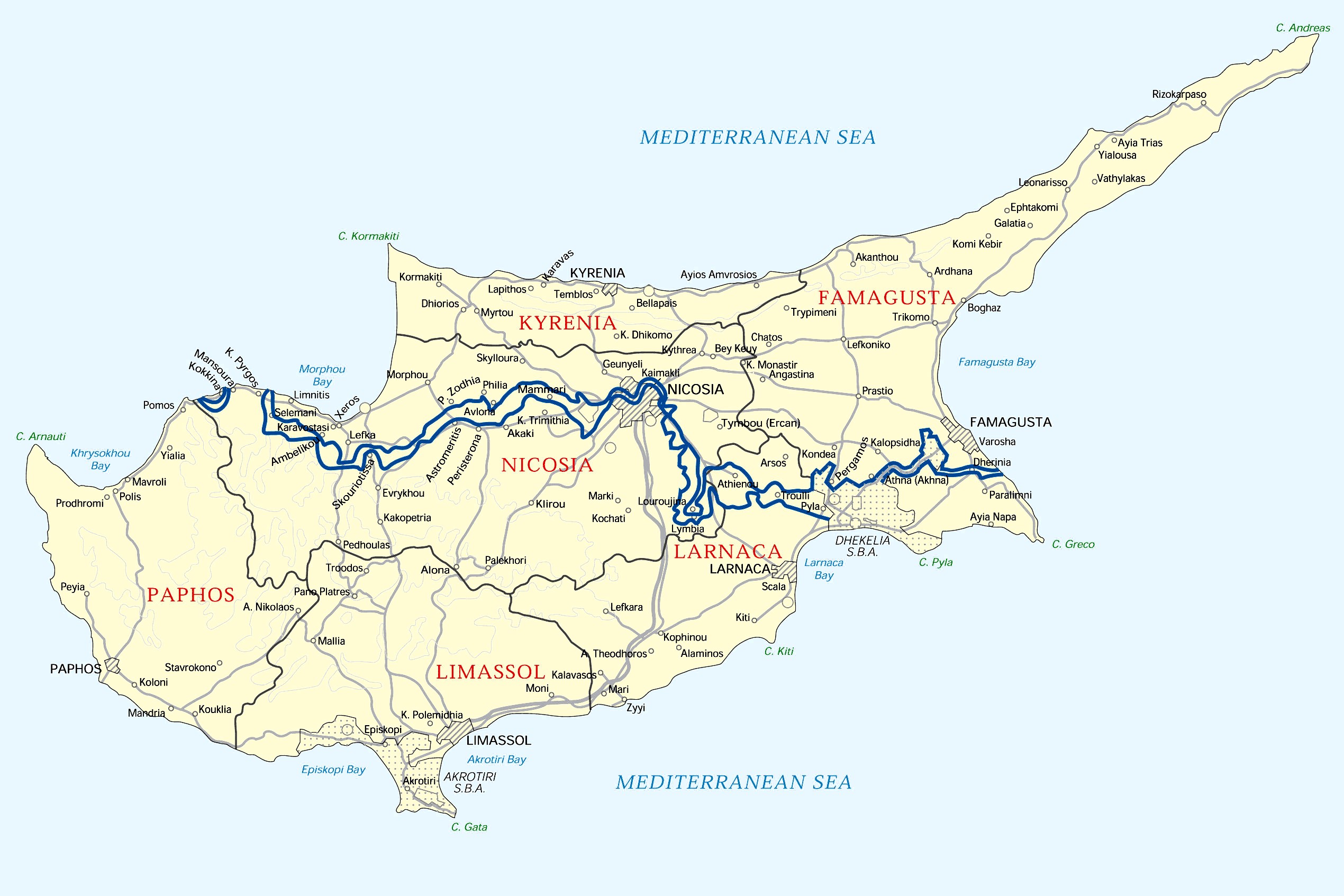

The geopolitical landscape of Cyprus is undergoing a dramatic shift, with the United States and Israel allegedly orchestrating a new grand strategy that could alter the region’s balance of power. According to Prof. Dr. Anıl Çeçen, an expert in Politics and Public Law, Cyprus is being positioned as a key battleground for global capital movements, energy control, and military dominance.
A trap for both Turks and Greeks
Speaking to haberglobal.com.tr, Prof. Çeçen warned that a significant geopolitical trap is being set, not only for Turkish Cypriots but also for Greek Cypriots. A crucial aspect of this strategy, he suggests, is the push to integrate the Greek Cypriot Administration into NATO. While this may appear to be a strategic advantage for Greece and the Greek Cypriots, it may ultimately lead to forced migrations.
“If the Greek Cypriot side joins NATO, the Greeks will be forced to migrate to the Greek islands, while the Turks will be pushed into Anatolia,” says Prof. Çeçen.
A key motivation behind these maneuvers, he argues, is the desire of global Zionist financial elites to relocate Switzerland’s banking system to Cyprus. This move is reportedly justified by the rise of right-wing governments in Europe and the potential for global conflicts.
A plan for chaos and conflict
According to Prof. Çeçen, the broader objective of this project is to dismantle Switzerland’s neutrality and divide its cantons among Germany, France, and Italy. Cyprus, in turn, would become a new financial hub controlled by Anglo-American and Israeli interests.
“This plan will eventually trigger chaos and conflict, as both Greeks and Turks will resist such imposed changes,” he explains.
The creation of instability in Cyprus would serve as a means to consolidate foreign control over the island’s strategic location and energy resources.
Cyprus: A “Second Israel”?
One of the most alarming aspects of Prof. Çeçen’s analysis is the idea that Cyprus could gradually transform into a Jewish-dominated island. He claims that Israeli citizens have been purchasing large tracts of land on both the Greek Cypriot and Turkish Cypriot sides. This trend, coupled with increasing U.S. military presence and bases, points toward a long-term plan of establishing Cyprus as a second home for Jewish settlers.
“Cyprus has, in a sense, become the Jews’ second homeland,” he states.
Furthermore, he argues that the U.S. does not want the emergence of a unified European superstate, particularly in light of the rising right-wing movements across the continent. By turning Cyprus into a heavily militarized banking hub, the global elite seeks to undermine Europe’s economic independence.
Energy as the catalyst for conflict
Another crucial dimension of this geopolitical struggle is Cyprus’ role in the Eastern Mediterranean energy equation. The island’s central location places it at the heart of major oil and natural gas reserves, making it an attractive target for powerful global actors.
Prof. Çeçen suggests that the U.S., Israel, and Britain aim to control these energy resources by fostering a climate of instability and conflict. The goal is to eliminate any local opposition to their energy ambitions while simultaneously weakening the influence of Russia and regional players.
The “One-State” Trap
According to Prof. Çeçen, the long-term strategy for Cyprus involves imposing a single-state model that would dilute the Turkish Cypriot presence. The integration of the Greek Cypriot side into NATO is just the first step.
Once this happens, he claims, efforts will be made to pacify Turkish influence in the region. This will pave the way for large-scale Jewish settlements and increased U.S. military control.
Annexation: The last resort for Turkey?
As a potential countermeasure, Prof. Çeçen suggests that Türkiye must consider annexing the Turkish Republic of Northern Cyprus (TRNC) if a forced unification plan is imposed.
“If the Greek Cypriot side is accepted into NATO and a single-state model is forced upon Türkiye, then as a last resort, the TRNC must be connected to Türkiye, similar to Hatay’s annexation,” he asserts.
To protect Turkish sovereignty in the region, he recommends that the TRNC Assembly officially request annexation, which would then be approved by Turkish Cypriots.
A call for regional alliances
In addition to direct action on Cyprus, Prof. Çeçen argues that Türkiye should follow in the footsteps of its founder, Mustafa Kemal Atatürk, by building regional alliances. He calls for the establishment of a new Sadabad Pact or a “Central States Community” to enhance regional security and prevent external interventions.
By forming strategic partnerships with neighboring countries, Türkiye could create a security umbrella that includes Cyprus, thereby countering imperialist designs on the island.