
The New Pact on Migration and Asylum, proposed by the European Commission in September 2020 and subject to intense negotiations over the subsequent years, aims to create a more comprehensive and coordinated approach to migration management across the European Union (EU). On 10 April 2024, the European Parliament voted in favour of the new migration rules, which were adopted by the EU Council on 14 May 2024. Given the disproportionate burden borne by frontline states, particularly in the European South, the key questions remain: How fair and equitable is this new agreement for the Mediterranean countries, which are most directly affected by irregular migration flows? Is the New Pact expected to redress the imbalance between the disproportionate distribution of illegal arrivals among Member States, or will it further exacerbate the feeling of injustice experienced by frontline states due to their geographical location? Has Brussels received the message after the unsuccessful implementation of the Dublin Regulation, or does it continue to turn a blind eye, guided by the powerful member states of Central Europe, which show an atypical intolerance towards the dialogue for equal burden sharing?
This analysis examines the fairness and equity of the New Pact, focusing on its impact on frontline EU states such as Greece, Italy, Spain, Malta, and Cyprus. By assessing its burden-sharing mechanisms, responsibility allocation, solidarity provisions, and broader geopolitical implications, the article aims to determine whether the Pact adequately addresses the challenges faced by southern European nations or whether it continues the pattern of asymmetric responsibilities in migration management.
Policy analysis
Core principles and objectives of the New Pact
The New Pact on Migration and Asylum introduces key policy shifts, aiming to balance responsibility and solidarity among member states while enhancing the efficiency of asylum and return procedures. The main pillars (or the so-called building blocks) include:
● Mandatory pre-screening procedures: The New Pact introduces standardized procedures for identifying migrants and asylum seekers at the EU’s external borders, aiming to streamline registration and security checks. This involves biometric data collection, fingerprinting, and initial vulnerability assessments conducted within a maximum timeframe of five days. These procedures aim to distinguish between genuine asylum seekers and individuals liable for return at an early stage, reducing the strain on national asylum systems. Furthermore, the framework enhances interoperability between EU databases, ensuring a more coordinated approach to migration management across member states.
● Accelerated border procedures: The New Pact seeks to expedite asylum decisions through streamlined border procedures that aim to reduce processing times while ensuring fair treatment. Under the new framework, individuals arriving at EU borders will undergo rapid initial assessments within five days, followed by an accelerated asylum procedure lasting up to 12 weeks for cases deemed manifestly unfounded or requiring immediate resolution. This approach aims to prevent prolonged stays in border facilities, mitigate overcrowding, and improve efficiency in handling claims.
Additionally, provisions have been introduced to enhance legal safeguards, including access to legal counsel and appeal mechanisms. The implementation of these measures varies across member states, and concerns remain about the potential for increased administrative burdens on already overstretched national asylum systems.
Furthermore, the Pact encourages greater reliance on digital case management systems and cooperation with EU agencies such as the European Union Agency for Asylum (EUAA) to promote harmonized standards across member states.
● Revised Dublin system: The New Pact marks a significant departure from the original Dublin Regulation, which primarily assigned responsibility for asylum applications based on the country of first entry into the EU. Under the revised framework, responsibility-sharing is intended to be more balanced through a mechanism that considers various factors, including family links, prior residence, and past visa issuance. Although this reform is intended to ease the burden on frontline states, it still maintains an obligation for first-entry countries to process a large share of asylum applications.
Additionally, the new system introduces a structured relocation mechanism, which allows other member states to contribute through asylum seeker transfers or financial and operational support. However, concerns persist over the enforceability of these measures, as previous relocation initiatives have often faced resistance from certain EU states, leading to inconsistent implementation across the Union.
● Solidarity mechanisms: The New Pact introduces a novel approach to solidarity among EU member states, replacing the rigid quotas of previous frameworks with a more flexible model. This mechanism allows states to contribute in various ways, including the direct relocation of asylum seekers from frontline states, financial contributions to support affected countries, or providing operational and logistical support such as personnel deployment, infrastructure development, and technological assistance. While this system is designed to ease the burden on heavily impacted nations, it remains voluntary, meaning wealthier northern European countries can opt to provide financial aid instead of hosting migrants. Critics argue that this flexibility dilutes the principle of burden-sharing and may lead to uneven commitments, leaving frontline states like Greece, Italy, and Spain to bear the majority of arrivals.
Furthermore, concerns persist regarding the enforcement of solidarity pledges, as previous EU relocation schemes have often suffered from lackluster participation and political resistance from member states opposed to migrant distribution.
● Enhanced return policies: The New Pact places significant emphasis on streamlining return procedures for rejected asylum seekers by fostering stronger cooperation with third countries. This involves a more robust implementation of readmission agreements, ensuring that origin and transit countries comply with the EU’s return policy framework. Additionally, the Pact promotes a more coordinated and digitized Return Border Management System, enhancing the tracking and execution of deportation procedures. Another key element is the establishment of EU Return Coordinators, whose role is to facilitate the enforcement of return decisions across all member states, improving efficiency and reducing bottlenecks in national asylum systems. The Pact also incorporates incentives for voluntary return programs, providing reintegration assistance for returnees in their home countries to make returns more sustainable. However, concerns remain regarding the reliance on third-country cooperation, as past experiences with North African and Middle Eastern states have demonstrated inconsistencies in compliance and enforcement.
While these principles aim to create a more efficient and predictable system, their actual impact on frontline states remains contested.
The responsibility-solidarity balance
One of the most contentious aspects of EU migration policy has been the disproportionate responsibility placed on frontline states under the Dublin Regulation. The New Pact seeks to modify this structure but maintains key elements that may continue to disadvantage the European South.
● Continued primary responsibility: Despite reforms, countries of first entry still bear the initial burden of processing migrants and asylum seekers.
● Solidarity mechanisms with loopholes: While the Pact introduces mandatory solidarity, it allows alternative forms of support, such as financial contributions or operational assistance, instead of actual relocations.
● Insufficient relocation quotas: The absence of clear, enforceable relocation commitments means frontline states may still face disproportionate asylum pressures.
Implications for the Mediterranean frontline states: The case of Greece
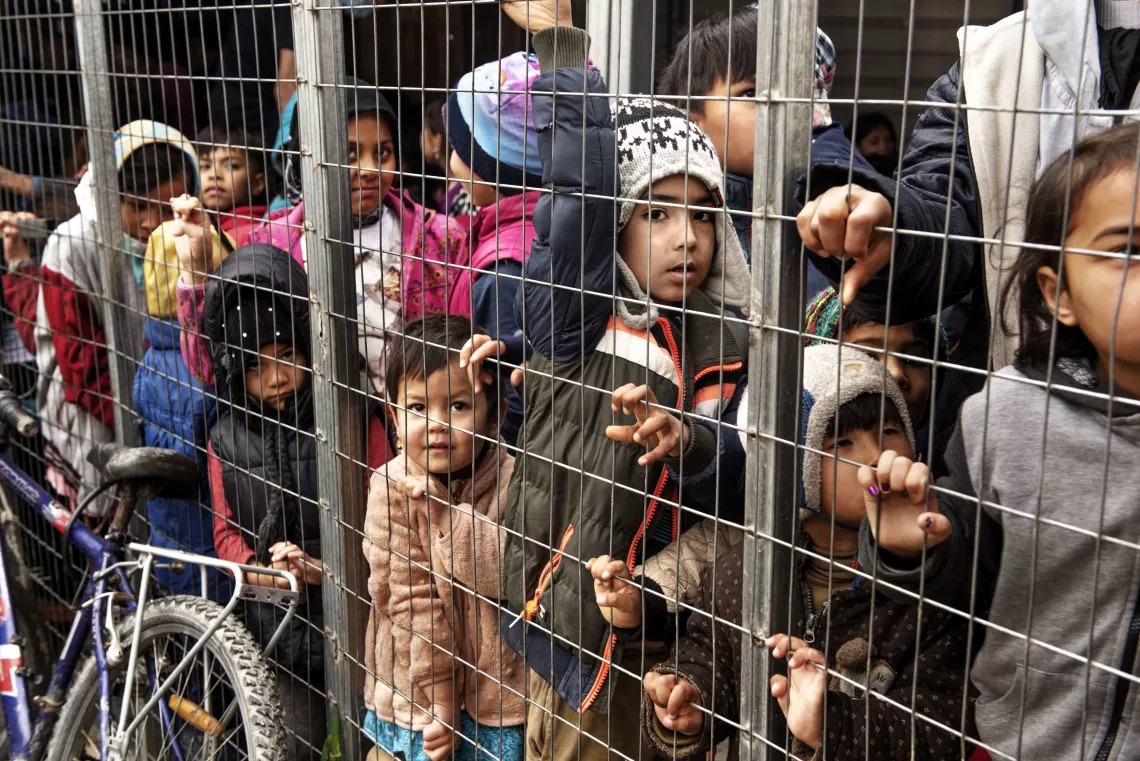
Greece has long been a focal point of migration pressures due to its geographic position along key irregular migration routes, particularly as a primary entry point for migrants crossing from Türkiye via the Aegean Sea and through land borders in the Evros region. This strategic location has resulted in a persistent influx of asylum seekers, placing significant strain on the country’s reception facilities, asylum system, and border control mechanisms. The Greek islands, especially Lesvos, Chios, Samos, and Kos, have been particularly impacted, often operating beyond their intended capacity, resulting in persistent overcrowding and inadequate living conditions. Moreover, Greece has faced ongoing challenges related to migration governance, including balancing EU policy obligations, managing increased border security measures, and ensuring compliance with international human rights standards against a backdrop of fluctuating geopolitical tensions with neighbouring third countries.
Despite EU financial support and operational assistance through agencies such as Frontex and EUAA, Greece has repeatedly called for a more equitable distribution of asylum seekers across member states, emphasizing the need for mandatory relocation quotas rather than voluntary solidarity contributions. The New Pact, while proposing new measures to enhance cooperation, remains contentious in Greece as policymakers and civil society groups debate whether it sufficiently alleviates the disproportionate pressure placed on its borders.
The New Pact’s provisions have mixed implications for Greece:
● Stricter border controls: The Pact enhances screening and border procedures, aligning with Greek priorities for stronger migration management.
● Increased EU financial support: Greece stands to benefit from expanded funding mechanisms for migration infrastructure.
● Border procedure acceleration: The Pact’s faster asylum processing could benefit Greece’s efficiency and may also result in increased deportations of those who are not eligible for asylum.
● Limited reduction in responsibility: While the Pact offers flexible solidarity, it does not eliminate Greece’s primary responsibility for processing arrivals.
● Prolonged processing times: The risk of long-term border detention could lead to overcrowding in reception centers.
● Uncertain relocation commitments: Lack of concrete relocation guarantees means Greece may continue to struggle with high numbers of asylum seekers.
● Externalization risks: A stronger focus on return and readmission agreements may lead to increased reliance on third countries (e.g. Türkiye) to contain migration flows.
● Potential increased arrivals: Stricter border policies in other Mediterranean states (e.g. Malta and Italy) may redirect migration routes towards Greece.
So, how fair and equitable is the new agreement for the European South?
The New Pact on Migration and Asylum represents a significant step towards a more structured and coordinated EU approach to migration governance. However, the fairness and equity of the New Pact on Migration and Asylum remain subjects of intense debate. While the Pact provides for financial and logistical support to frontline states and attempts to establish a framework for shared responsibility, its implementation continues to fall short of true burden-sharing. The reliance on voluntary relocation commitments, the persistence of first-entry processing obligations, and the flexibility granted to wealthier EU nations to opt out of direct migrant hosting undermine the equitable distribution of responsibilities.
For the Mediterranean states, the Pact offers incremental improvements but does not fundamentally alter the structural imbalances of EU migration policy. Greece, Italy, Spain, Malta, and Cyprus remain under disproportionate pressure to manage migration flows, often with insufficient support from their northern European counterparts. While the Pact introduces stronger border controls and more efficient asylum processing mechanisms, concerns persist over the long-term sustainability of these measures and their impact on human rights.
In the absence of binding and enforceable relocation quotas, increased financial and infrastructural assistance, and a truly common migration framework, Southern European member states are likely to continue shouldering a disproportionate share of the EU’s migration burden. Addressing these disparities requires a deeper commitment from all member states to uphold the principles of solidarity and fairness in migration governance.
References & Sources
● European Commission, 2025 – Policy framework on the New Pact on Migration and Asylum.
● European Parliament, 2025 – Legislative updates on EU migration governance.
● EU Agency for Fundamental Rights, 2025 – Analysis of migration policy impact on human rights.
● Frontex, 2025 – Data on irregular migration trends in the Mediterranean.
● European Council, 2025 – Negotiation outcomes on migration burden-sharing.
● UNHCR, 2025 – Reports on asylum processing and refugee protection in EU frontline states.
* Marios Kaleas is General Director of the Greek Asylum Service and Deputy Chair of the Management Board of the European Agency for Asylum (EUAA).