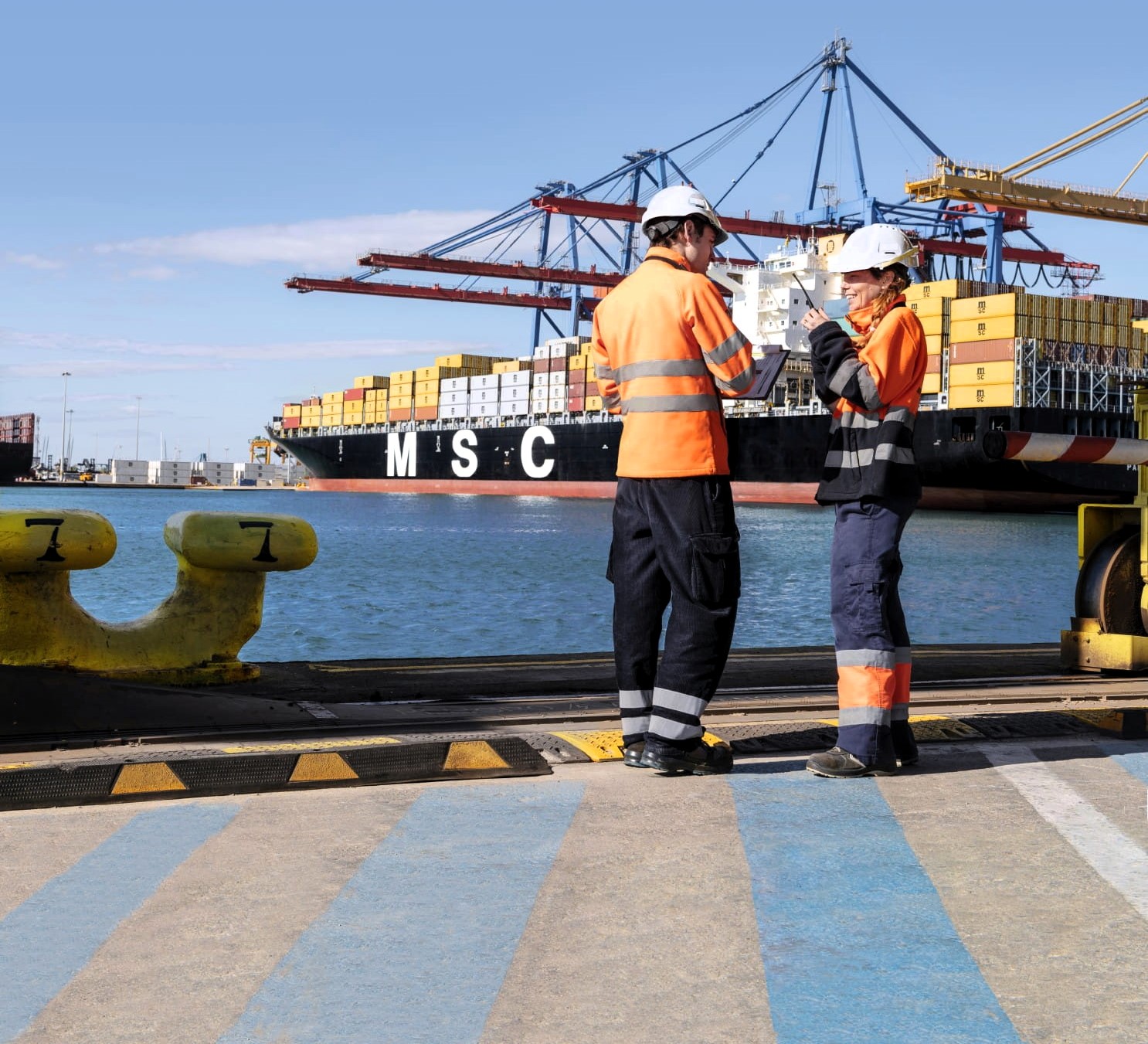

Gianluigi Aponte founded MSC in 1970 after purchasing a single ageing German cargo vessel — a purchase that, with the benefit of hindsight, looks less like a business decision and more like the opening move of a very long game.¹ Today, MSC Aponte operates at a scale that is difficult to overstate: a fleet approaching 1,000 vessels, a presence spanning more than 150 countries, and a network that touches over 500 ports worldwide. It carries roughly 30 million TEU annually and controls close to one-fifth of global container capacity. Since overtaking Maersk after the pandemic, it holds the unchallenged title of the world’s number one container line.
The critical distinction, however, is structural. Unlike Maersk, MSC carries no stock market listing, publishes no quarterly results, and answers to no external shareholders. In an industry where visibility is often mistaken for strength, MSC Aponte has spent five decades proving the opposite. While listed rivals must justify every acquisition to analysts and pension funds, MSC moves with a speed and discretion that publicly traded companies simply cannot replicate. This opacity is not an oversight. It is a competitive weapon.
The transfer of ownership from Gianluigi to his son Diego, Group President, and daughter Alexa, Group Chief Financial Officer, took place in the final quarter of 2025. The public announcement, issued on 13 April 2026, was characteristically minimal. A company spokesman declined to elaborate beyond the official statement. Gianluigi retains the role of Executive Chairman. The family said precisely as much as it needed to, and nothing more.
Three chokepoints, one family
The timing of that public announcement deserves careful examination. MSC Aponte now sits at the centre of three simultaneous geopolitical pressure points — not of equal weight, but of different kinds: one structural, one a volatility shock, and one a test of political mediation. Together, they define the inheritance.
First, the Panama Canal. In March 2025, MSC joined a BlackRock-led consortium to acquire 43 ports across 23 countries from Hong Kong conglomerate CK Hutchison, in a deal valued at $22.8 billion. The transaction included the Balboa and Cristobal terminals on either side of the canal. Washington applauded; Beijing did not. China’s antitrust regulator launched a comprehensive review, officials framed the sale as a national betrayal, and by late 2025 the deal had become a fully-fledged geopolitical stand-off with no clear resolution in sight.⁷ In February 2026, Panama annulled the Hutchison concessions entirely and placed the terminals under interim control of Maersk and MSC. COSCO responded by suspending operations at Balboa, a move widely interpreted as calculated pressure rather than commercial logic. This is where MSC crossed a line it cannot easily uncross: from operator to geopolitical actor.
Second, the Strait of Hormuz. The conflict involving the United States, Israel, and Iran has effectively closed the waterway, trapping vessels and cargo in the Persian Gulf. MSC’s expansion into oil tankers — which many observers read at the time as tactical diversification — proved exceptionally well timed, with tanker rates surging precisely as the blockage deepened.
Third, the transatlantic trade relationship. Diego Aponte helped broker the November 2025 White House meeting of Swiss business leaders that produced a preliminary agreement to reduce the 39% tariffs Washington had imposed on Switzerland. This positions him as a credible intermediary between European capital and the Trump administration — but also as a visible actor in a political arena where alignments can unravel as fast as they form.
The capital that cannot be inherited
Here is the question that no succession statement can answer: how much of MSC Aponte’s power resided in the person of Gianluigi Aponte himself, rather than in the institution he constructed around him?
The Panama deal offers a useful reference point. According to reporting based on a Wall Street Journal investigation, it was Gianluigi who initiated informal discussions with Li Ka-shing — the Hong Kong billionaire and founder of CK Hutchison, one of the world’s largest port operators — before the geopolitical context had even emerged. Their relationship predated the crisis by years. That kind of relational capital — built across five decades of quiet deal-making, personal trust, and a carefully maintained reputation for discretion — does not appear on any balance sheet, and it does not transfer with ownership documents.
Diego has demonstrated genuine capability. His appointment as Group President in 2014 preceded a period of extraordinary fleet expansion, and his role in the Swiss-US tariff discussions points to political instincts well beyond the transactional. Alexa, meanwhile, has managed the financial architecture of a rapidly expanding global portfolio under considerable market pressure. In the shipping dynasties of East Asia and Northern Europe, the CFO role has historically carried more structural power than its title suggests — the person who decides which acquisitions get funded shapes strategy more durably than the person who announces it. Diego is MSC’s face to the world; Alexa, by all structural logic, may be its spine. Yet she remains almost entirely absent from international media. Whether this reflects a deliberate division of roles within the family or a more structural asymmetry in how MSC Aponte presents itself to the outside world is unclear. The company, consistent with long-standing practice, offers no guidance.
A model built for a world that no longer exists
MSC Aponte’s entire business logic rests on a specific version of globalisation: open sea lanes, relatively frictionless trade, and the freedom to serve all major economies without declaring allegiance to any of them. That version of the world is under considerable strain, and the strain is structural rather than cyclical.
The U.S.–China trade dispute has not simply raised tariffs. It has begun to fragment the underlying infrastructure of global commerce, from port ownership to shipping alliances to the financing of maritime assets. The pressure on CK Hutchison was not merely commercial; it was political, and it forced every major shipping group to reveal whose side it was on. MSC’s alignment with the BlackRock–Washington axis positions it as a beneficiary of American strategic priorities, for now. But China remains the world’s largest exporting nation and a fundamental source of container volumes for any carrier that aspires to genuine global scale. Antagonising Beijing is a cost, not a neutralised variable. MSC’s own investment decisions suggest an awareness of precisely this exposure: the group has taken a stake in Italian rail operator Italo, launched MSC Air Cargo, and pushed aggressively into integrated land-side logistics. These moves read less as opportunism and more as a hedge against a world in which pure container shipping may no longer be sufficient. When the world’s largest container line diversifies away from containers, it is worth asking what exactly it knows.
The deeper question, therefore, is not whether Diego and Alexa are competent. By all available evidence, they are. The question is whether the model their father built — one that derived its strength precisely from its studied refusal to take sides — can survive a world that increasingly demands exactly that. The more neutral MSC becomes in intent, the more political it becomes in effect.
The statement that said everything by saying nothing
One sentence in the official announcement deserves considerably more attention than it received: Gianluigi Aponte will remain as Executive Chairman. In corporate governance terms, this means the founder retains strategic oversight at the precise moment when strategic judgment faces its sternest test. Whether this reflects confidence in the next generation, or a more cautious reading of the current environment, the company will not say. Both interpretations are plausible; neither is fully comfortable.
MSC’s communications culture has always favoured silence over disclosure. Gianluigi built his empire on the principle that the less said, the more powerful. The paradox is that as MSC grows too large to ignore, that silence becomes harder to sustain. The Panama deal forced a visible geopolitical alignment. The Hormuz crisis made the tanker strategy legible to rivals and regulators alike. And the tariff diplomacy has placed Diego on a public stage from which there is no discreet exit.
The Aponte family built their empire by being everywhere and belonging nowhere. The next generation inherits a world in which that position may no longer exist.
The question is no longer whether MSC Aponte can move the world’s cargo. It is whether it can continue to move between its rival centres of power without being claimed by one of them.