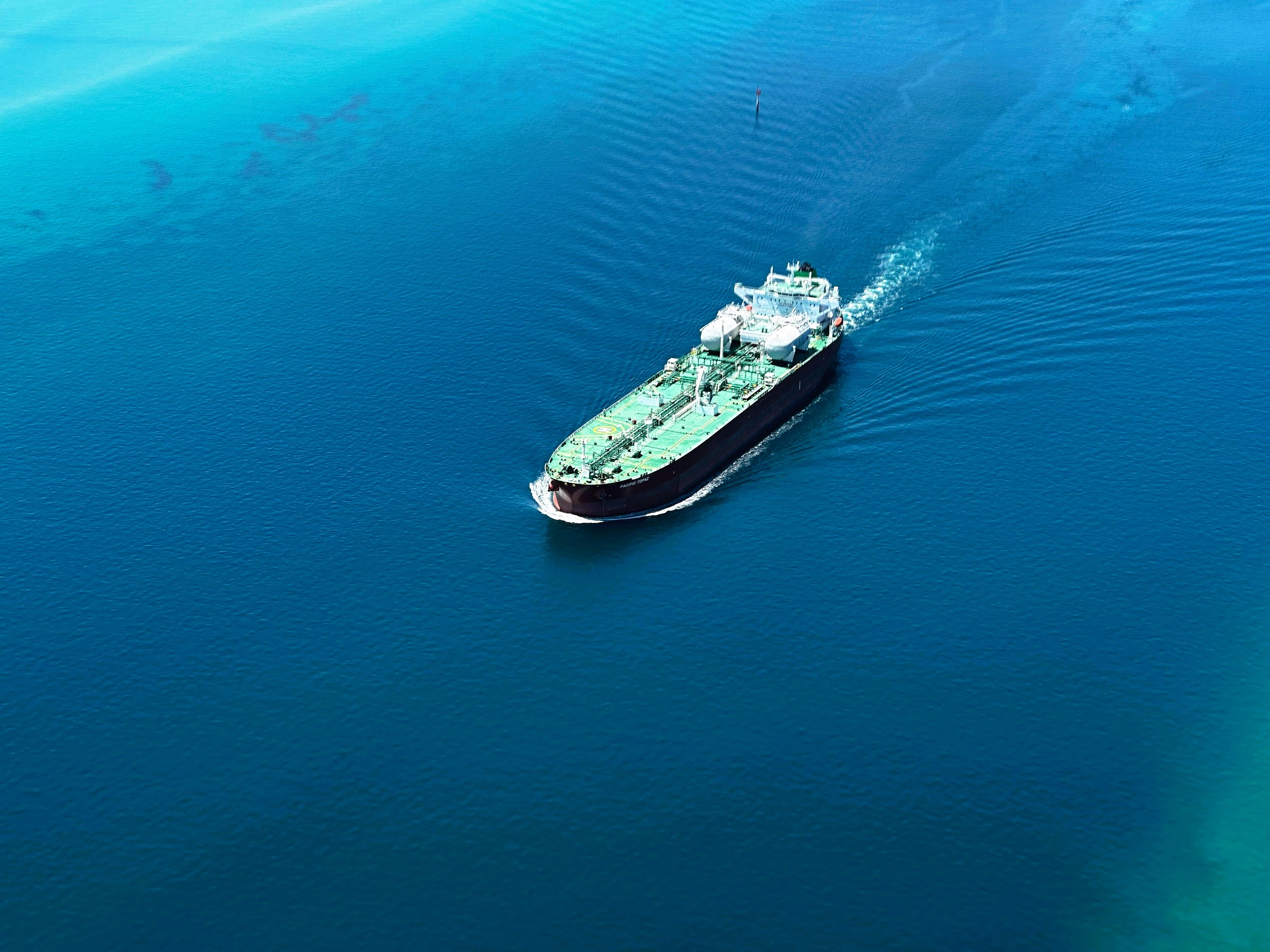

In the global energy system, geography is power. Nowhere is that power more concentrated, or more contested, than in the Strait of Hormuz. When this artery constricts, the world holds its breath. When it flows, economies function. In early March, one company decided to become the pulse.
In the early hours of March 4th, the VLCC Shenlong did something remarkable. As the two-million-barrel tanker, part of George Prokopiou’s Dynacom fleet, approached the world’s most volatile maritime chokepoint, its Automatic Identification System (AIS) signal went dark. For five days it became a ghost — its journey a black hole in global tracking data as it navigated the gauntlet. On March 9th, it reappeared in the Gulf of Oman, its mission complete.
This was not a lone vessel. It was the vanguard of a five-tanker operation. This single, audacious transit was more than just a profitable venture; it was a masterclass in the principles that underpin Greek shipping dominance.
The architect of calculated risk
To understand the voyage, one must understand the man. George Prokopiou is a titan of the industry who has built a multi-billion-dollar empire by consistently identifying opportunity within crisis. His decision was not born of recklessness, but of a cold, hard calculation.
The logic is ruthlessly simple. When risk perception peaks, the majority flees, creating a vacuum in transport capacity. Yet, the world’s thirst for oil does not abate. Consequently, charterers pay an extraordinary premium for an owner with the nerve to service that demand. With VLCC spot rates from the Middle East surging to record highs — with one fixture reported at $436,000 per day — the financial incentive was monumental, representing a figure many times greater than normal market rates.
This is not an isolated tactic but a recurring theme in the Hellenic shipping model. It echoes the strategies of past Greek titans like Aristotle Onassis, who famously ordered supertankers during the Suez Crisis. When others see an insurmountable obstacle, the architects of the Greek tanker empire see a tollbooth.
────────────────────────
WHY HORMUZ MATTERS
The Strait of Hormuz is the world’s most important energy chokepoint.
Oil flow: ~21% of global petroleum liquids consumption transits the strait daily.
LNG trade: Approximately one-third of global Liquefied Natural Gas (LNG) trade passes through it.
Geography: At its narrowest point, the shipping lane is only two nautical miles wide in either direction.
Dependence: It is the primary maritime route for the crude oil exports of Saudi Arabia, the UAE, Kuwait, Iraq, and Iran.
────────────────────────
The domino effect: from a single tanker to the global oil price
The Shenlong’s voyage is a catalyst with the potential to recalibrate the entire energy transport market. Its success serves as a proof of concept, a powerful signal that the route, while hazardous, is not impassable.
The mechanism is a straightforward cascade:
- Breaking the psychological barrier: Prokopiou’s success demystifies the risk.
- Incentivising others: The extraordinary profits act as a powerful lure for other operators.
- Increasing transport supply: As more vessels re-enter the route, the acute shortage of available tankers will ease.
- Pressuring freight rates: An increase in the supply of ships will inevitably exert downward pressure on freight rates.
- Impacting the end price: A reduction in transport costs will, in due course, translate into a lower cost per barrel.
This illustrates the outsized influence that the Greek-owned fleet can wield over the world’s most critical commodity markets.
The DNA of the apex predator
Prokopiou’s venture is the quintessential example of why Greek maritime power remains dominant. This is not hyperbole; it is a matter of immense capital value. As of early 2026, the Greek-owned fleet is the second most valuable in the world, with a total asset value of approximately $171 billion, commanding a vast and modern armada of tankers, bulkers, and LNG carriers. This financial might is the result of a specific, repeatable formula on full display in the Hormuz operation:
- Counter-cyclical investment: The defining trait is to buy when others are selling and to enter markets when others are panicking.
- Agility and speed: As a private entity, a company like Dynacom can make a billion-dollar decision with a speed impossible for a bureaucratic corporate behemoth.
- Mastery of risk: The model is not about avoiding risk, but about pricing it correctly. The voyage was not a blind leap but a meticulously calculated exposure.
This operational philosophy is precisely why, in an era of unprecedented uncertainty, Greek shipping dominance is not just maintained, but fortified. While others are paralysed by analysis, the Greek owner acts.
The Shenlong did more than deliver oil. It delivered a reminder: in global shipping, the bold still set the price of risk.