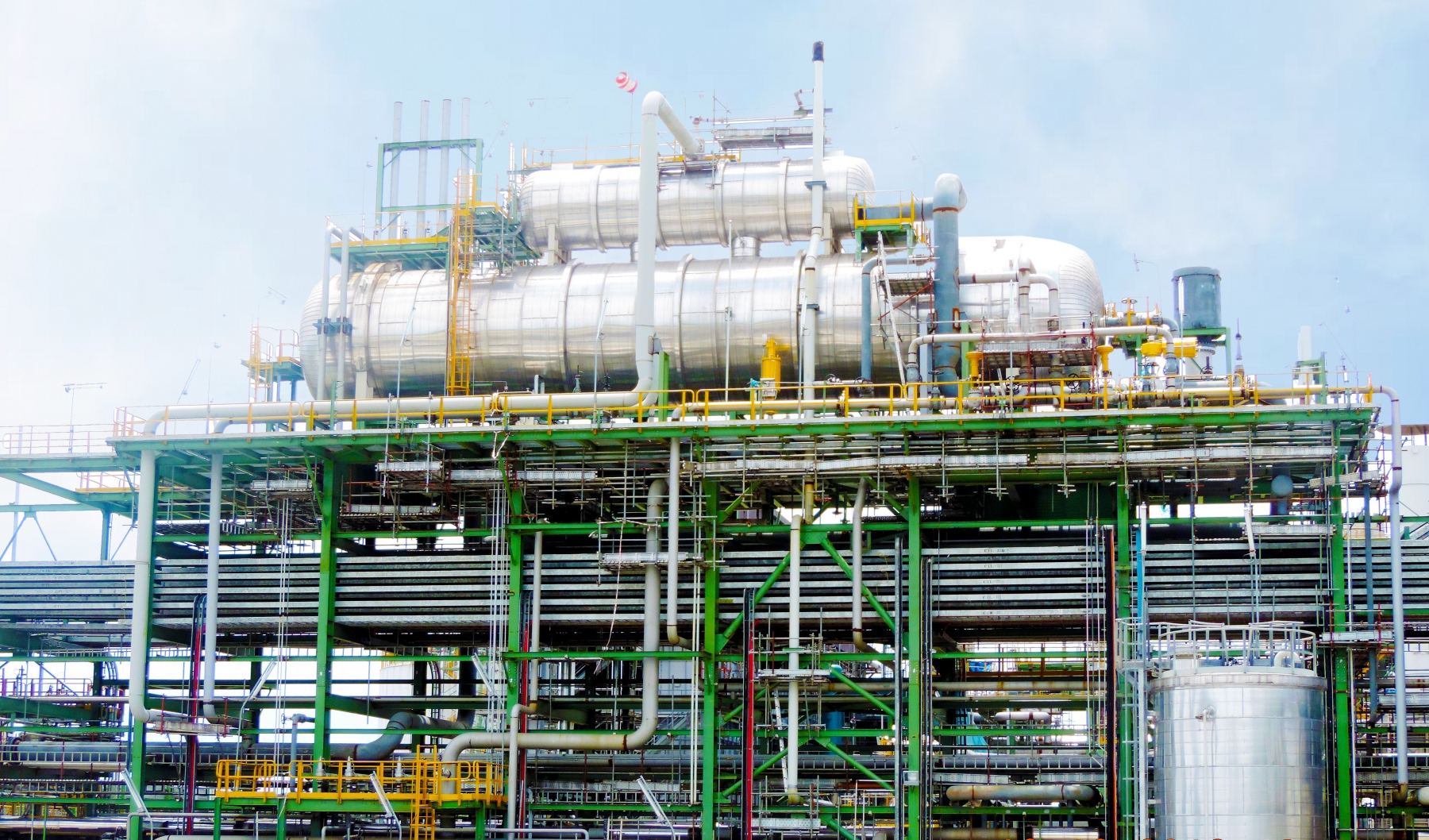

The initial spark for this inquiry was a rather pointed observation regarding Nigeria’s oil economy: a nation with reserves four times those of the UK and Norway combined, yet consistently dead in the water when it comes to domestic refining capacity. This is not merely a failure of local governance; it is the inevitable outcome of a global economic structure designed to prevent the conversion of raw material wealth into sovereign industrial power. The core thesis is simple: the current global order, maintained by both established Western powers and the emerging Eastern giant, actively works to keep African industrialization a theoretical exercise, ensuring the continent’s primary function remains that of a resource supplier.
This analysis will proceed with the precision of a master mariner plotting a course, examining the three primary forces that conspire to maintain this status quo: the structural mechanisms of the West, the transactional model of China, and the corrosive effect of internal governance failures.
The Western mechanism: Suppressing value capture
The post-colonial relationship between Africa and the West (the United States and Europe) is defined by a sophisticated set of economic and political instruments that replace the direct control of the colonial era. These mechanisms ensure that the highest value-added stages of production—refining, manufacturing, and financial services—remain firmly anchored in Western ports of call.
The financial anchor: Structural adjustment
The most damaging tool deployed by the West was the Structural Adjustment Programme (SAP), enforced by the International Monetary Fund (IMF) and the World Bank, institutions where Western influence is paramount. Throughout the 1980s and 1990s, African nations seeking financial assistance were compelled to adopt policies of austerity, privatisation, and market liberalisation.
The effect was immediate and devastating. State-owned enterprises, including the four Nigerian refineries, were starved of capital, mismanaged, or sold off. This forced liberalisation led not to competition, but to de-industrialisation, as nascent local industries could not withstand the sudden influx of cheap, finished goods from abroad. Consequently, the capacity to refine oil, process minerals, or manufacture goods was systematically dismantled, cementing the continent’s reliance on imports. This was not a friendly hand; it was a financial chokehold.
The trade asymmetry: A rigged market
Furthermore, the global trade system, heavily influenced by the EU and the U.S., operates on a principle of deliberate asymmetry. Trade agreements are structured to favour the export of unprocessed raw materials from Africa, which face low or zero tariffs. In stark contrast, finished or semi-finished goods—the very products that would drive African industrialization—are met with higher tariffs and complex non-tariff barriers upon reaching Western markets.
This tariff escalation acts as a powerful disincentive for any African entrepreneur or government attempting to move up the value chain. Why invest billions in a refinery or a processing plant if the resulting product is immediately penalised in the world’s largest consumer markets? The system is rigged, and the rules are clear: Africa ships the ore; the West keeps the factory.
The green transition: A new resource grab
The latest iteration of this structural control is the “Green Transition.” As the world shifts towards electric vehicles and renewable energy, the demand for critical minerals—cobalt, lithium, copper, and rare earths—found predominantly in Africa, has skyrocketed. The EU, through its “Energy Transition Diplomacy,” is now scrambling to secure supply chains, signing agreements with nations like the Democratic Republic of Congo and Zambia.
However, these agreements, much like the oil contracts of the past, focus almost exclusively on the extraction and export of raw, unrefined minerals. There is little genuine commitment to funding the massive energy and infrastructure projects required for local processing. The West needs the minerals for its own green factories; it has no intention of allowing Africa to build the factories itself. The name of the game has changed from black gold to green minerals, but the underlying dynamic remains precisely the same.
The Pan-African reality: Beyond nigeria
While Nigeria’s oil paradox is a potent symbol, the failure to capture value is a pan-African affliction, affecting every major resource. The continent is riddled with examples where the political will to enforce local processing has been crushed by external pressure or internal corruption:
- The DRC’s cobalt: Despite holding the world’s largest reserves of cobalt, the Democratic Republic of Congo has consistently failed to enforce local refining, ensuring that the vast majority of the mineral—essential for the global battery supply chain—is shipped out as raw ore.
- Zambia’s copper: Zambia, a major copper producer, has struggled to move beyond basic smelting. Even with government policies aimed at local value addition, large foreign-owned mining companies have little incentive to sell to local processors, preferring to export the semi-finished product to their own international value chains.
- Guinea’s bauxite: Guinea, possessing immense bauxite reserves, has repeatedly failed to compel mining companies to build the promised alumina refineries. The government’s recent attempts to enforce these contracts, including revoking concessions, underscore the intense resistance to any move that threatens the established, profitable export of raw materials.
The counter-narrative: Dependent successes
To preempt the predictable counter-argument—“What about the success stories?”—it is necessary to examine the few industrial bright spots, such as Morocco and Ethiopia. These are not systemic reversals, but rather dependent successes that highlight the fragility of industrialization when it is not sovereignly driven.
- Morocco’s automotive sector: Morocco has successfully positioned itself as a major automotive manufacturing hub, primarily serving the European market. However, this success is fundamentally dependent on European firms (Renault, Stellantis) and European export markets. This dual dependence makes the sector highly vulnerable to international fluctuations and policy changes in Brussels, confirming a reliance on external demand and capital rather than a self-sustaining industrial base.
- Ethiopia’s light manufacturing: Ethiopia and Rwanda have been lauded for their growth in light manufacturing (textiles, garments). Yet, this model is often predicated on low wages and is highly sensitive to external shocks, such as foreign exchange shortages needed to import necessary components, and geopolitical instability. These are successes of assembly and export, not of deep, sovereign African industrialization that controls the entire value chain from raw material to final product.
The Chinese factor: New patron, old model
In contrast to the West’s policy of structural suppression, China has adopted a strategy of transactional engagement, primarily through massive infrastructure investment under the Belt and Road Initiative (BRI). China’s approach is often lauded for building the roads, railways, and ports that Africa desperately needs—infrastructure that the West neglected for decades.
External power engagement models and their impact on African industrialization
| Actor | Primary mechanism of engagement | Impact on African industrialization |
|---|---|---|
| Western Powers (U.S. / EU) | Financial conditionality (IMF / World Bank), trade asymmetries, tariff escalation | Structural suppression: Systematically dismantled domestic industrial capacity through austerity and privatization, while penalizing value addition via unequal trade regimes. |
| China | Debt-financed infrastructure investment, resource-backed loans, limited technology transfer | Extractive bypass: Constructed infrastructure optimized for raw material extraction and export, with minimal integration into local manufacturing ecosystems. |
While China’s capital is a welcome alternative to Western conditionalities, its model is not a benevolent one; it is a pragmatic, self-serving strategy that inadvertently reinforces the raw material dependency.
The debate over “debt-trap diplomacy” is often hyperbolic, yet the reality is that Chinese loans, while funding necessary projects, have dramatically increased the debt burden of many African nations. More critically, the Chinese model prioritises the efficient extraction of resources for its own industrial machine. The infrastructure built—rail lines to ports, power plants for mines—is primarily geared towards facilitating the export of raw materials to China, not necessarily towards fostering local manufacturing hubs.
Furthermore, Chinese investment is frequently criticised for its limited use of local labour and its reluctance to transfer core technology, ensuring that the highest-value knowledge remains in Beijing. China is a new patron, offering a different kind of deal, but the fundamental contract remains: Africa provides the raw materials; the external power provides the finished goods. This is not a liberation; it is merely a change of flag on the vessel.
The internal complicity: The resource curse
No analysis of this structural failure is complete without addressing the internal dynamics. External forces can only succeed if they find a willing, or at least compromised, partner on the ground. This is where the “Resource Curse” and poor governance become the essential local component of the neo-colonial structure.
The vast, easily accessible wealth generated by crude oil or mineral exports creates a perverse incentive structure. Governments rely on these export revenues rather than on a broad tax base, eliminating the need for accountability to the citizenry. This revenue stream fuels endemic corruption, which acts as a powerful internal barrier to African industrialization.
The failure of the Nigerian state refineries, for instance, was not solely due to IMF policy; it was driven by decades of gross mismanagement, corruption, and political patronage that bled the facilities dry. This internal rot ensures that any attempt to build sovereign capacity is immediately undermined by those who benefit from the existing, highly profitable import/export arbitrage.
Political instability and a lack of the rule of law further compound the problem. Long-term industrial projects, such as refineries or petrochemical complexes, require decades of stable policy and secure property rights. When political risk is high, capital—both local and foreign—will not commit. The result is a vicious cycle: external powers exploit the instability, and the instability prevents the creation of the robust institutions necessary to resist external exploitation.
Full steam ahead on the wrong course
The Nigerian paradox is a stark reminder that the post-colonial economic order is not one of free markets, but of managed dependency. The West, through its financial and trade architecture, systematically suppresses African industrialization, while China, through its debt-financed infrastructure, merely offers a more efficient means of extraction. Both models converge on the same outcome: Africa remains the quarry.
The only true course correction lies in the continent’s ability to enforce the political will necessary to demand local value addition, regardless of the cost or the “concerns” raised in London, Washington, or Beijing. This requires a decisive break from the current course, employing specific tools of economic sovereignty:
- Export bans on raw materials: Following the lead of nations like Malawi and Nigeria, imposing outright bans on the export of unrefined minerals to force foreign investors to build local processing facilities.
- Mandatory local refining quotas: Enforcing strict quotas, similar to those adopted in Tanzania and South Africa, that mandate a minimum percentage of raw materials must be processed domestically before export.
- Leveraging AfCFTA: Utilizing the African Continental Free Trade Area (AfCFTA) as a unified regional bloc to negotiate with external powers from a position of strength, creating a massive internal market that rewards local manufacturing.
Until African nations seize control of their own value chains—from the oil well to the petrol pump, from the mine to the battery factory—they will remain sailing full steam ahead on a course plotted by others.
The time for polite requests is over; the time for demanding sovereign industrial capacity is now.