
The revised U.S. Trade Representative’s port fees targeting Chinese shipbuilding have sparked an unexpectedly robust counteroffensive from Beijing, setting the stage for yet another economic showdown with potentially disastrous consequences for American consumers.
American retreat disguised as strategic recalibration
The maritime industry breathed a collective sigh of relief as the U.S. Trade Representative unveiled its revised, significantly watered-down port fee structure targeting Chinese-built vessels. What began as a sledgehammer approach has transformed into something closer to a gentle tap on the wrist.
Originally, any shipowner with Chinese-built vessels in their fleet would face penalties for every U.S. port call—regardless of which ships actually docked. The revised plan now allows shipowners to neatly segregate their Chinese-built vessels for non-U.S. trade while using their other ships for American ports without penalty—essentially creating a massive loophole that renders the restrictions nearly toothless.
For vessels that do fall under the fee structure, the penalties have been dramatically reduced: charges apply only once per U.S. visit rather than at each port stop, with a maximum of five charges annually per vessel. The fees are now scaled based on vessel size, removing the disproportionate burden on smaller ships that characterized the original proposal.
This remarkable retreat barely disguises Washington’s realization that its initial approach was economically self-destructive—a fact Beijing has wasted no time pointing out.
Beijing’s diplomatic broadside
China’s Ministry of Commerce wasted no time issuing a stern rebuke following the announcement of the maritime restrictions. In classic diplomatic parlance that barely conceals its contempt, the ministry urged Washington to stop “shifting responsibilities” and correct its “erroneous” practices immediately.
The statement’s carefully crafted warning that “China will closely monitor relevant developments from the U.S. side and will resolutely take necessary measures to safeguard its interests” represents standard diplomatic fare that nevertheless carries the unmistakable scent of potential retaliation.
The Foreign Ministry added further pressure, with spokesperson Lin Jian emphasizing that imposing port fees and tariffs on cargo handling facilities would ultimately hurt American interests, disrupt global supply chains, and increase inflationary pressures in the U.S.—a pointed reminder that economic warfare often produces friendly fire casualties.
Industry giants show their teeth
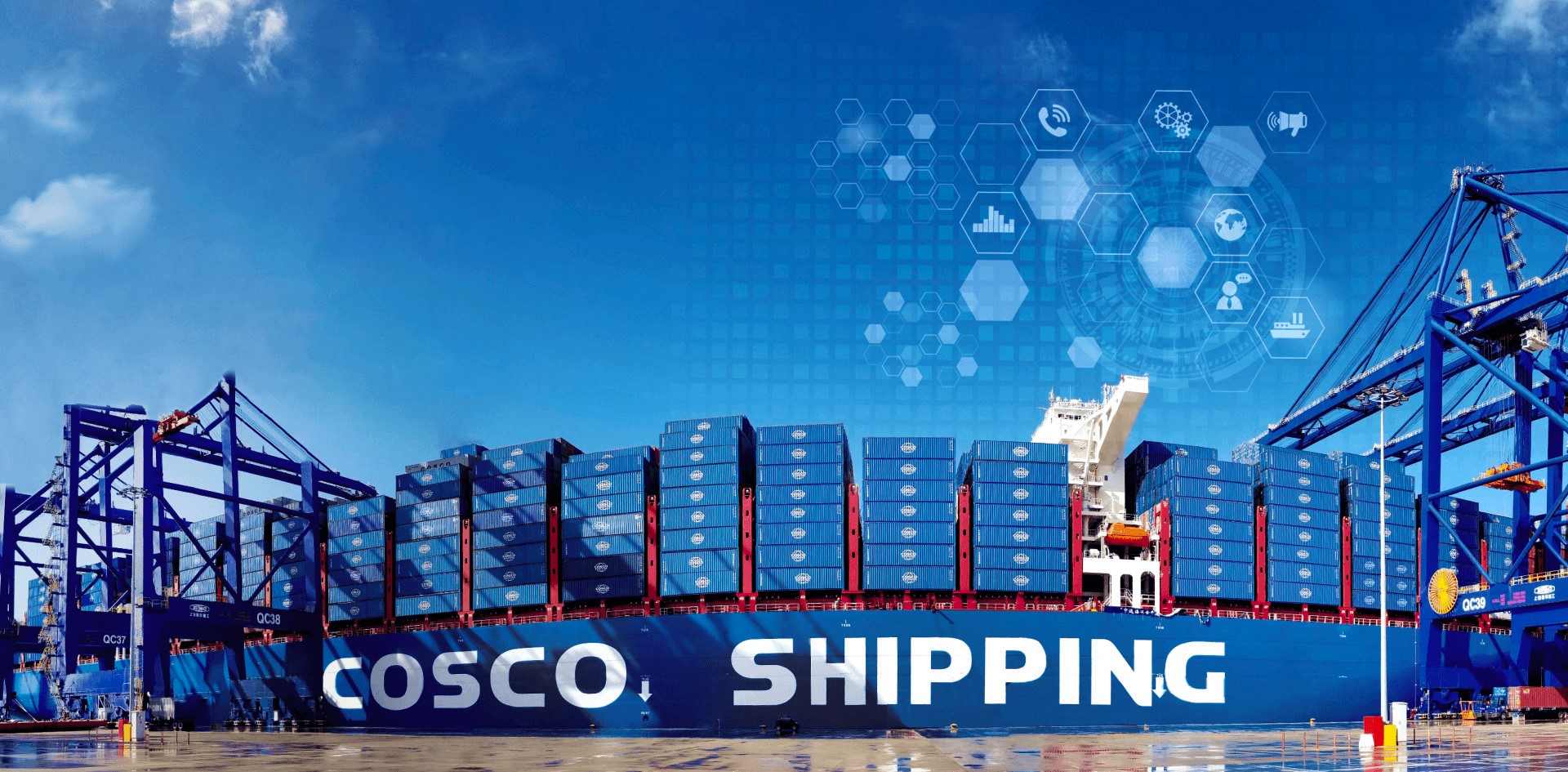
Perhaps more concerning for Washington policymakers should be the unified front presented by China’s shipping and shipbuilding sectors. China COSCO Shipping Corporation Ltd—a global maritime powerhouse—issued a defiant statement condemning the U.S. maritime restrictions as measures that “distort fair competition and impede the normal functioning of the global shipping industry.”
The company’s declaration that it “will continue to safeguard our clients’ interests while offering a comprehensive range of dependable services” signals that Chinese shipping giants have no intention of absorbing these costs themselves—meaning American importers and consumers will ultimately foot the bill.
Multiple Chinese industry associations have joined the chorus of condemnation, creating a united front that suggests Beijing’s response will be coordinated, strategic, and potentially painful for American interests.
Inflationary tsunami on the horizon
The real danger of Washington’s maritime restrictions lies in their potential to trigger a devastating chain reaction throughout the global supply chain—with American consumers standing directly in the path of the economic tsunami.
According to International Monetary Fund analysis, shipping costs serve as a primary driver of global inflation, with doubled freight rates potentially causing inflation to rise by 0.7 percentage points. With U.S. Consumer Price Index already showing a 2.9 percent increase from December 2023 to December 2024, additional port fees threaten to pour gasoline on an already concerning inflationary fire.
The World Shipping Council hasn’t minced words, describing the U.S. fees as a “disguised additional tax” that will inevitably raise imported goods prices while simultaneously damaging U.S. seaborne trade and associated industries.
Research suggests that even a modest 1 percent reduction in shipping capacity could trigger a 2-5 percent increase in freight costs—costs that will ultimately find their way to American shopping carts.
America’s self-inflicted port paralysis
The maritime restrictions create a perfect storm for logistical nightmares at major U.S. ports. By incentivizing shipping companies to prioritize larger ports to minimize per-unit costs, the measures could increase throughput at critical hubs like Los Angeles and Long Beach by 30-50 percent—far exceeding their infrastructural capacity.
The resulting bottlenecks would reduce terminal efficiency, increase ship dwell times, and dramatically inflate overall supply chain costs. America’s heavy reliance on seamless connections between ports and land transport means that once ports become congested, the ripple effects through the entire logistics network become nearly impossible to contain.
For low-value goods like furniture and agricultural products, these increased logistics costs may exceed profit margins entirely, potentially removing certain products from American shelves altogether.
Chinese shipyards weathering the storm
Despite Washington’s attempts to kneecap China’s shipbuilding industry, Chinese shipyards are showing remarkable resilience. While bulk carrier orders declined by over 90 percent in early 2025 according to BIMCO data, the revised USTR plan has already sparked renewed confidence.
China Merchants Industry Group wasted no time announcing plans to expand its shipbuilding capacity through the acquisition of Qingdao Yangfan Shipbuilding Co., focusing on general-purpose bulk carriers and container ships—a clear signal that Chinese shipbuilders anticipate continued demand despite American pressure tactics.
Global supply chain fragmentation
The most concerning long-term consequence of America’s maritime restrictions may be the potential fragmentation of the global shipping network. Industry experts warn that global shipping giants might establish “parallel fleets” specifically designed to avoid U.S. routes, effectively severing America from parts of the global maritime supply chain.
This fragmentation would increase scheduling complexity and operational costs while creating new vulnerabilities throughout the system. The Director of Shenzhen International Maritime Institute, Chen Jihong, warns that such developments could trigger a “domino-like decline of the global logistics network.”
The irony of America’s maritime restrictions is that they threaten to accomplish precisely the opposite of their intended purpose: instead of strengthening America’s position, they risk isolating it from global maritime commerce while simultaneously harming American consumers through increased costs and reduced access to goods.
As one shipping executive privately remarked, “Washington seems determined to prove that in global trade wars, the most devastating friendly fire casualties are always self-inflicted.”