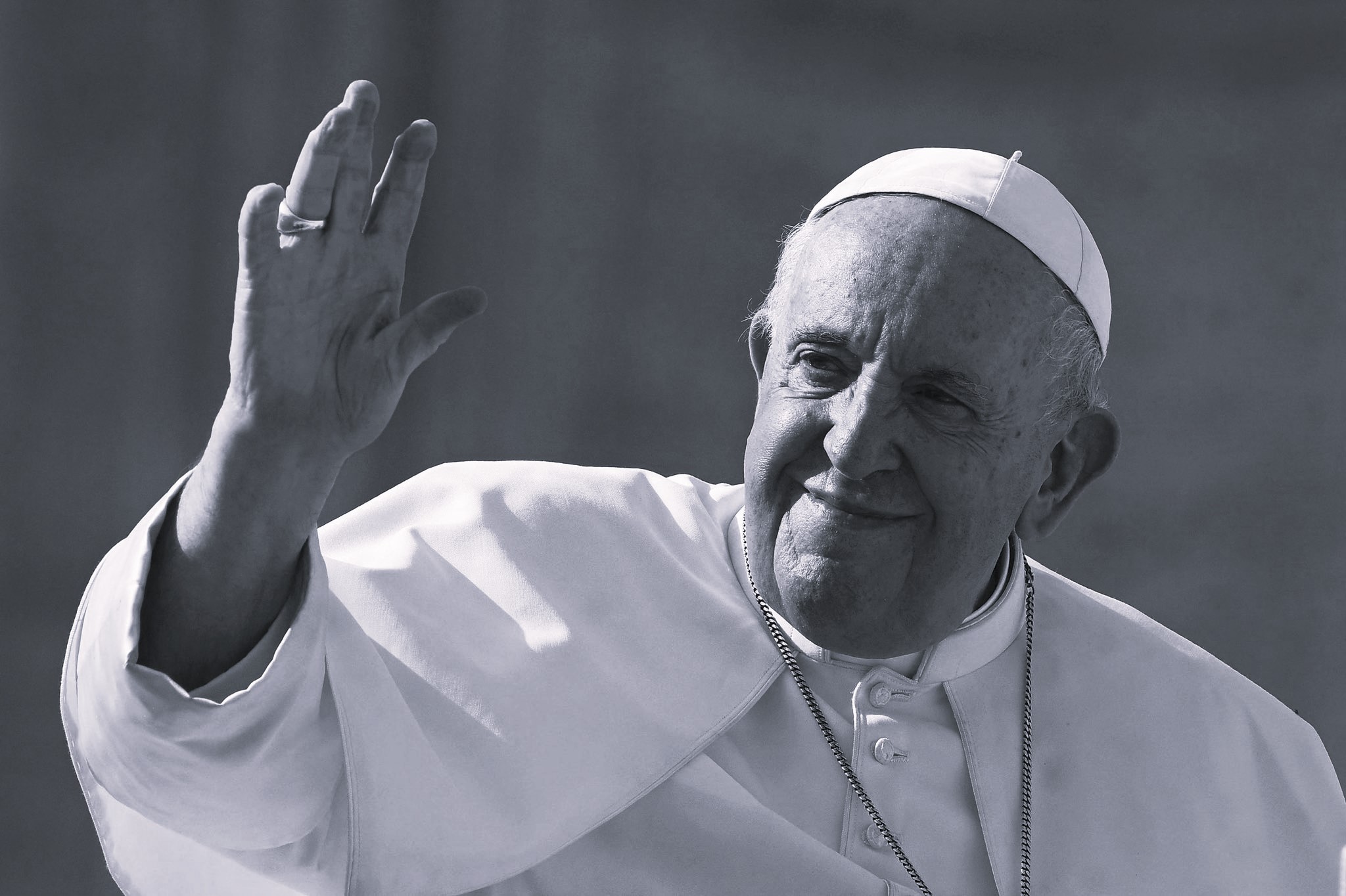

Pope Francis died on April 21, 2025—during the sacred days of Easter week. At 88, the first Latin American pope and first Jesuit to hold the papal office left behind a legacy of subtle but lasting change. His death closes a chapter marked not by grand upheaval, but by an insistent redirection—toward humility, encounter, and conscience. He made the Catholic Church feel again.
The keyword Pope Francis made global headlines, not for a new apostolic letter, but as a farewell to a figure who made gestures carry the weight of doctrine. He refused the papal palace, rode in a Ford Focus, and chose the margins over Rome’s curated grandeur. The symbolism wasn’t performative—it was the reform.
From Buenos Aires to the world
Born Jorge Mario Bergoglio in Buenos Aires in 1936, the future Pope Francis grew up amid tango, turmoil, and theological depth. The son of Italian immigrants, he became a Jesuit and then a cardinal known for his no-frills spirituality and closeness to the poor.
His legacy as archbishop in Argentina remains debated—some highlight his prudence under dictatorship, others his silence. But his fidelity to simplicity shaped his papal identity.
A disruption in tone, not dogma
From his first appearance on the Vatican balcony in 2013, Francis changed the mood. He asked the crowd to bless him first. It was not doctrinal innovation that defined him, but a recalibration of presence. His focus was not on rewriting catechisms but on how the Church spoke, listened, and walked.
Documents like Amoris Laetitia (2016) explored the complexity of family life and encouraged pastoral discernment, especially for divorced and remarried Catholics. In 2023, the Vatican reinforced his view through a cautious yet affirming tone. Pope Francis didn’t challenge orthodoxy—he offered oxygen to those suffocating under its weight.
Signature texts and pregnant silences
Francis penned deeply influential works:
- Laudato Si’ (2015), which fused ecology and moral responsibility.
- Fratelli Tutti (2020), a reflection on global solidarity.
- His 2024 letter on literature as theological experience, inviting believers to recognize divine tension in metaphor.
He refused to revise doctrine on abortion, euthanasia, or same-sex unions, yet he denounced discrimination and legalism. Pope Francis rarely legislated from the pulpit; instead, he modeled a theology of closeness—especially in what he chose not to say.
Geography of a papacy
Francis’ travels were emblematic. He embraced Iraq, Mongolia, and the Congo—not the typical itinerary of a European pontiff. His focus was on the periphery: the wounded, the displaced, the forgotten. Despite never visiting his native Argentina after 2013, he remained a Latin American pope in ethos and imagination.
He avoided high-profile ceremonies. When Notre-Dame reopened in 2024, he did not attend. His silence was louder than any homily: the Church’s axis had shifted. Not away from Europe, but beyond it.
The power of popularity and the resistance of the establishment
Pope Francis’ reign was not without opposition, especially within the ecclesiastical elite. The Vatican’s conservative factions and high-ranking clergy criticized his approach to church governance, his more lenient stance on divorce, and his emphasis on the pastoral over the doctrinal. His inclusive messages about women in the Church, which allowed them greater visibility, further stirred the discontent of traditionalists who viewed these moves as a challenge to the entrenched patriarchal structure of the clergy.
Some of the fiercest resistance came from cardinals and bishops who upheld the traditionalist “Pope Benedict” vision of the Church. For them, Francis’ emphasis on mercy over judgment, his frequent calls for peace and solidarity, and his reluctance to rigidly define doctrinal positions were seen as dangerous ambiguities. To many in the Vatican’s more powerful circles, the pope’s compassion seemed like a softening of Church doctrine, leading to charges of “Francisphobia” from his most vocal critics. But for others, this softness was a profound reflection of Christ’s mercy.
At the same time, Francis’ challenge to the entrenched Catholic hierarchy pushed back against the institutionalism of the Church. It was an act of revolution, not by force but by contrast—creating a Church that was, paradoxically, both humble and authoritative. He championed the rights of the poor and the marginalized, though this alienated wealthy Catholics who felt excluded by his critique of economic inequality. His message regarding the “idol of money” enraged those at the top of the economic food chain, further deepening the divide.
The quiet revolution
Pope Francis’ vision of the Church was never about the loud declarations or the sharp doctrinal shifts. He focused on the everyday experience of the believer. His papacy was grounded in a pastoral revolution that shifted the Church’s focus from top-down, doctrinal authority to a more open and inclusive form of leadership. He elevated the idea of synodality, emphasizing decision-making by the whole community, not just a hierarchy of cardinals and bishops.
His doctrine was subtle, but it had seismic effects on the way the Church interacted with the world. He demonstrated that leadership in the Church need not come from grand gestures but from daily, intentional acts of humility, love, and service. He called for a “poor Church for the poor,” and while some saw this as a call for a new direction, others saw it as a rejection of the Church’s longstanding alliances with political elites.
The global impact of Pope Francis’ leadership
Despite facing intense opposition, Francis’ global impact cannot be overstated. His advocacy for interreligious dialogue and peace became cornerstones of his papacy. His 2019 visit to Abu Dhabi and his historic meeting with the Grand Imam of Al-Azhar were pivotal moments in Catholic-Muslim relations. Furthermore, his stance on climate change, captured in Laudato Si’, made him a global figure in the environmental movement. It is perhaps his call for an “ecological conversion” that will prove to be one of his most lasting legacies, setting a tone for future religious and moral debates on the environment.
Though his leadership was at times divisive, it was undeniably transformative. Pope Francis’ papacy changed the tone of the Catholic Church, making it more compassionate, more humble, and more attuned to the needs of the world’s poorest and most marginalized. His refusal to cater to the powerful and his call for a Church that serves others over itself continue to influence the direction of the Vatican in ways that will shape its future.
A final goodbye
Pope Francis passed away at the age of 88, leaving behind a legacy that will be debated for years to come. But in the end, his quiet revolution made a louder impact on the world than any doctrinal edict ever could.
His legacy is not found in the dogmatic teachings he left behind but in the transformation he catalyzed: a call for a Church that listens, that serves, and that always, always remembers the marginalized.