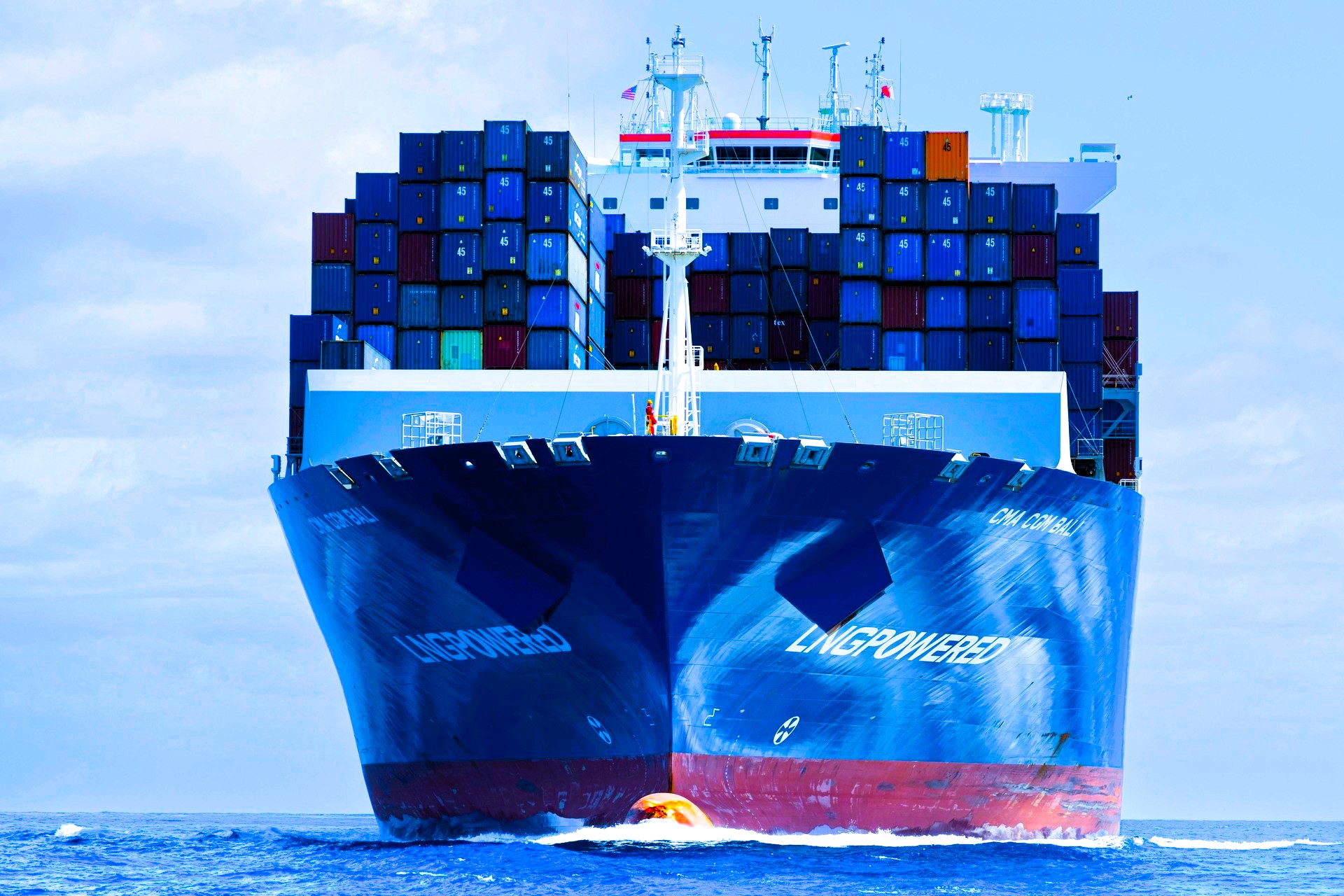

CMA CGM Group has announced a $20 billion investment in the U.S. shipping and logistics sector, promising to bolster domestic shipbuilding, enhance port infrastructure, and create 10,000 new American jobs. The move strengthens its 35-year presence in the U.S. while aligning with Washington’s push for maritime self-sufficiency.
But there’s another layer to the story. A newly proposed U.S. shipping policy threatens to penalize companies operating Chinese-built vessels, a category that includes a substantial portion of CMA CGM’s fleet. With potential fines reaching over $20 billion in four years, this investment could be as much about financial survival as it is about strategic expansion.
Why now? The policy triggering CMA CGM’s shift
A proposed U.S. regulation introduces $1 million fines per port call for carriers operating ships built in China or with pending Chinese shipyard orders. CMA CGM faces a 34.5% exposure in its current fleet and 38 Chinese-built vessels on order, making it one of the most vulnerable operators.
Timing is everything. One day after the policy’s announcement, CMA CGM CEO Rodolphe Saadé met with U.S. officials, unveiling a dramatic shift: a commitment to construct ships in U.S. yards. This suggests not just a strategic investment but also a move to sidestep a financial storm that could have cost the company billions.
Challenges: The hidden costs of compliance
Despite its ambitions, CMA CGM’s plan faces critical obstacles:
High construction costs: U.S. shipyards are significantly more expensive than their Asian counterparts. The transition to domestic shipbuilding will demand enormous capital and may not match CMA CGM’s fleet renewal pace.
Fragmented logistics market: The U.S. supply chain is highly competitive, with dominant players like FedEx, UPS, and Maersk. CMA CGM’s success hinges on seamless integration—something easier said than done.
Risk of inconsistent ROI: The $20 billion commitment is a long-term play, but profits may take years to materialize. Economic downturns, trade policy shifts, or market fluctuations could strain CMA CGM’s financials.
Disruption of existing supply chains: If CMA CGM shifts orders away from China, it could face contractual penalties, delivery delays, or higher costs—all of which could affect its global operations.
Strategic advantages: A calculated decision?
Yet, if executed effectively, this investment could position CMA CGM as a major force in the evolving U.S. supply chain landscape. The potential benefits include:
Job creation & political capital: 10,000 new jobs will boost U.S. employment, helping CMA CGM secure goodwill from policymakers.
Stronger market position: Expanding air cargo hubs, port infrastructure, and warehousing strengthens its foothold in a logistics sector dominated by American and Danish giants.
Technological edge: A Boston-based R&D hub focused on robotics and automation could give CMA CGM a long-term operational advantage over rivals.
Long-term U.S. partnership: Aligning with U.S. policy ensures regulatory stability and preferential treatment in an increasingly protectionist market.
A bold move with far-reaching global consequences
CMA CGM’s $20 billion investment in U.S. maritime and logistics infrastructure is not just an expansion strategy—it’s a calculated response to shifting geopolitical and regulatory tides. The move seeks to navigate the challenges of a fragmented U.S. logistics sector while positioning the company to compete with dominant industry players. However, significant risks remain: high capital costs, uncertain return on investment (ROI), and the complexity of integrating diverse operations all present formidable obstacles.
The stakes couldn’t be higher. While the financial and operational challenges are considerable, the alternative—crippling regulatory penalties and weakened access to the U.S. market—could be far worse. If successful, this investment could redefine U.S. supply chains, stimulate economic growth, and create thousands of jobs, reinforcing CMA CGM’s standing as a global logistics powerhouse.
Yet, much depends on execution. The company’s ability to implement this vision will hinge on its capacity to innovate, adapt, and cultivate strong relationships with key industry stakeholders. The central question remains: Will this bold maneuver cement CMA CGM’s dominance, or will financial and operational hurdles prove insurmountable? The coming years will determine whether this is a strategic masterstroke—or a costly miscalculation.