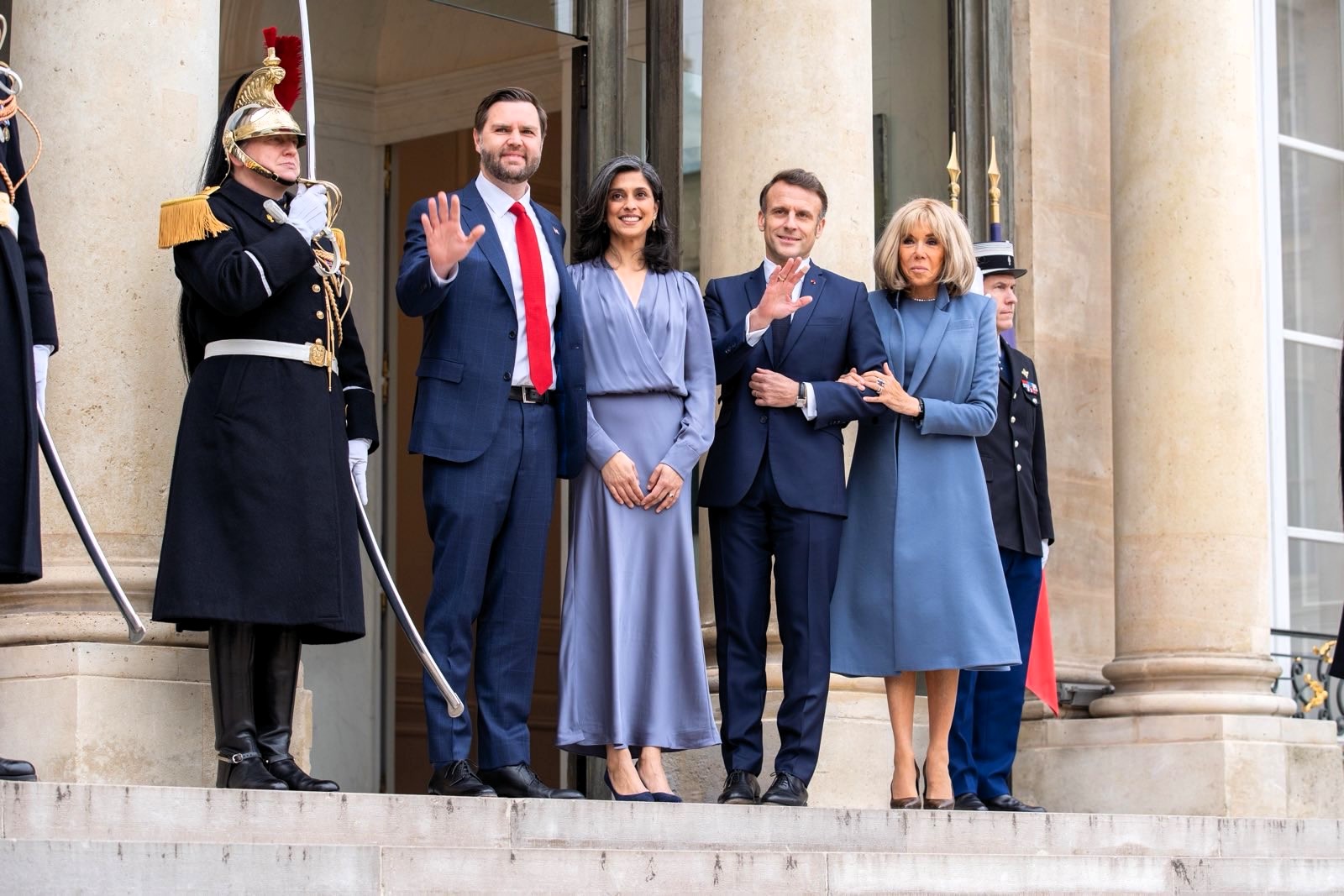

In a display of unbridled audacity, U.S. Vice President JD Vance took the stage at the Munich Security Conference to deliver a scathing critique of Europe’s internal affairs. His speech, laden with condescension, targeted Europe’s immigration policies, free speech practices, and political dynamics, leaving European leaders both astonished and incensed.
A Hillbilly’s lesson on democracy
Vance, whose claim to fame includes authoring Hillbilly Elegy: A Memoir of a Family and Culture in Crisis, a narrative that romanticizes a subculture many Europeans view as archaic, now assumes the role of a moral arbiter for the continent. He boldly asserted that Europe faces a “threat from within” greater than any external adversary, citing instances such as election cancellations in Romania and the prosecution of anti-abortion protesters in the UK. He proclaimed, “We may disagree with your views, but we will fight to defend your right to offer it in the public square.” This from a man whose political ascent is rooted in a milieu often criticized for its own challenges with inclusivity and progressive thought.
The Vice President’s remarks did not stop at free speech. He lambasted European immigration policies, linking them to recent violent incidents, such as the car-ramming attack in Munich. “How many times must we suffer these appalling setbacks before we change course and take our shared civilization in a new direction?” he questioned, insinuating that Europe’s approach to immigration is naïve and self-destructive.
European leaders were quick to respond to Vance’s unsolicited counsel. German Defense Minister Boris Pistorius rebuked the Vice President’s comparisons of Europe to autocracies, labeling his remarks as unacceptable. Pistorius stated, “He speaks of the annihilation of democracy. And if I have understood him correctly, he is comparing conditions in parts of Europe with those in authoritarian regions … that is not acceptable.”
EU foreign policy chief Kaja Kallas expressed her dismay, stating that listening to Vance’s speech felt as though the United States was attempting to provoke Europe. She emphasized the need for allies to focus on more significant threats, such as Russia’s aggression toward Ukraine, instead of engaging in unnecessary conflicts.
Contradictions on Ukraine and the limits of U.S. influence
In a meeting with Ukrainian President Volodymyr Zelenskyy on the conference’s sidelines, Vance discussed strategies to end the Russia-Ukraine war. He emphasized the U.S. desire for a “durable, lasting peace,” while Zelenskyy underscored the need for “real security guarantees” before engaging in peace talks. This interaction further highlighted the administration’s mixed messages, as Defense Secretary Pete Hegseth had previously ruled out NATO membership for Ukraine and deemed full territorial liberation an unrealistic goal.
The irony of Vance, a self-proclaimed “Hillbilly” who chronicled the struggles of America’s white working class, lecturing Europe on democracy and governance, was not lost on observers. His Hillbilly Elegy painted a picture of a culture grappling with its own crises, yet he now positions himself as a critic of European policies. This juxtaposition was aptly summarized by a European diplomat who, preferring to remain anonymous, remarked, “It’s rich for someone from a country with its own deep-seated issues to come here and tell us how to manage our affairs.”
Populism, free speech, and the Musk factor
Vance’s speech also touched upon the rise of populist parties in Europe. He defended political factions opposing immigration, asserting, “No voter on this continent went to the ballot box to open the floodgates to millions of unvetted immigrants.” This defense of Europe’s far-right movements drew parallels to his own political journey, which capitalized on populist sentiments within the United States.
The Vice President’s critique extended to Europe’s handling of free speech. He charged that “across Europe, free speech, I fear, is in retreat,” echoing President Trump’s attacks on online censorship. He cited examples such as the UK’s arrest of a man for praying near an abortion clinic and Sweden’s conviction of an anti-Islam campaigner for burning Korans in public. These examples, he argued, exemplify a broader trend of suppressing dissenting voices.
European officials, however, viewed Vance’s comments as an unwelcome intrusion into their domestic affairs. German government spokesman Steffen Hebestreit cautioned against foreign meddling in its politics, stating that outsiders “may not have a full overview of the political debate” in Germany.
The Vice President’s remarks also touched upon the influence of external figures on European politics. He referenced Elon Musk’s enthusiastic backing of Germany’s far-right Alternative für Deutschland (AfD) party, suggesting that Germany should get used to such interventions. “If American democracy can survive 10 years of Greta Thunberg’s scolding, you guys can survive a few months of Elon Musk,” he quipped. This comparison, however, was met with skepticism, as many Europeans view Musk’s involvement as an unwelcome interference rather than constructive criticism.
Europe barks, but can it bite?
The Munich conference made one thing clear: Europe remains trapped between resentment and impotence. Leaders fumed at Vance’s tone, but their response was limited to indignant rhetoric. When Germany’s government warned against “foreign meddling” in its upcoming election, it sounded less like a confident democracy and more like a fragile regime rattled by external critique. If Elon Musk’s support for AfD can shake Berlin, what does that say about the stability of its political landscape?
Vance went to Munich to assert American dominance, and Europe, despite its grumbling, had no real answer. The European project—once a force of political ambition—now survives on defensive maneuvering rather than visionary leadership. European leaders wish to protect their crumbling order from Trumpism, yet they lack the dynamism to propose a compelling alternative. Vance’s arrogance was infuriating, but at least he projected strength. Europe, on the other hand, could only mutter objections from the sidelines.
A hollow clash of civilizations
In the end, the clash between Vance and European leaders was not about democracy. It was about power, and who gets to define the terms of the global order. Vance’s America wants to impose its vision of strength, while Europe clings to an outdated self-image as the bastion of enlightenment values. Both narratives are false. The U.S. is mired in its own democratic decline, and Europe’s institutions are more concerned with self-preservation than democratic vibrancy.
So, while European leaders bristled at Vance’s lecturing, they would do well to ask themselves: Do they defend democracy, or just their own authority? And if all they can do in response to American swagger is issue carefully worded rebukes, then perhaps the question is moot. Because unless Europe finds its own voice, all the barking in the world won’t amount to much more than background noise.