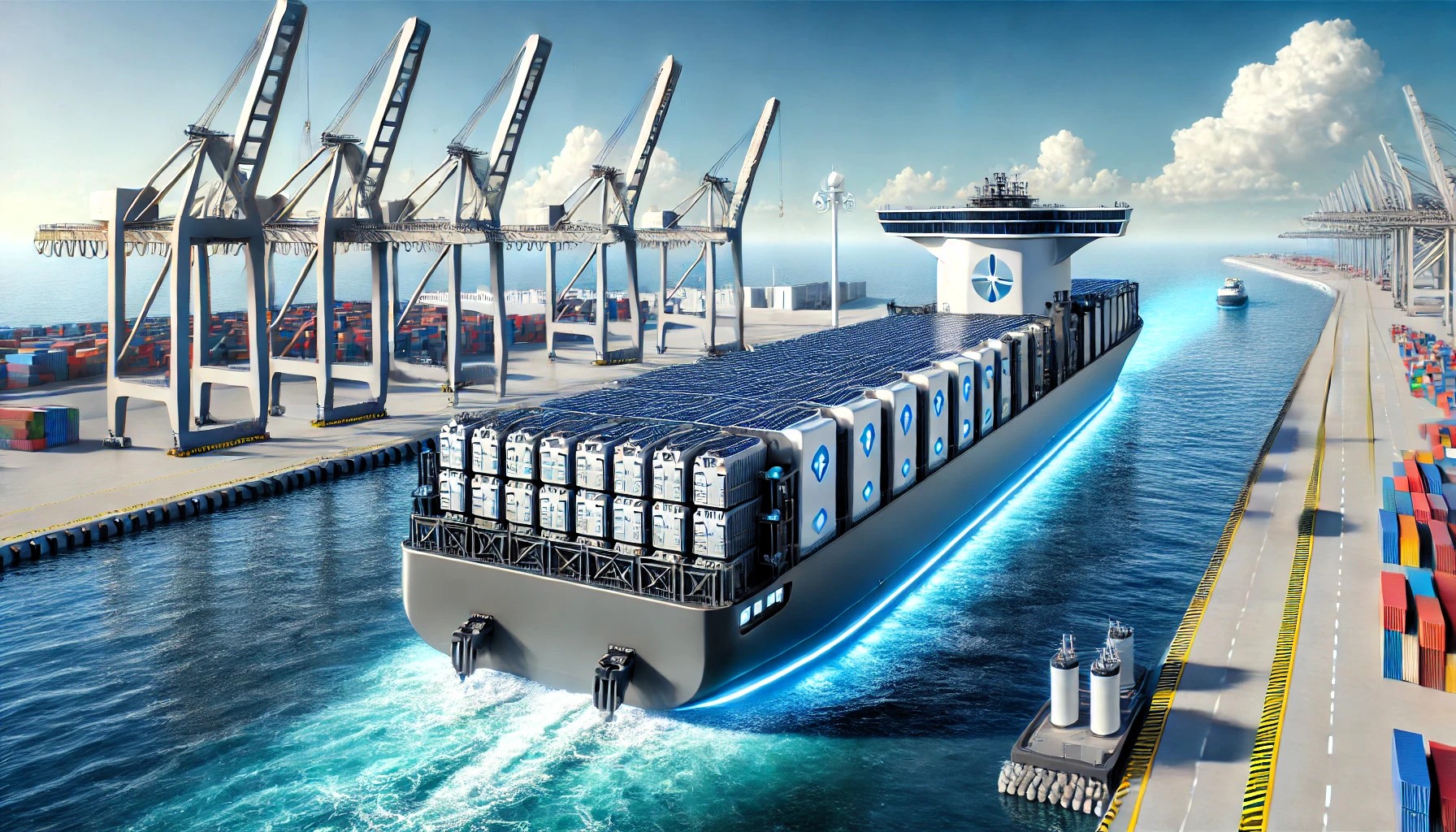

China has taken a monumental step in green technology and maritime innovation with the commencement of construction for the world’s largest 10,000-ton pure electric cargo ship. This state-of-the-art vessel, initiated on December 30, 2024, in Hubei Province, underscores China’s commitment to zero-emission transport and cutting-edge shipping technology.
Fully domestically developed masterpiece
Led by the subsidiary of China Three Gorges Corporation, Changjiang Power Three Gorges Electric Energy, this electric cargo ship is a hallmark of domestic innovation. Collaborating with numerous Chinese research institutions, the project highlights the country’s growing expertise in maritime technologies. Every element of the ship—from its advanced battery systems to its navigation technologies—is entirely domestically sourced, showcasing China’s self-reliance and technological progress.
Intelligent features setting new standards
As China’s first inland bulk cargo ship equipped with intelligent ship “i-Ship (R1)” and “i-Ship (Nn)” notations, this vessel brings unprecedented capabilities to the industry. Its advanced navigation and control systems integrate the latest in artificial intelligence and communication technologies. Key features include:
- Multi-link networks: Seamlessly combining 4G, 5G, BeiDou, and satellite systems for uninterrupted connectivity.
- Autonomous operations: Capabilities such as remote-controlled navigation, collision avoidance, and automated berthing/unberthing elevate safety and efficiency.
- Enhanced performance: These smart technologies optimize the ship’s operations, making it a beacon of modern inland shipping.
This intelligent infrastructure not only improves operational safety but also sets a new benchmark for large-scale inland navigation.
A revolution in power and efficiency
The ship’s power system is a marvel of engineering. It features 12 modular lithium battery boxes, each resembling a standard shipping container, with a combined capacity of approximately 24,000 kWh. This modular design allows for quick battery swaps, eliminating the need for lengthy charging sessions and enabling uninterrupted operations. With a single charge, the ship can traverse up to 500 kilometers, making it both practical and efficient for bulk cargo transport.
The inclusion of specialized charging and battery-swapping stations along its route further enhances operational efficiency. These supporting facilities are critical for the adoption of long-range electric bulk cargo ships in the future.
Environmental and economic impact
Upon completion, this groundbreaking electric cargo ship is expected to make a significant environmental impact. It will replace approximately 617.5 tons of conventional fuel annually, reducing carbon dioxide emissions by around 2,052 tons every year. These impressive numbers demonstrate the ship’s potential to contribute to global efforts in combating climate change and fostering sustainable development.
Moreover, its zero-emission capabilities align with international goals to decarbonize the maritime industry, presenting a replicable model for other nations.
Paving the way for the future of maritime shipping
The construction of this electric cargo ship is more than just a technological achievement; it represents a paradigm shift in how the maritime industry approaches sustainability. By integrating advanced green technologies with intelligent systems, China is setting a new standard for the global shipping industry.
The project’s success will not only advance China’s maritime capabilities but also inspire other countries to invest in similar innovations. With its large-scale implementation of zero-emission technology, this vessel marks a transformative moment in sustainable shipping.
Conclusion
The 10,000-ton electric cargo ship under construction in China embodies the future of maritime transport: intelligent, efficient, and environmentally friendly. As the world’s largest vessel of its kind, it demonstrates how innovation and sustainability can go hand in hand. With projects like this, the global shipping industry moves closer to achieving a greener and smarter future.