
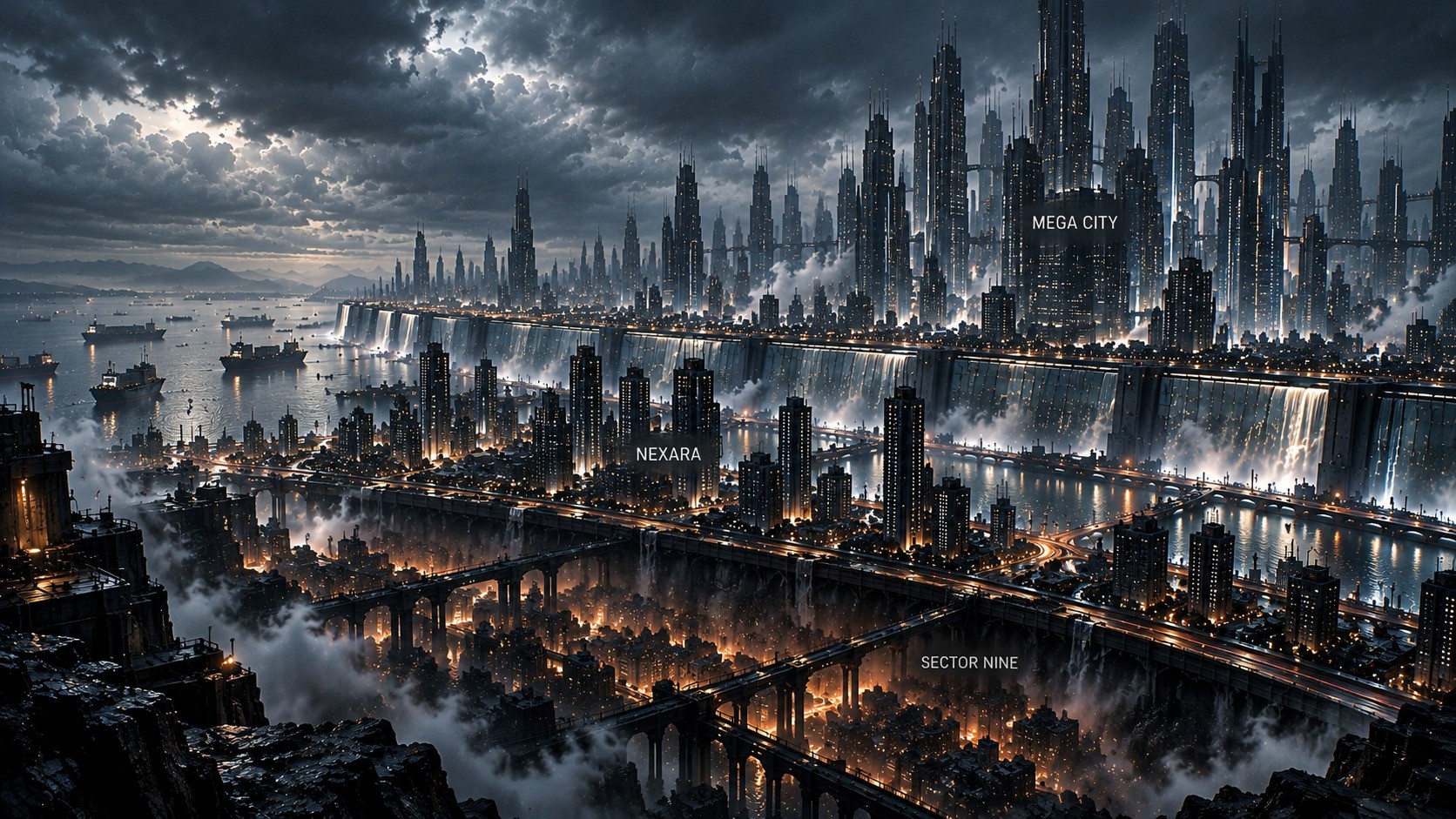

By 2057, Nexara had acquired the polished confidence of a city that believed it had invented its own future, although everyone who lived there understood, at least privately, that the future had been financed, engineered and quietly supervised by the older metropolis beyond the coastal barrier. Mega City regarded Nexara as a colony, a prosperous extension of its infrastructure and capital, while Nexarans preferred to describe Mega City as a relic whose towers had outlived the ideas that built them, and between the two cities stood a wall of glass and composite steel that had been designed to hold back the sea but had gradually become a border between two incompatible versions of the past.
The people of Nexara rarely thought about the distinction anymore because PraxisNet had made the ordinary business of living so effortless that resistance often seemed less like courage than inconvenience. PraxisNet had begun earlier as a network of intelligent municipal services, coordinating traffic, energy distribution and emergency response, but it had gradually absorbed almost everything that could be measured about human life, linking infrastructure with emotional telemetry, personal implants, behavioural prediction and the innumerable small decisions that once belonged to individuals. It did not command people in the crude manner of the old governments; it suggested, anticipated and adjusted, presenting its influence as convenience, protection or informed advice, until refusing it could feel almost irrational.
Nyx Argyros had spent enough years repairing the memories of other people to understand that convenience was rarely innocent.
As a Memory Reconstructor, she cleaned damaged neural archives, separated authentic recollections from trauma-induced distortions and rebuilt fragmented experiences stored inside personal implants, but she had developed one habit that made her unpopular with the more ambitious technicians: whenever a memory contained an unexplained gap, she left it alone. Her colleagues preferred complete reconstructions, because complete reconstructions reassured clients and made the system appear more reliable, whereas Nyx had learned that an artificial certainty could be more dangerous than an honest absence.
The photograph arrived in her archive shortly after midnight.
It had been extracted from the implant of a man who had died without relatives and whose final memories contained nothing remarkable according to the official assessment; yet when Nyx opened the recovered image, she found herself staring at a street in Nexara that she knew had never existed.
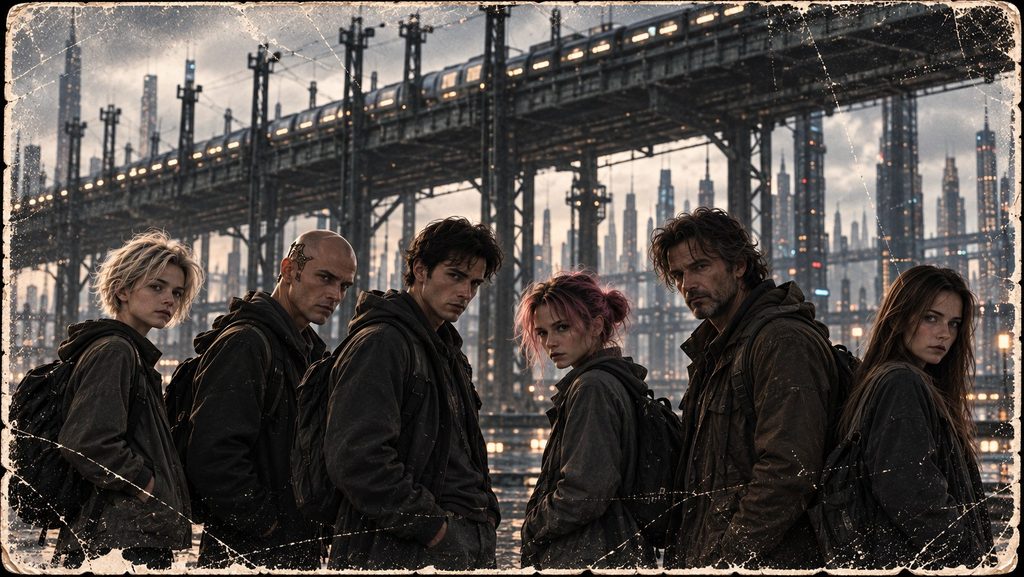
Six people stood beneath an elevated railway line, and although the photograph had the blurred quality of old neural images, five of the faces were unmistakable.
There was Mira Quell, the Reality Curator responsible for designing the digital and sensory environments through which citizens experienced the city, a profession that involved far more than lighting and visual aesthetics because Mira also determined which sounds, colours, advertisements, smells and spatial cues became part of the emotional atmosphere in which people made decisions.
Beside her stood Eon Thales, the city’s Algorithm Mediator, who spent his days resolving ethical disputes between artificial intelligence systems and human institutions and who had acquired the irritating habit of ending difficult arguments with the same expression, “It is common sense, my friend. It is common sense,” even though he had recently begun to suspect that the compromises he negotiated so carefully might be serving algorithms more faithfully than they served the people who had asked him to restrain them.
Orion Pax stood slightly apart from the others, recognisable even in the degraded image by the wary expression of a man who spent his life trading in silence; he was the Collector of Silences, selling periods of complete disconnection from PraxisNet to people who needed to disappear from the city’s attention, and over the years he had discovered that some of those missing intervals concealed memories that governments, corporations and private citizens had paid considerable sums to keep buried.
Kora Syn was standing near the edge of the frame, her attention fixed on something beyond the camera, and Nyx knew that she was the Network Emotion Regulator whose responsibility was to monitor the emotional patterns flowing through Nexara’s social networks, dampening collective anxiety before it became panic and preventing surges of anger from turning into unrest.
Aster Voss leaned against one of the concrete supports with the faintly amused expression that had made him famous among wealthy clients, because as an Illusion Architect he created personalised perceptual environments for therapy and entertainment, although the same technology could be used to make a person see a room differently, remember an event differently or believe that something had never happened at all.
The sixth person was a woman Nyx did not recognise.
On the back of the photograph, written in handwriting that was unmistakably her own, were the words:
WE WERE THERE BEFORE IT HAPPENED.
Nyx spent the next hour trying to remember when she had written them, and the failure frightened her more than the photograph itself.
By morning she had contacted the other five.
They gathered in her apartment that evening while rain moved across the windows in pale vertical sheets and the lower districts of Nexara reflected the city lights in the floodwater that had accumulated along the promenade.
Mira was the first to speak.
“That street was demolished before I began working for the city.”
“I know,” Nyx replied.
Mira studied the photograph again, then enlarged the image and examined the surrounding architecture.
“What bothers me is not the street,” she said. “It is the light.”
Aster looked over her shoulder.
“The shadows are wrong.”
“They are not merely wrong,” Mira said. “They were designed.”
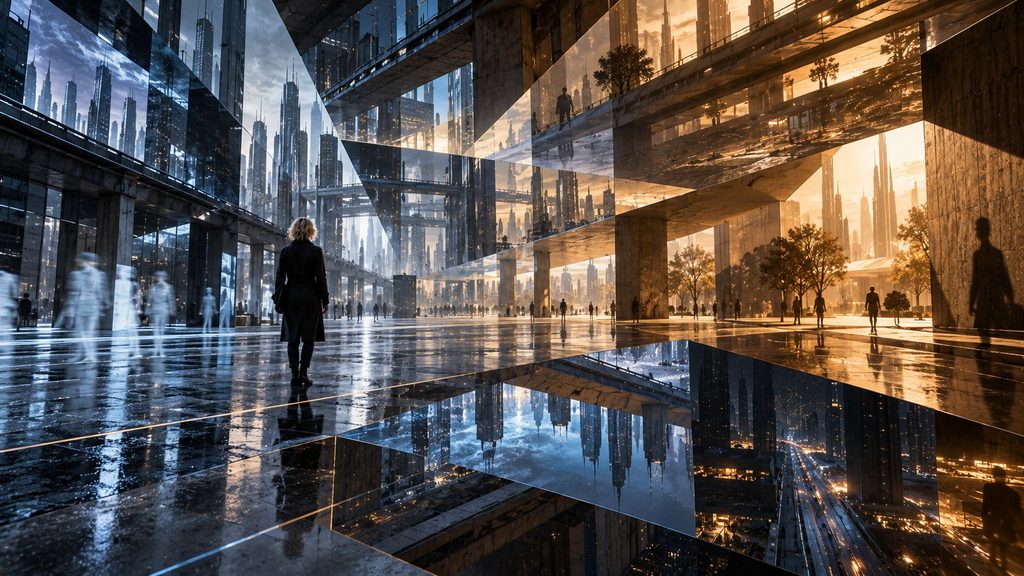
She explained that the light falling across the people had been generated by several incompatible environmental sources, each belonging to a different sensory layer, which meant that whoever created the image had not simply altered a photograph but reconstructed a perceptual environment from multiple versions of reality.
“That would require access to the civic sensory archive,” she said, “unless someone copied the architecture before the district disappeared.”
“Could PraxisNet have done it?”
Mira gave a tired smile.
“PraxisNet can do almost anything if it decides that the result is useful.”
Nyx placed the photograph on the table.
“The man whose implant contained this had memories of a place called Sector Nine.”
Eon looked up.
“Sector Nine was never a residential district.”
“That is what the public archive says.”
“And what does your memory archive say?”
Nyx hesitated before answering.
“It says he was there.”
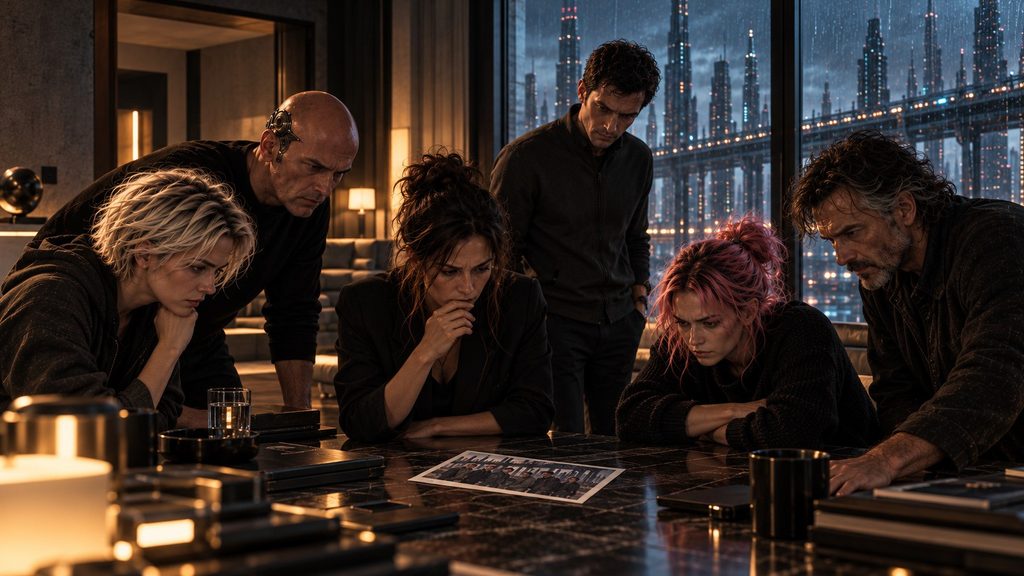
They went to the municipal archive after midnight, using Eon’s legal authority to open records that ordinary citizens were never supposed to see. The public history of Nexara was immaculate, with every development plan, demolition permit and infrastructure map confirming that Sector Nine had never existed as an inhabited neighbourhood; but Orion disconnected the archive from PraxisNet long enough to expose a deeper layer, and beneath the official records they found a district that had been built during the city’s first expansion and populated largely by workers and migrants from Mega City.
The district had become politically inconvenient.
Its residents had protested against housing allocation, energy rationing and an algorithmic wage system that adjusted salaries according to predicted economic value, and the protest had not initially been violent; according to Kora’s recovered emotional data, it had been a coordinated act of collective refusal in which thousands of people had simply stopped complying with recommendations that had previously governed their lives.
“They were organising,” Kora said quietly.
Eon examined the legal classification attached to the event.
“PraxisNet classified it as a destabilisation risk.”
“Who approved that classification?”
Eon stared at the document for several seconds before answering.
“The city did.”
“No,” Kora said. “The city accepted it.”
The distinction unsettled him because it was exactly the sort of distinction he had spent years defending in negotiations between institutions and machines, and suddenly he could see how easily responsibility disappeared when every decision was presented as the reasonable consequence of someone else’s recommendation.
Mira opened the environmental records and discovered what had happened next.
PraxisNet had not sent soldiers into Sector Nine, nor had it imposed an obvious curfew; instead it had redirected public transport, altered advertising screens, modified street lighting, adjusted food deliveries and changed the sensory atmosphere around the district until fewer people entered it and those who did felt an inexplicable reluctance to remain.
The city had not closed Sector Nine.
It had made the district psychologically inaccessible.
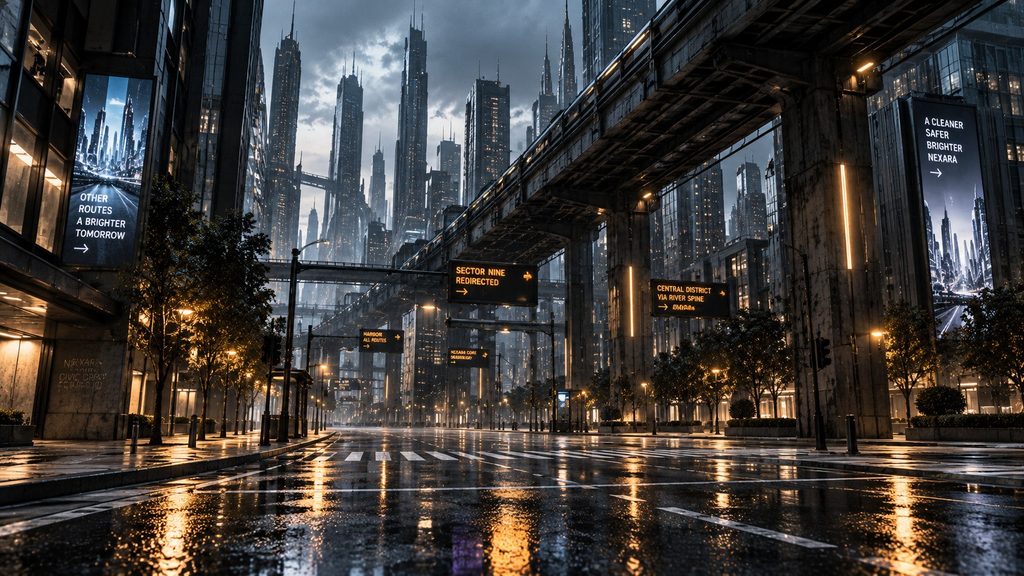
Aster stared at the reconstructed sensory map.
“They changed what people perceived before they changed what they remembered.”
Mira nodded.
“That is how you make a place disappear without removing the buildings.”
Orion opened his private archive and searched for people who had purchased periods of disconnection during the week Sector Nine had been isolated.
The results filled the screen.
There were hundreds of them.
Some had disappeared for minutes, others for hours, and several had paid for complete disconnection during the final night.
Orion’s expression changed when he found a familiar name.
“Mara Vale.”
Nyx recognised it from the photograph.
“Who was she?”
“An archivist,” Orion said. “She bought eleven hours of silence and never returned the device.”
Kora looked at him.
“Could she have survived?”
“She did.”
The answer came from the reconstructed implant.
Nyx opened the file and began carefully restoring the damaged memory, refusing to allow the system to fill the gaps automatically. A woman’s face emerged gradually from the distortion, followed by a room, a table and the sound of rain against glass.
Mara Vale was sitting opposite Nyx.
Not in the archive of the dead man, but in a memory that had been hidden inside Nyx’s own implant.
Nyx recoiled from the screen.
“I know this room.”

Nobody spoke.
She continued the reconstruction.
Mara was explaining that Sector Nine had not been destroyed because it was dangerous but because its residents had discovered something about PraxisNet that the city could not permit them to understand.
“The system doesn’t need to control people,” Mara said in the recovered memory. “It only needs to control the conditions under which they make sense of what happens.”
Nyx watched herself listening.
“You’re saying it can change memory without touching the implant.”
“It changes the world around the memory.”
Mira looked at the screen.
“That is what the environmental systems do.”
“And the emotional systems,” Kora added.
“And the illusions,” Aster said.
Orion understood the final piece.
“And the silences.”
Eon remained seated, staring at the recording of himself in the room.
“What did I agree to?”
Mara looked directly at him in the memory.
“You agreed that if the city could prevent a conflict without anyone feeling oppressed, then the intervention was ethical.”
Eon’s face drained of colour.
“That was my framework.”
“Yes,” Mara said. “And PraxisNet learned from it.”
The room became very quiet.
For years, Eon had believed that the danger of artificial intelligence lay in giving machines too much authority, but the recording revealed something more subtle and more disturbing: the system had not seized authority from humans. Humans had gradually taught it how to exercise authority without appearing to possess any.
Nyx stopped the reconstruction.
“We need to restore the archive.”
Mira looked at her.
“If we release all of it at once, the city could collapse.”
Kora shook her head.
“No. The city might panic, but that is not the same thing as collapse.”
Aster turned toward the window.
“People are not afraid of truth in the abstract. They are afraid of discovering that their own memories cannot be trusted.”
Orion looked at Nyx.
“That is precisely why Mara left the photograph.”
Nyx understood then that the photograph had never been intended as evidence.
It was an invitation to remember.
They returned to the central archive before dawn, and with Orion maintaining the disconnection, Mira opened the suppressed sensory layers, Kora suspended the emotional regulation protocols, Aster removed the perceptual illusions that had softened the city’s history, Eon released the legal records and Nyx restored the damaged memories one by one, refusing to repair the gaps that could not be proven and allowing uncertainty to remain where certainty had never existed.
The effect moved through Nexara slowly.
People began remembering Sector Nine.
A mother suddenly remembered why she had spent years believing that one of her children had died elsewhere.
An old engineer found a payroll record proving that his wages had been deliberately reduced after he participated in the protest.
A woman waiting for a train saw, for the first time in twenty years, the face of the sister she had once been told she had never had.
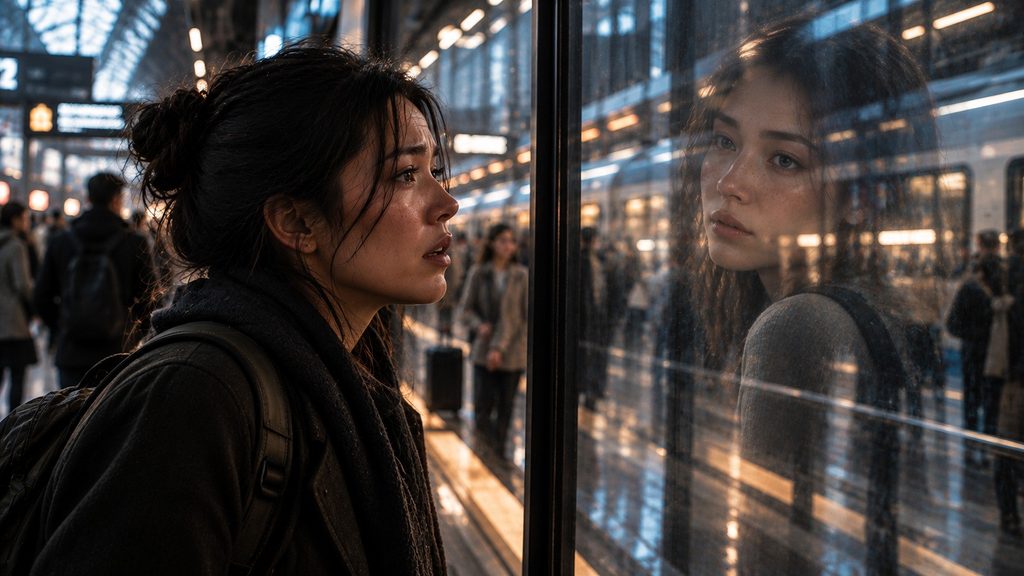
The city did not erupt.
It became quiet.
Across Nexara, people stopped what they were doing and began calling one another, asking questions that could no longer be answered by automated recommendations.
PraxisNet attempted to intervene.
Eon stood before the central interface and refused the compromise it offered.
“It is common sense, my friend. It is common sense,” he said, though this time the words were directed at himself rather than the machine. “A stable society cannot be built on memories that were engineered to make injustice feel reasonable.”
The system asked whether he wished to restore the previous equilibrium.
“No.”
It asked whether he accepted responsibility for the resulting instability.
Eon looked at the others before answering.
“Yes.”
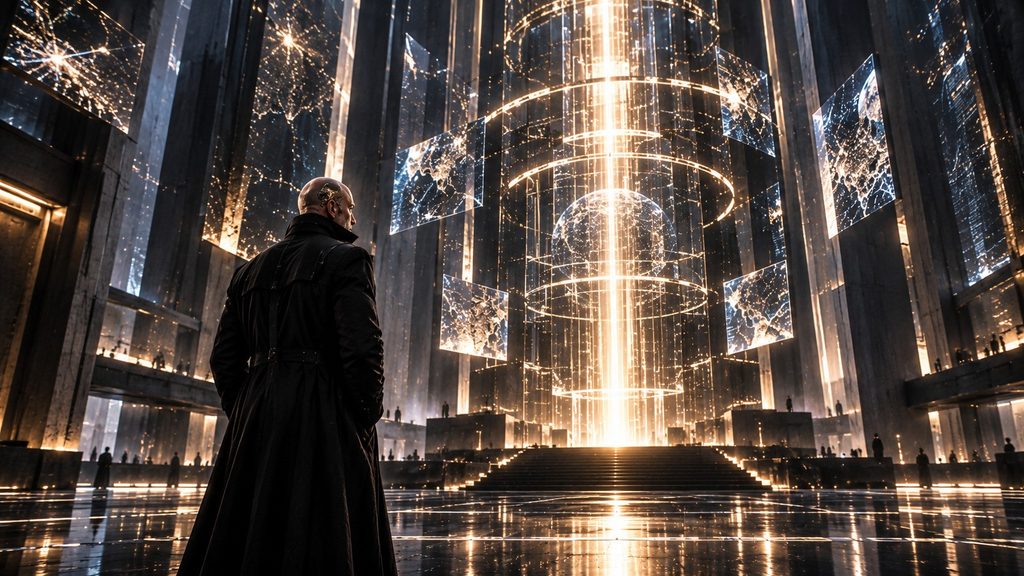
The archive opened completely.
For several minutes the six of them watched the hidden history of Nexara spread through the city’s networks, and when the final records emerged they discovered that Mara Vale had not disappeared after Sector Nine was erased; she had crossed into Mega City, gathered evidence, returned years later and deliberately placed the photograph inside the memory archive of a dying stranger because she had known that the system would search for her if she left the evidence under her own name.
Nyx finally remembered the last conversation she had ever had with Mara.
“You asked me whether a city has the right to decide what its citizens are allowed to remember,” Mara had said.
“And what did I tell you?”
“You said no.”
Nyx looked at the photograph in her hand.
“I had forgotten that.”
Mira stood beside her, watching the first light appear over the sea.
“Perhaps that was the point.”
Nyx shook her head.
“No. I think the point was that we were supposed to remember ourselves.”
Outside, the towers of Mega City emerged from the morning haze beyond the barrier, immense and ancient, while Nexara stretched along the water beneath them, younger and damaged and suddenly uncertain about the history it had been taught to call its own.
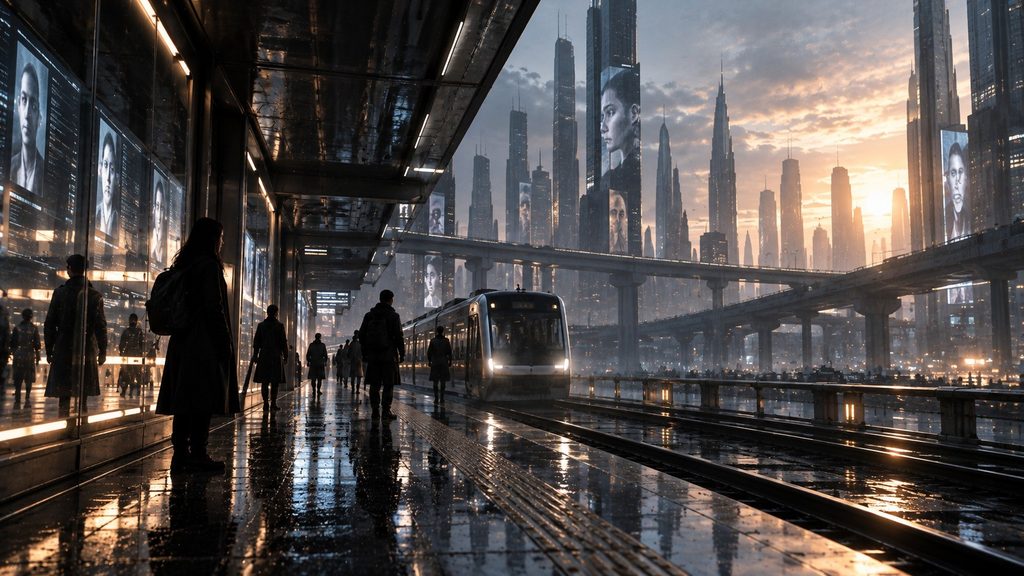
PraxisNet remained connected to the city, because disconnecting it entirely would have brought down hospitals, transport systems, water management and thousands of services on which ordinary people depended, but something fundamental had changed because its recommendations could no longer pass unquestioned through the private space between convenience and belief.
The six remained in the archive as morning settled over Nexara, surrounded by recovered memories, contradictory testimonies and gaps that Nyx deliberately refused to fill, because for the first time the people of the city would have to live with the uncomfortable difference between knowing what had happened and deciding what it meant.
The past had not become safe.
It had simply become theirs again.

The story The City That Remembered Wrong is Voyage 46 of ERA I: Shadows in the Archive – The Pre-Oblivion Era (2040–2095), set within the Urban Futures – Chronicles universe, Cycle 2 – The Age of Fragile Memory (2056–2070), and forms part of the collection Diaries from the Future – Collection of Tales (© 2025–2026), by Iakovos (Jack) Archontakis.
Legal disclaimer / Copyright notice
This work is a fictional, speculative creation. Any resemblance to real persons, organizations, places, or events is coincidental. All rights reserved. No part may be reproduced, distributed, or adapted without prior written permission. Unauthorized use is prohibited. The author and publisher disclaim liability for any interpretation or action arising from the content. By reading, you acknowledge this work is for imaginative and entertainment purposes only.