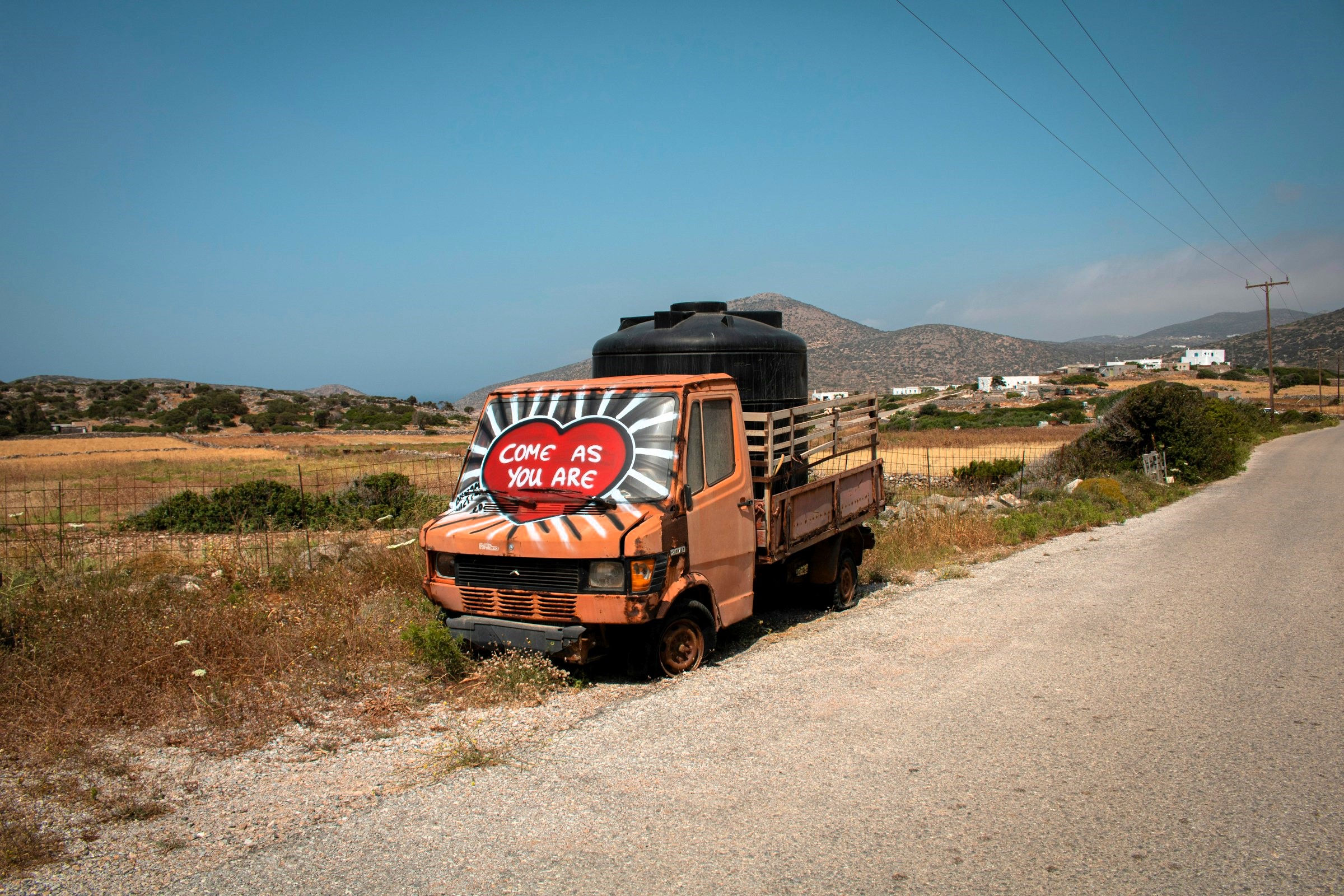

Amorgos does not resemble the islands that try to impress. It lacks the excess of image and the intensity of fame. Instead, it carries something far more difficult to describe: a silent consistency. An island that does not ask for your attention, yet forces you to think about it — if you stay long enough.
In the Cyclades, where every island struggles between tourism and identity, Amorgos seems to maintain a delicate balance. It is not untouched, nor frozen in time. But it remains one of the few places where time still moves at a rhythm not fully surrendered to the speed of the market.
Its morphology — steep, almost dramatic — leaves no room for easy solutions. The cliffs that plunge into the Aegean, the paths connecting villages and monastery, the sense that the landscape does not “host” the human being but accepts him on its own terms, create a peculiar relationship: here, it is not only the island that adapts to the visitor, but the visitor who must adapt to the island.
And perhaps this is Amorgos’ greatest asset.
Between authenticity and pressure
As across much of the Cyclades, tourism pressure here is not theoretical. It is real, gradual, and often silent. It does not arrive with rupture, but with small shifts: more accommodations, longer seasons, increasing demand for infrastructure, and an economy that begins to depend more and more on a few months of the year.
The question is not whether tourism is good or bad. The question is whether it can remain compatible with the island’s character without slowly eroding it.
Because Amorgos does not have “infinite capacity.” It has limits — natural, hydrological, energy-related, social. And these limits are not easily visible until they are exceeded.
The power of low intensity
Unlike more saturated destinations, Amorgos continues to operate with a logic of low intensity. This is not a weakness. It is a strategic advantage.
The experience of the island is not based on the number of visitors, but on the quality of their relationship with the place. On the fact that the landscape cannot be “consumed” quickly, but demands time, movement, silence. It is an island that cannot become a fast product without losing itself.
This creates a critical dilemma for the future: development or preservation. But in reality, the true dilemma is more subtle: what form of development does not destroy the very thing that makes it possible in the first place?
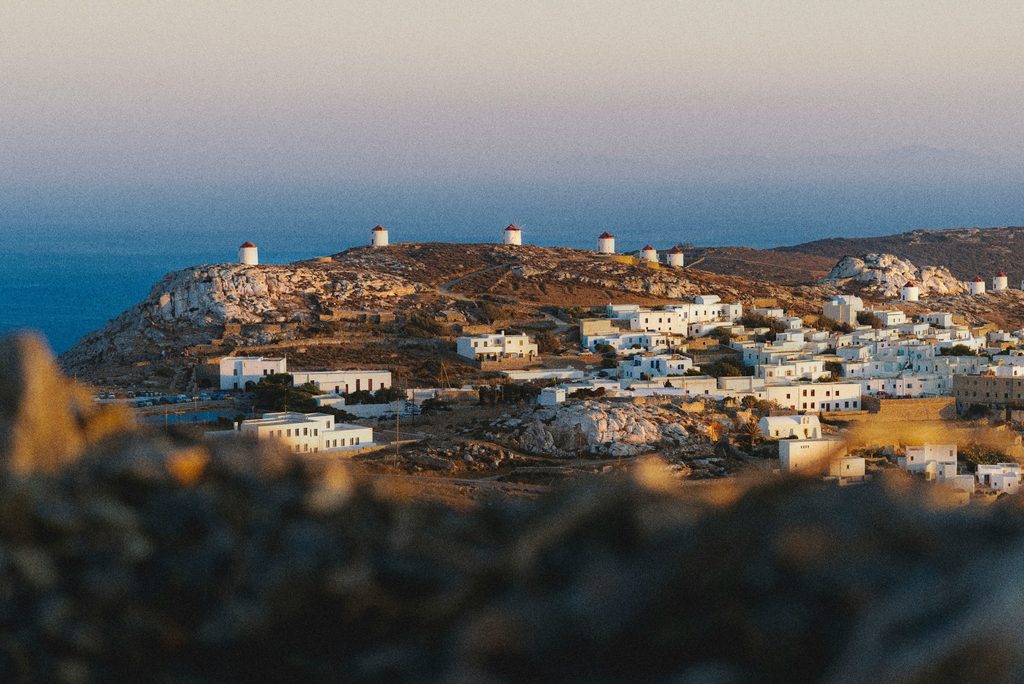 © Yorgos Triantafyllou/Unsplash
Infrastructure and the invisible threshold
Here, as across the smaller Cyclades, the most critical issue is not the image, but the infrastructure. Water, energy, waste management, medical care, transportation. These are not “technical matters.” They are the actual framework within which the future is determined.
Amorgos, due to its geography, cannot operate under logics of unlimited expansion. Every increase in population — even seasonal — multiplies pressure on systems already functioning at their limits.
And here the challenge is not only economic. It is political and environmental at the same time: how do you keep an island alive without turning it into something other than what it is?
The culture of duration
Amorgos is not an island of speed. It is an island of duration. It seems to belong more to people who stay than to people who pass through. And this creates a different relationship with place: less consumptive, more existential.
In a world that changes rapidly, such places are not merely tourist destinations. They are forms of resistance to haste. Not in a political sense, but in a geographical one.
An island that does not need to win the world
Amorgos does not need to become “bigger” to have a future. It needs to remain consistent with what it already is, while adapting just enough not to break under the pressure of the world around it.
Its true wager is not development through spectacle, but endurance through balance.
Because some islands do not exist to win the world. They exist to remind us that the world is not only speed.

Disclaimer
This article reflects solely the personal views and assessments of the author and is intended for informational and analytical purposes. It does not constitute an official position, policy, or representation of any organization, institution, or authority. References to Amorgos and to issues of development, infrastructure, and identity are based on general observations and are not meant to provide binding conclusions or evaluations of specific individuals, businesses, or local bodies.
image sources
- geo-trends.eu_Amorgos_: Yorgos Triantafyllou/Unsplash