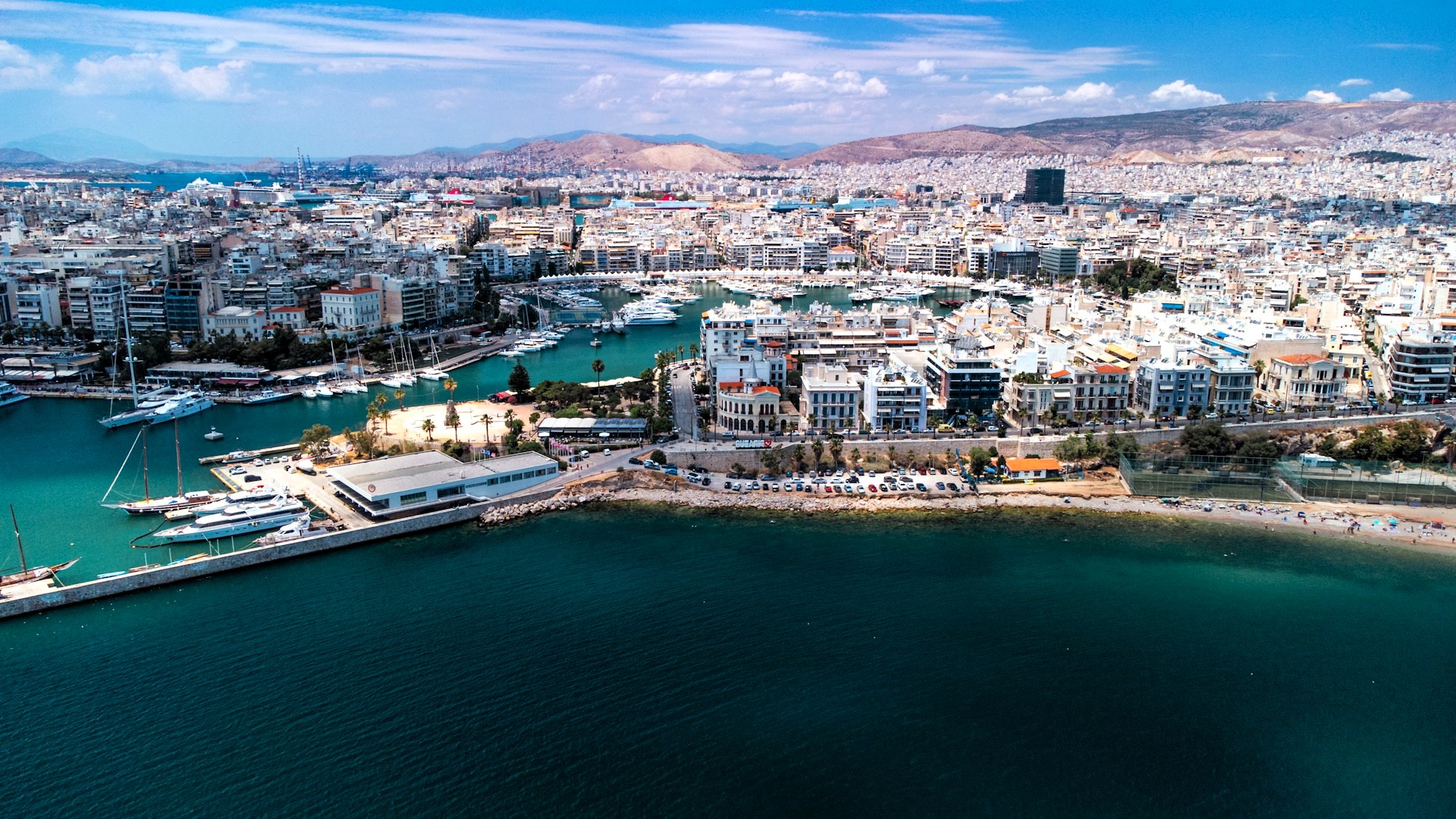

Piraeus is not merely a port. It is a pressure point. A space where economy, shipping, daily life, and the environment constantly collide within a few square kilometers of land and sea. As traffic increases, vessels grow larger, and global trade flows intensify, the city begins to pay a cost that does not always appear in balance sheets: the cost of air, of health, of silence, of the very possibility of living normally next to the sea.
The critical question for the next decade is not whether Piraeus will grow. That is already happening. The question is whether it can grow without turning into a permanently burdened environment for its residents.
The municipal authority, regardless of parties and ideologies, stands before a reality that does not yield to rhetoric. Pollution from ships, emissions at berths, traffic pressure from heavy vehicles, noise pollution, and thermal burden form a system that cannot be corrected through fragmented measures. It requires structure, continuity, and, above all, political courage.
Because the most effective measures are often not the most popular.
From a “transit port” to a “port of responsibility”
A modern port cannot function solely as a trade hub. It must also function as an environmental management hub. This means that the municipal authority cannot remain a passive observer or mediator; it must actively demand technical and institutional transformation.
International experience shows that ports that truly upgrade themselves are not those that merely increase throughput but those that reduce environmental impact per unit of activity.
Strategic interventions that should be considered
Without ideological framing and with purely technical reasoning, there are concrete action pillars that could reshape Piraeus:
The first is shore power electrification, allowing vessels to shut down engines while docked. This immediately reduces emissions and noise in the heart of the city.
The second is the creation of low-emission zones around the port, with strict control of heavy vehicles and a gradual transition toward cleaner transport technologies.
The third is the restructuring of freight and logistics traffic so that the urban fabric is relieved of continuous flows of heavy transport that degrade both quality of life and safety.
The fourth is systematic, real-time air quality monitoring with publicly available data, ensuring that governance is based on measurement rather than estimation.
The difficult part: the political cost of change
None of these interventions are neutral in terms of cost. Every structural change in the port affects interests, operational flows, contracts, and economic balances. Here lies the true test of municipal governance: not in recognizing the problem but in sustaining the implementation of solutions that are not immediately convenient.
Neutrality in this context does not mean inertia. It means balance between economic functionality and environmental obligation, without allowing one to become an excuse for the total cancellation of the other.
Piraeus as a test of urban civilization
Piraeus is not merely a technical port-management project. It is a test of whether a city can coexist with its industrial identity without losing its human scale.
Cities that fail this test do not collapse abruptly. They erode slowly. They lose residents, they lose quality of life, and, eventually, they lose their identity as places of habitation rather than mere transit.
The invisible choice that determines everything
The real stake for Piraeus is not whether it will become a more modern port. It is whether it will become modern in a way that remains livable for the people who live around it.
And this is neither a left- nor a right-wing policy question. It is a question of reality.
Because, in the end, the sea does not ask for ideology. It asks for balance.
Iakovos (Jack) Archontakis is Senior Maritime Strategy Consultant – Chartering Executive & TMC Shipping Commercial Director.

Disclaimer
This article is intended solely for informational and thought-provoking purposes. It does not constitute a political position or endorsement of any ideology or entity. Any references to scenarios or hypothetical developments are made for analytical purposes only and should not be interpreted as factual claims or predictions. The content does not constitute professional, investment, or legal advice.