
The guns may have fallen silent, but the strategic battle over the meaning of the war has only just begun. As Tehran and Washington move forward under a 14-point Memorandum of Understanding (MoU) presented as a “framework agreement,” direct insight into Iranian strategic thinking remains exceptionally rare in Western media.
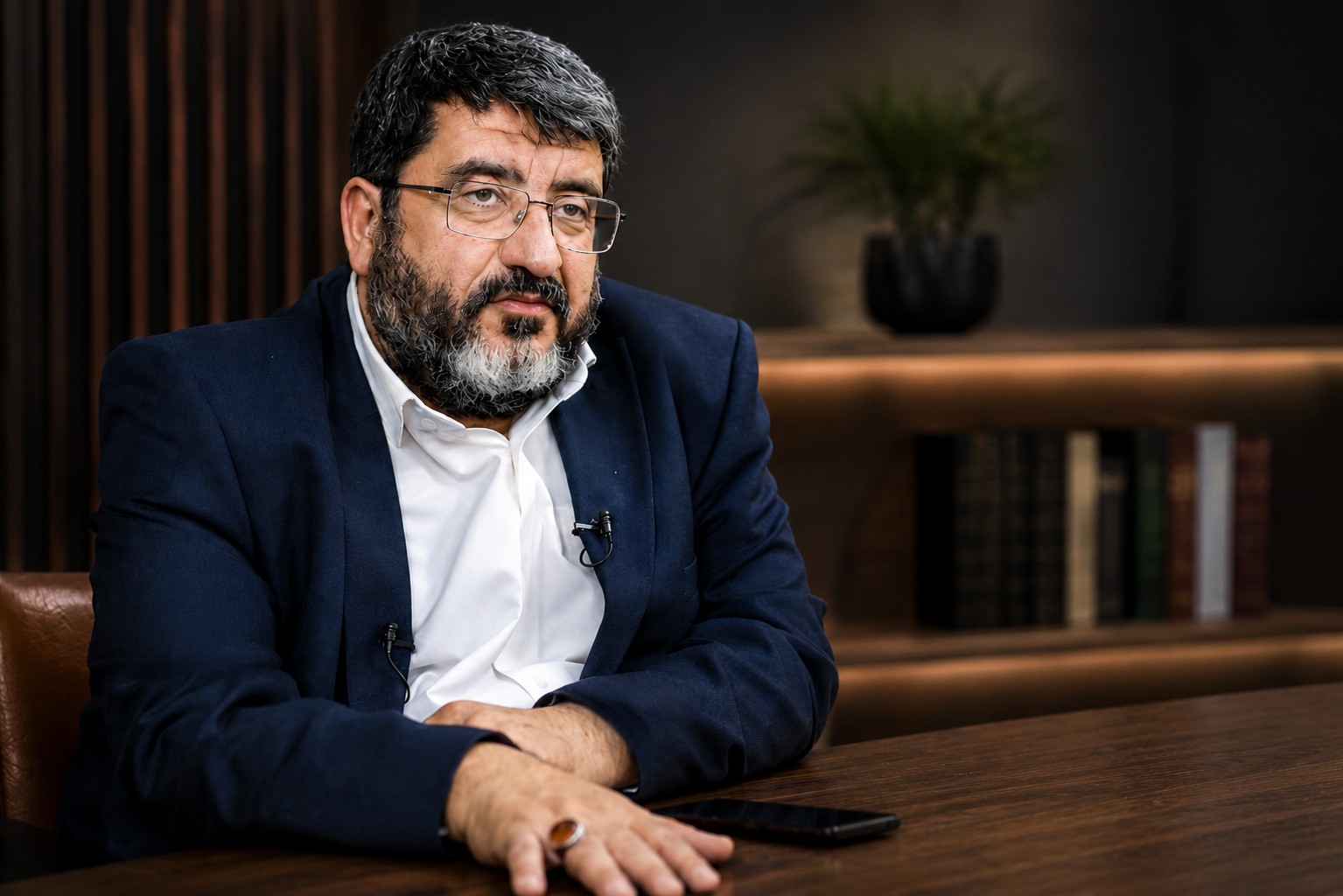
Against this backdrop, GeoTrends spoke with Foad Izadi, Professor of American Studies at the University of Tehran and a specialist in U.S. foreign policy, to examine how Tehran interprets the conflict, its deterrence, the ceasefire, and the risks of another regional war.
Tehran’s first lesson from the war
One of the central questions emerging from the conflict is whether Iran’s long-standing deterrence strategy ultimately proved sufficient. Although Tehran has long relied on a combination of missile capabilities, regional allies and the implicit leverage of the Strait of Hormuz, Israeli and American strikes still reached some of the country’s most sensitive military and nuclear facilities.
Dr. Izadi argues that the recent conflict exposed both the limitations of Iran’s deterrence and the instruments Tehran may seek to strengthen in the future. He states that “if you had deterrence, they would not be attacking you. So Iran’s deterrence was not good enough.” He further notes that this is why the Strait of Hormuz remains strategically significant, since “that will increase Iran’s deterrence.”
The debate over deterrence inevitably leads to another question that has shaped Western policy for years: Iran’s nuclear programme. Washington and Tel Aviv justified the military operations that began on February 28 as a continuation of the June 2025 attacks, arguing that Iran was moving closer to a nuclear weapons capability. We therefore asked Dr. Izadi directly: “In your view, had Iran reached the technical threshold necessary to build a nuclear weapon if a political decision had been taken?”
The nuclear question: what U.S. intelligence concluded
Izadi does not provide a direct technical assessment and instead refers to American intelligence evaluations. “I suggest you read the Threat Assessment of the U.S. Intelligence Community as of 2025, before the U.S. 12-day war. Read the Iran section. The stuff on nuclear. That would be a good read,” he says, referencing the opening statement by Tulsi Gabbard, former Director of National Intelligence.
According to Gabbard’s Annual Threat Assessment of the U.S. Intelligence Community, released on March 25, 2025, “The IC continues to assess that Iran is not building a nuclear weapon and Supreme Leader Khamenei has not authorized the nuclear weapons program he suspended in 2003.” At the same time, the report notes that “Iran’s enriched uranium stockpile is at its highest levels and is unprecedented for a state without nuclear weapons.”
Beyond the nuclear debate, the war also reopened another question that had shaped Iranian strategic messaging for years: whether Tehran ultimately responded at the scale its leaders had repeatedly promised before the conflict.
Before the conflict, senior Iranian leaders repeatedly warned that any direct strike on Iranian territory would trigger a massive regional retaliation. Supreme Leader Ali Khamenei promised a “strong reciprocal blow,” while senior commanders such as Hossein Salami and Amir Ali Hajizadeh warned that an attack on Iran would “set the region aflame,” turn the Middle East into a “hell” for its enemies, and provoke a devastating response against Israeli, American, and allied targets across the region.
Did Tehran deliver on its threats?
One of the central questions raised after the war is whether Tehran ultimately delivered the level of retaliation its leaders had repeatedly promised before the conflict.
Dr. Izadi rejects suggestions that Iran had failed to act in accordance with those warnings. He maintains that “the Iranian response has always been proportional, perhaps even less than proportional.”
However, he cautions that the current approach may not continue indefinitely. “If these agreements do not work out and the Americans attack again, I think even the people who were arguing for restraint would not be doing that anymore,” he states.
Agreement or temporary pause?
Can the newly signed agreement prevent another round of military confrontation? Dr. Izadi is unconvinced. While he argues that any renewed attack would constitute a violation of the commitments already undertaken, he questions whether Washington and Tel Aviv can be relied upon to honour them.
“Attacking Iran again would be against Article One of the agreement: ‘…undertake from now on not to initiate any war or any military operation against each other, and to refrain from the threat or use of force against each other’,” he says.
Nevertheless, Izadi expresses deep skepticism about the durability of such commitments, arguing that “Americans and Israelis do not respect the papers they signed and cheat whenever they get a chance.” As a result, he believes Iran’s security ultimately depends not on written agreements but on practical deterrence. In his words, “two things will help Iran to make sure that the other side behaves. One is the Strait of Hormuz, and the other is destroying oil facilities in a manner that would not allow them to be repaired for at least two or three years.”
From this perspective, Izadi also interprets the U.S. decision to support a ceasefire as a strategic calculation rather than a diplomatic breakthrough. “I think the Americans,” he comments, “realized that by bombing Iran more, they would not achieve any of their objectives, and they realized that Iran could respond in a heavier manner.” According to his assessment, “the decision for a ceasefire came when Iran hit the Qatari gas facilities in a serious manner, and they wanted to open the Strait of Hormuz, so they could not continue with that war.”
Did Gulf states play a direct role?
Dr. Izadi also rejects the view that the Gulf Arab states remained outside the conflict. Instead, he argues that some regional actors played a far more active role than has been publicly acknowledged. He claims that “The Wall Street Journal, The New York Times, and The Washington Post had numerous reports about Saudi Arabia and the UAE attacking Iran, actually using their own aircraft.”
According to him, “they not only provided bases, but they also took part in the war.” Izadi further maintains that “the U.S. attack on Iran was illegal under international law. And helping an illegal war is also illegal.”
Despite these accusations, he suggests that Tehran may still seek to improve relations with its regional neighbours, noting that “Iran may give them a chance to change course. And the hope is that they will do that.”
The next war would target energy
Looking ahead, Dr. Izadi argues that any future confrontation would be fundamentally different from those that preceded it. In his view, another American attack would trigger a response aimed not only at military targets but at the region’s energy infrastructure, with potentially long-lasting global consequences.
“If this time Americans attack Iran, Iran will hit the oil infrastructure in this part of the world in a manner that could not be repaired for at least two or three years,” he warns, resulting in oil prices remaining high for an extended period.
In his view, Tehran’s patience has reached its limits: “Iranian leaders are tired of being attacked every few months.”