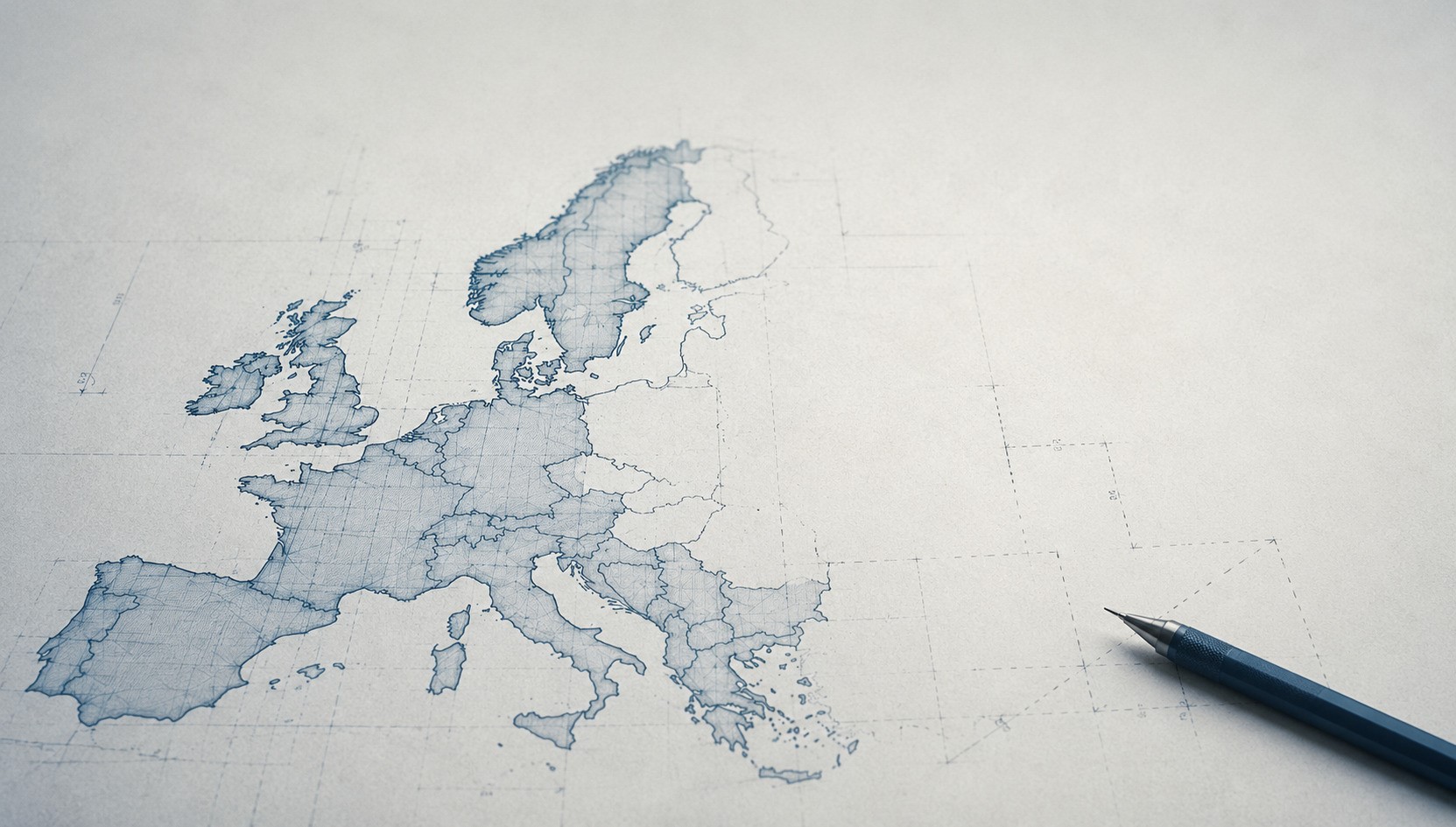

European Commission President Ursula Von Der Leyen, just weeks after visiting Nicosia due to the Republic of Cyprus’s assumption of the EU Presidency, traveled to Yerevan. Following this first summit between the EU and Armenia, a joint statement was released, described as a “historic turning point,” and Von Der Leyen mentioned her views on the “completion of Europe” in a message shared on her social media account. “We are here in Armenia to show that Europe is one big and broad family. Bound by the same interests, facing the same challenges.”
Speaking in Hamburg on 20 April 2026 during celebrations marking the 80th anniversary of Die Zeit, Von der Leyen mentioned Türkiye alongside China and Russia while discussing the “completion of Europe”. While it’s true that relations between Türkiye and the EU haven’t been in a golden age, especially in the last decade, being mentioned alongside Russia and China has provoked considerable reaction in Türkiye. Russia, with its 2022 attack on Ukraine, has transformed from a potential threat to a concrete one, while China remains the biggest potential threat. Despite all the shortcomings and problems, Türkiye, a founding member of the Council of Europe, possesses the second-largest army in NATO and, although not an EU member, has been part of the Customs Union for over thirty years. For Türkiye to be included in the “Made in EU” category, even though its charter hasn’t yet come into effect, it needs to implement reforms, particularly regarding its public procurement law.
From candidate country to strategic distance
Türkiye first applied for EU membership in 1987 and gained candidate status in 1999. Relations gained momentum with the AKP’s rise to power in November 2002. During this period, when Türkiye had its closest relationship with the EU, the Turkish economy also performed exceptionally well. Even in the most conservative cities of Anatolia, where the AKP was strong, the desire for EU membership was around 70 percent. Unfortunately, over time, Türkiye’s relationship with the EU has lost the enthusiasm it had in the early 2000s.
Undoubtedly, both sides share responsibility for this decline. Leaders who stated that they did not see Türkiye as a cultural part of Europe received the greatest support, strangely enough, from a government that, as it consolidated power, scorned the EU and was reluctant to implement reforms. As Türkiye dragged its feet in fulfilling the requirements of EU membership, the EU clung more tightly to the idea of keeping Türkiye outside.
Migration replaces principles
The start of the Arab Spring marked a new turning point in Türkiye’s relations with the EU. The Syrian civil war, in particular, led to millions of refugees arriving in Türkiye, causing serious concern in Europe. As right-wing parties in Europe rose to power through anti-immigrant rhetoric, migration management became a key agenda item in the EU’s relations with Türkiye. A new relationship, based entirely on short-term gains, was established in exchange for Türkiye not sending refugees to Europe.
This new relationship was actually inconsistent for the EU, which constantly speaks of the importance of principles. Because Türkiye’s continuous decline in indices such as democracy, human rights, freedom of speech, and press freedom was not as important to the EU as the millions of refugees likely to mass at the border.
The enlargement debate and the trust gap
Ursula Von der Leyen has not mentioned Türkiye among the candidate countries for quite some time. While it is suggested that the EU’s latest enlargement might include Montenegro, Albania, Iceland, and even some other Balkan countries, the fact that Türkiye is being considered alongside China and Russia is worth considering.
This presents a situation that seems difficult to resolve. Türkiye’s actions are causing the EU to distance itself increasingly; this, in turn, is gradually reducing EU support in Türkiye. For example, the EU rightly cites the decline in Türkiye’s shared foreign policy stance with the EU from over 80% to 4% as a reason why relations haven’t returned to their former state, while Türkiye doesn’t hesitate to remind the EU of its promise to “complete itself without Türkiye.”
Defense cannot be the only agenda
Trump’s return has shaken the EU considerably. A serious shift in mindset has begun to overcome the “fragmentation” that Enrico Letta outlined in his report, which Von der Leyen herself announced would be the EU’s roadmap. The EU is preparing to emerge as a real player against the US. We know that Airbus, a “common European brand,” has gained a competitive advantage over America’s Boeing. If the EU can achieve the mindset shift outlined in Letta’s report, competition with the US will be seen in many areas, including the economy and defense.
Trump’s ambivalent statements about NATO and his open declaration of his desire to annex Greenland to the US seem likely to fundamentally change the EU’s approach to the defense industry. Türkiye has once again come to the EU’s agenda at this very stage. Unlike twenty years ago, the topic of discussion this time is not membership, but what can be done together in the field of defense. Almost no one talks about Türkiye’s democracy, rule of law, freedom, qualified human resources, or green transformation in its economy anymore. The only agenda is what can be done together in the field of defense.
Rebuilding a shared strategic vision
The way to overcome the deadlock in relations between Türkiye and the EU undoubtedly lies in agreeing on common goals. Common goals are necessary to overcome the trust crisis and enable harmonious cooperation in all areas, including defense.
The EU should think more long-term and be more inclusive in its relations with Türkiye. For its part, Türkiye should overcome the trust crisis and bring EU membership back to the forefront as a concrete goal on the country’s agenda. Any step taken in an environment where trust is re-established between Türkiye and the EU will be reciprocated many times over. Instead of wasting time waiting for a response, I think it would be better if the first step were taken in Ankara.
Bilgehan Uçak is a political analyst and author.