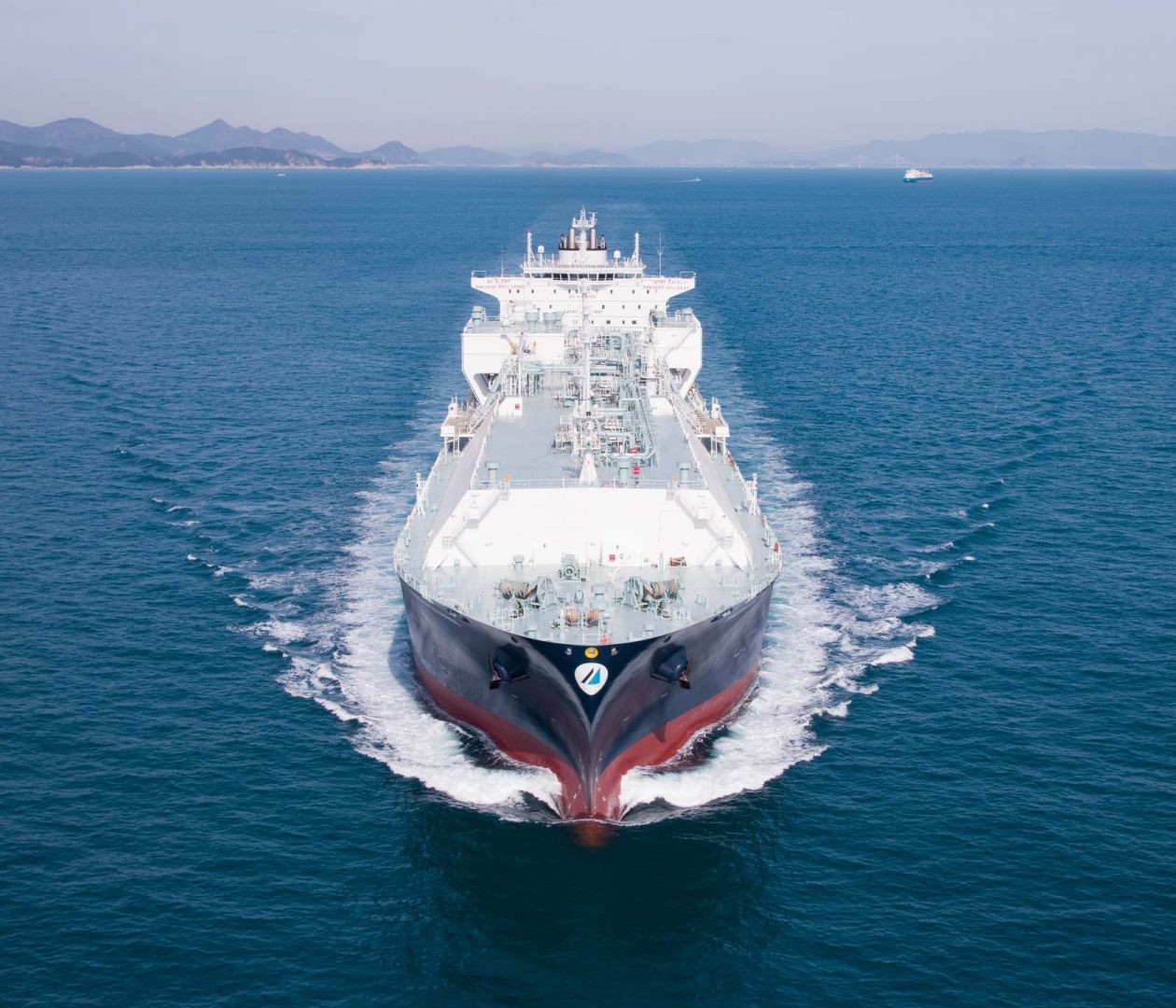

Over 800 LNG-capable vessels are already in service, with more than 600 on order. A separate fleet of LNG carriers adds further scale to the numbers, but it is the fuel-choice vessels, not the cargo-constrained carriers, that face the real compliance question. DNV’s 2026 white paper on methane in shipping establishes this baseline with authority: LNG shipping has moved from experiment to structural commitment, backed by tens of billions in committed capital across the global fleet.
Clarksons Research confirms the momentum. In 2025, LNG claimed roughly 80% of all alternative-fuel tonnage ordered, with bunkering infrastructure now available at 222 ports worldwide. The original commercial case for LNG shipping, cleaner air emissions, competitive fuel prices, and regulatory headroom, still holds. The harder question is how much headroom remains, and what the industry does with it.
The compliance clock is ticking
DNV maps what it terms the “compliance horizon,” the period during which vessels can run on fossil LNG and still meet greenhouse gas intensity targets. Under FuelEU Maritime, ships with the best-performing 2-stroke high-pressure dual-fuel engines remain compliant until approximately 2034-2035. Ships with 4-stroke low-pressure engines face a harder ceiling, with potential non-compliance under the IMO Net-Zero Framework as early as 2029. The critical variable is the well-to-tank emission factor the IMO assigns to LNG, a figure still undecided at the time of writing.
Methane slip compounds the problem. Methane carries a global warming potential 28 times greater than CO₂ over a century, and the EU ETS expanded in January 2026 to include methane and nitrous oxide in its CO₂-equivalent pricing scope, making every gram of unburned exhaust a direct financial liability. Bureau Veritas, in its analysis of the new IMO rules, concludes that LNG vessels could fall into Tier 2 non-compliance by 2031 under the IMO’s own metrics. That is not a long-term forecast. That is the operational life of ships currently under construction.
Policy-focused research groups raise a sharper question. Transport & Environment conducted field research in Rotterdam, filming unburned methane escaping from LNG ships in real time with infrared cameras. The International Council on Clean Transportation concludes that certain LNG vessel configurations emit more greenhouse gases on a lifecycle basis than conventional fuel-oil ships, depending on engine type and LNG supply origin. These findings come from organisations with explicit decarbonisation mandates, and the expert reader will weigh them accordingly. As a stress test of LNG shipping’s climate credentials, however, they define the downside scenario that regulators are already beginning to price.
Bio-methane and e-methane: the promised land has a queue
DNV’s demand modelling, anchored in FuelEU Maritime and IMO NZF compliance trajectories, sets the central challenge in plain numbers. Under the IMO NZF Base target, LNG shipping could require between 40 and 95 million tonnes of low-GHG methane annually by 2040. Global bio-methane production in 2024 reached approximately 7 million tonnes, with projections pointing to 15 million tonnes by 2030. The gap is not marginal. It is structural.
The IEA’s geospatial analysis of global biogas and biomethane potential confirms that the theoretical ceiling is vast, but also that power generation, road transport, and industry absorb today’s output almost entirely. Rabobank’s 2025 assessment of Europe’s biomethane landscape identifies the supply-side constraint precisely: the EU’s 35 billion cubic metre target for 2030 is non-binding, deployment is running below trajectory, and funding flows favour solar, wind, and green hydrogen over biomethane.
Market capital is beginning to move. Maersk has committed $4.6 billion to LNG newbuilds with a secured bio-LNG supply arrangement from 2027. E-methane, produced by combining renewable hydrogen with captured CO₂, remains at the prototype stage, with only 13 operational plants globally and a combined output of roughly 0.01 million tonnes. These are first-mover positions. A functioning market does not yet exist. But first-mover positions are where markets begin, and the trajectory matters more than the current volume.
The geopolitical arithmetic
DNV identifies the chain-of-custody question as one of the two remaining structural barriers to low-GHG methane in shipping. The EU already permits mass balancing, allowing bio-methane injected into the gas grid at any point to be claimed as marine fuel at a bunkering terminal elsewhere. The IMO has not yet decided its chain-of-custody model. Until it does, there is no IMO framework yet to put shipping on equal footing with other sectors in accessing certified low-GHG methane, sectors that already operate under flexible accounting frameworks in the U.S., UK, and across Europe.
Japan is deploying e-methane as explicit national industrial strategy, with binding mandates on city gas utilities from 2030 and long-term targets reaching between 50% and 90% by 2050. The U.S. extended its Clean Fuel Production Tax Credit through 2029. These are competing industrial bets on who controls the low-GHG methane supply chain in the 2030s. LNG shipping will be a major buyer, competing against better-positioned domestic customers in each of those jurisdictions, on terms that remain structurally unequal.
Greece’s stake in an unfinished game
The DNV analysis stops at the waterline. What happens in Geneva, Brussels and Athens is a different story.
Greek shipowners control 16.4% of global deadweight tonnage and hold the world’s second-largest LNG carrier fleet by asset value. The top five Greek LNG carrier owners, including Maran Gas Maritime, GasLog, and TMS Cardiff Gas, manage combined assets approaching $14 billion. Capital Group alone placed orders for over 40 newbuilds in 2025, valued at $4.7 billion, across segments that include LNG carriers and dual-fuel tonnage.
A commentary published last week in tovima.com, authored by a Chatham House fellow, makes a pointed observation: Greece voted against the IMO Net-Zero Framework at the extraordinary MEPC session in October 2025. The vote reflected legitimate technical concerns about LNG’s treatment in well-to-wake lifecycle accounting. It also placed Greece outside the coalition shaping the rules governing the fuel on which its fleet depends. Greek owners are placing capital on the assumption that bio-methane supply will scale and that regulatory frameworks will reward early movers in LNG shipping. Both assumptions are reasonable. Neither is guaranteed.
What the numbers actually say
Ship technology is ready. Bunkering infrastructure is in place. Two of the three pillars DNV identifies as essential for the transition to low-GHG methane are firmly standing. The third is not lagging. It is structurally constrained: production remains limited, competing sectors absorb available supply, and the regulatory framework governing chain of custody remains unresolved at IMO level.
LNG has bought shipping time. The question is whether the industry uses that time to build the methane supply chain, or merely to postpone the reckoning.