

Israel is heading into an election that could determine far more than who occupies the prime minister’s office. Three years after the October 7 attacks, with the Middle East profoundly transformed and the confrontation with Iran at the centre of Israel’s strategic calculations, the battle for the country’s political future is also a battle over the meaning of the war and what victory should ultimately look like.
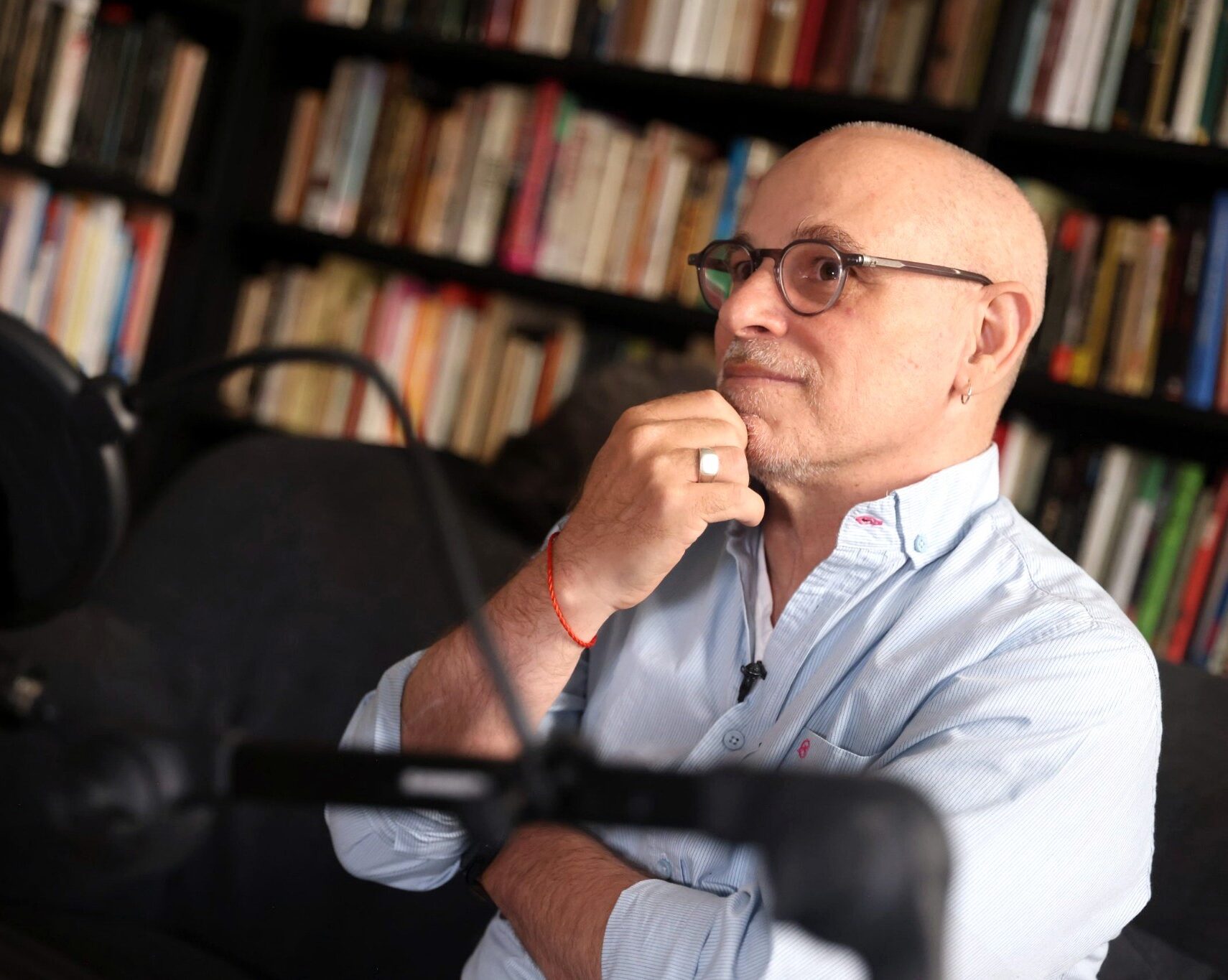
For Gadi Taub, the stakes could hardly be higher. In a provocative and uncompromising interview with GeoTrends, the Israeli historian, political commentator and senior lecturer at the Hebrew University of Jerusalem argues that October 7 shattered the foundations of Israel’s peace-oriented political thinking, accelerated a decisive shift to the right and exposed what he considers the dangerous illusions of Netanyahu’s opponents. He accuses opposition leaders of seeking political advantage through a premature end to the war, dismisses growing European criticism of Israel and portrays Netanyahu not as a leader weakened by international isolation, but as the architect of a regional transformation stretching from Gaza and Lebanon to Syria and Iran.
As Israelis prepare to vote on October 27, Taub delivers a stark message: the election is not simply a referendum on Netanyahu’s past failures or political survival. It is a choice between competing visions of Israel’s security, the future of the two-state solution and the strategic balance of the Middle East. At the heart of his argument lies an explosive proposition: Netanyahu’s most consequential objective remains unfinished, and that objective is nothing less than bringing down the Iranian regime.
— October 7, 2023, marked one of the darkest chapters in Israel’s history, shattering deeply held assumptions about the country’s enemies, the capabilities of its military and intelligence services, and the effectiveness of its deterrence strategy. To what extent has that trauma fundamentally reshaped Israeli society and its political outlook?
I think Israeli society has moved to the right. Although the left’s propaganda machine is doing its best to portray October 7 as a failure of the right, and specifically of Netanyahu, arguing that the attack happened on his watch after so many years in power, the public generally does not accept that argument.
This shift to the right essentially reflects a growing conviction that October 7 exposed the misplaced optimism of the left regarding peace, partition and the two-state solution. They argued that if Israel withdrew from Gaza, it would become the Singapore of the Middle East. Instead, the pessimistic predictions of the right, that Gaza would become a terrorist state, proved to be more accurate.
So, regardless of how one judges Netanyahu’s responsibility, the Israeli public places more blame on the left than on the right.
— As Israelis head to the polls on October 27, the election appears to be about far more than Netanyahu’s political survival. With the war having fundamentally reshaped the country’s security priorities and political divisions, what do you believe is really at stake? Is this primarily a referendum on Netanyahu’s leadership, or a choice about Israel’s strategic future?
It is a referendum on Netanyahu’s policies. But I think Israelis will go to the polls thinking more about the future than the past, asking themselves who is better equipped to manage the continuation of the war and shape its outcome.
They will make that judgment, by the way, based on Netanyahu’s record in conducting the war and on the fact that almost all the opposition leaders wanted to surrender midway through, strike a deal and bring the war to an end. And shamefully, they did so under the false guise of demanding a hostage deal.
Never in the history of nations has a country surrendered simply to secure the release of its prisoners or hostages. That would be a suicidal move. Yet the left, or at least its opposition leaders, insisted on precisely that course.
This leads me to believe that, at the time, they thought an Israeli failure to win the war would create an opportunity to revive the two-state solution. The alternative to victory would be some kind of negotiated settlement. They probably had the Yom Kippur War in mind, when the Americans prevented us from achieving total victory, allowing the Egyptians to save face and subsequently make concessions.
Secondly, they believed that if Netanyahu failed to win the war, his right-wing government would collapse. And I think that calculation was probably correct.
If Netanyahu had agreed to a hostage deal that amounted to complete capitulation to Hamas’s demands, he would not have survived politically. The opposition leaders believed they could then take power, place the blame for October 7 squarely on Netanyahu and gradually revive the two-state solution.
Of course, that could not have happened immediately. The vivid memory of the sadistic horrors of October 7 made it much harder to sell the idea of peace to the Israeli public.
— You suggest that the opposition still sees the two-state solution as a political objective. Yet the debate has also shifted towards settler violence in the West Bank, with growing criticism from European governments and institutions. Do you believe this reflects genuine concern over developments on the ground, or an attempt to reshape the international narrative about the Israeli-Palestinian conflict?
Look at what they have done since, with the cooperation of the European left, the European Union and, to the extent that it remained relevant, the Biden administration. They are blowing the settler-violence campaign out of all proportion.
There is very little settler violence. There is a huge amount of Arab terrorism. They are downplaying Arab terrorism while exaggerating settler violence.
Why? Because they are trying to convince the public and the world that the problem is not Palestinian terrorism but Jewish terrorism. If they succeed, they will be able to convince Israelis that peace is still possible. If the problem is the Jews, then we can fix it. If the problem is the Arabs, obviously we cannot.
“Netanyahu has managed to turn Israel into a regional superpower.”
GADI TAUB | GEOTRENDS INTERVIEW
— Netanyahu has dominated Israeli politics for nearly two decades as prime minister. Yet October 7 exposed profound failures in the country’s security and intelligence apparatus under his leadership. Why do you believe he remains the right person to lead Israel despite those failures?
Because of his success. Netanyahu has managed to turn Israel into a regional superpower. He repeatedly warned about the Iranian nuclear programme, and he was proven right. He has also demonstrated that he is a world-class politician.
Look at what he did. Two days after October 7, he declared that he would change the face of the Middle East. And he did exactly that. I co-host a podcast with Mike Doran called “Israel Update.” Since the beginning of the war, we have been saying that the aim is to expand the war. Israel’s peace-seeking military establishment repeatedly warned that doing so would ignite a regional war. We kept laughing and saying, “We want a regional war.”
Netanyahu was aiming for a regional war because he wanted to take the war from Gaza to Lebanon, destroy Hezbollah and other Iranian proxies, then bring down Assad and the Iranian-backed Ba’ath regime, and finally take the war all the way to Tehran.
When I interviewed Netanyahu on my channel, I asked him, “Prime Minister, were we right to assume that you aimed for a regional war?”
He did not endorse that exact phrasing, but he smiled and said, “You know, it did not happen by coincidence.” So, yes, he managed to do it.
— While Netanyahu has projected Israel’s military power across the region, he faces mounting criticism from Western governments, including longstanding allies such as France, alongside allegations of war crimes and growing diplomatic isolation. Can military strength compensate for declining international support, and can Netanyahu sustain Israel’s strategic position under such pressure?
Yes, he can, because the most important factor for survival in this region is that your neighbours remember that you are dangerous. Our enemies should be afraid of us.
If France wants to capitulate to radical Islam, that is France’s business. We are at the forefront of what Netanyahu has called the war between civilisation and barbarism.
Europe has lost its immune system and is unable to identify people who openly declare themselves to be its enemies. That is Europe’s problem. This is why Europe is sinking, and Israel is not.

— Gadi Eisenkot is widely regarded as a potential challenger to Netanyahu, with his military background often presented as an advantage at a time when national security dominates Israel’s political debate. But does his experience make him a credible alternative, or does he represent the very military establishment whose assumptions collapsed on October 7?
Obviously, many people think he can be. But he is not the first general the left has put forward against Netanyahu. The joke on the Israeli right is that the left would vote even for a toaster if it were running against Netanyahu.
Gadi Eisenkot has advocated surrender throughout the war. He is weak. He represents the thinking of a military establishment that failed to anticipate the war, was complacent and believed we had nothing to worry about. He embodies the approach that reduced the size of the army and promoted what they stupidly called a “small, smart army.”
When the war began, we realised that the army was too small. We could not fight on two fronts. That is why we had to wait before dealing with Lebanon. Eisenkot is almost the epitome, the very symbol, of this approach.
The left, however, is fighting Netanyahu tooth and nail, using all kinds of dirty tricks, including the ridiculous trial against him. Its voters would basically vote for anyone. If you put a tree up against Netanyahu, they would vote for the tree.
— Let me conclude with the question of what happens after the election. If Netanyahu’s coalition falls short of the 61 seats needed for a parliamentary majority, will he seek to renew his alliance with far-right figures such as Itamar Ben-Gvir and Bezalel Smotrich, or will he try to form a broader coalition with other political figures, such as Gadi Eisenkot and Avigdor Lieberman?
These other politicians are saying they will never serve in a government led by Netanyahu. That is what they are telling their voters.
So, I do not know. Politicians make promises during election campaigns and then break them when circumstances change. And I do not say that cynically, because political reality presents you with choices. Before elections, you can promise everything. After elections, you have to compromise.
I think Netanyahu has always been inclined to try to build the broadest possible consensus. But I do not think he will abandon the war’s major objectives, which he himself considers unfinished business. He does not believe he can afford to leave the political stage before completing them. Above all, the most important objective is bringing down the Iranian regime.