
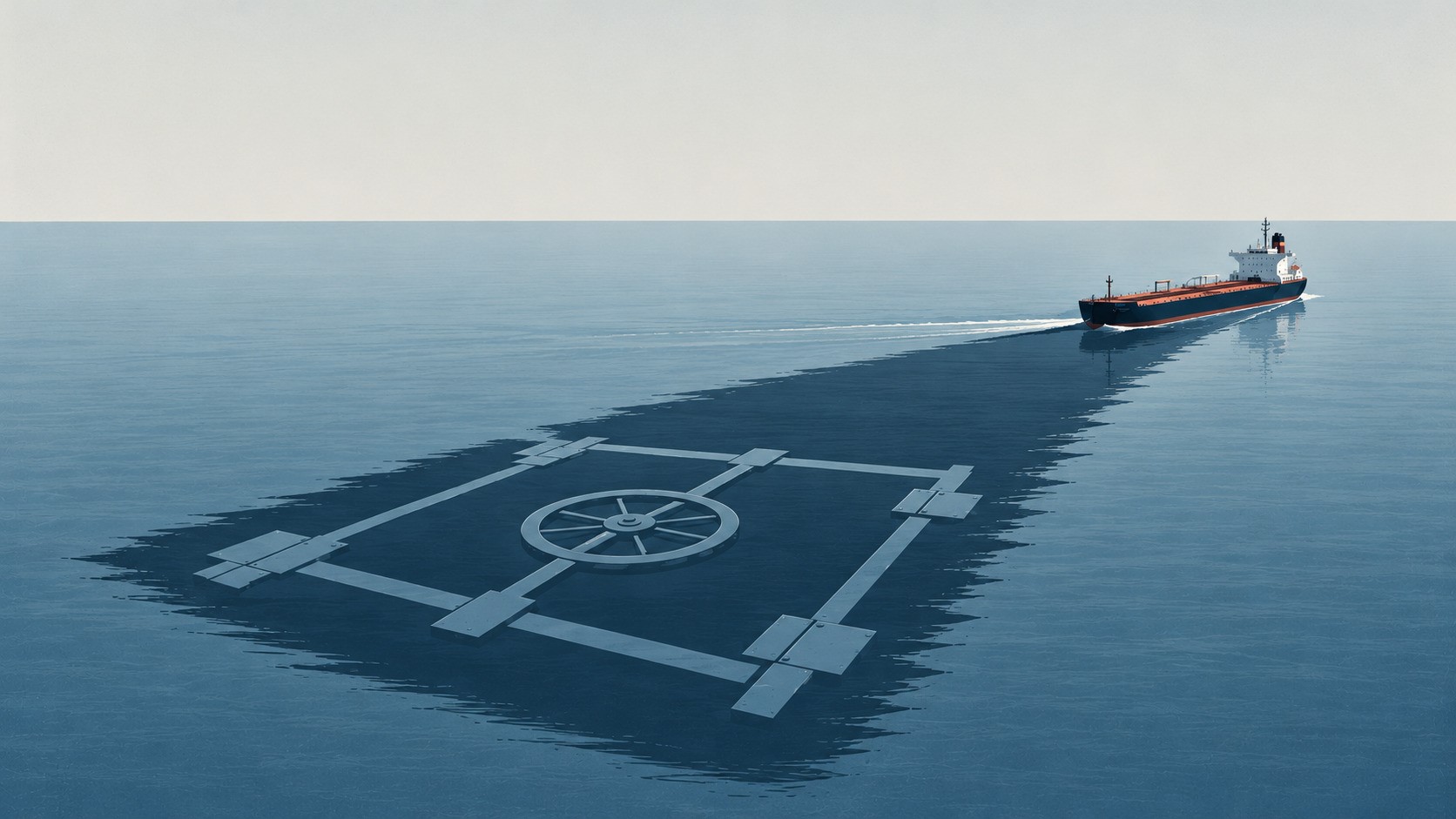

Russia’s shadow fleet is becoming one of the most significant fronts in Moscow’s economic confrontation with the West. Recent U.S. and European Union measures are extending pressure across the infrastructure that enables oil shipments to continue despite sanctions, from tankers and bunkering services to ship management companies and payment networks. The effectiveness of this campaign, however, depends on whether it can reduce Russian revenues without triggering further disruption in global energy markets.
This tension runs through the entire Western strategy. Russia needs export earnings to sustain its economy and finance the war. Sanctioning countries want to reduce the returns Moscow earns from those exports, but they must also consider the cost of a sudden fall in available supply. Meanwhile, Moscow is developing alternative routes and services, turning sanctions circumvention into an organised economic activity.
The term “shadow fleet” describes a shifting network of vessels and businesses characterised by opaque ownership structures, repeated flag changes and limited reliance on Western services. It is not a single fleet operating under one command. Nor does every shipment of Russian oil automatically breach sanctions. This distinction matters because tackling circumvention requires evidence concerning the individual vessel, its cargo, the parties involved and the services used.
The EU targets the network, not just the tankers
The European approach is reflected in the 21st sanctions package, adopted on 23 July 2026. It added 41 vessels to the 632 already listed, bringing the relevant total to 673. The Council also expanded the scope for targeting vessels that support the shadow fleet through bunkering and other services, and listed a crewing agency for the first time. These measures suggest that the EU now regards the network’s entire operating infrastructure as a target.
This broader approach has practical significance. A tanker may change its management company or flag, but it still needs fuel, crew, technical support and a means of receiving payment. The more of these points restrictions cover, the harder and more expensive it becomes to keep shipments moving. Sanctions must therefore also be judged by the operating costs they impose, the delays they cause and the extent to which they reduce the pool of reliable counterparties.
The EU had already introduced mandatory due diligence checks for tanker sales in its 20th sanctions package in April. It also established the basis for a future ban on maritime services associated with Russian crude oil and petroleum products, in coordination with the G7. Establishing that basis should not be confused with activating a blanket ban. The gap between the power to impose restrictions and their actual implementation remains decisive.
The European campaign continued in October. On 12 October, the EU adopted the largest single expansion of its sanctions list since Russia’s full-scale invasion of Ukraine, adding 1,569 individuals and entities, including 826 companies and 743 individuals. The measures primarily targeted Russia’s military-industrial complex, particularly ballistic missile production, while also covering other individuals involved in supporting Moscow’s war effort.
Three days later, the Council imposed further sanctions on three individuals and nine entities involved in circumventing EU restrictions. These included shipping-related companies based in the United Arab Emirates, India and the Seychelles linked to the shadow fleet ecosystem, as well as a trader supplying Russian-origin crude oil to India. Other listings targeted networks involved in parallel imports, customs intermediation and financial transactions.
Washington’s sanctions strategy meets its energy contradiction
In the United States, the signing of the Lindsey O. Graham Sanctioning Russia and Iran Act on 18 September expanded the statutory framework for sanctions, tariffs and prohibitions against Russia. The new powers strengthened Washington’s ability to exert pressure beyond Russia’s borders. Their political significance, however, depends on specific implementation decisions and the scope of exemptions.
That distinction became particularly important in October. On 9 October, the U.S. Treasury’s Office of Foreign Assets Control issued General License 135, authorising certain transactions involving the sale, delivery, offloading and importation of Russian-origin diesel, including imports into the United States, until 7 April 2027.
The authorisation followed President Donald Trump’s announcement that Russia would supply more than 300,000 tonnes of diesel to U.S. and global markets, with further shipments envisaged. These quantities, however, reflected the President’s announcement rather than independently verified deliveries. The actual volumes, prices and commercial arrangements remained uncertain.
The licence reflected mounting pressure on fuel markets, where supply constraints and elevated prices were complicating Washington’s broader sanctions strategy. It also exposed an uncomfortable contradiction: while the United States seeks to restrict Moscow’s energy revenues, it has demonstrated a willingness to permit selected Russian fuel transactions when market conditions make such flexibility politically and economically attractive.
The decision also raised a legal question. General License 135 authorises transactions under specified OFAC sanctions regulations, but does not expressly repeal the statutory restrictions on Russian energy imports introduced in 2022. The relationship between the licence and those restrictions therefore requires careful legal interpretation, particularly for companies considering transactions involving US jurisdiction.
The contradiction deepened on 16 October, when President Donald Trump signed Executive Order 14436, invoking a national-interest waiver under the Graham Act. The order waived the application of specified sanctions provisions and tariffs, substantially limiting the immediate reach of the new legislation. The waivers have no fixed expiry and remain in force until the administration determines that further action is appropriate. The order did not repeal the Act or dismantle sanctions imposed under earlier executive orders. The decision nevertheless highlighted the gap between Washington’s statutory sanctions powers and its willingness to exercise them.
These developments introduce a further complication for transatlantic coordination. The EU continues to strengthen restrictions on Russian energy-related activities, while Washington has demonstrated greater flexibility in response to domestic fuel-market pressures. Whether this divergence becomes temporary or more structural will influence the credibility and effectiveness of the wider Western campaign.
The financial networks behind the oil trade
Earlier U.S. action had targeted the financial infrastructure behind sanctions circumvention. On 1 October, the U.S. Treasury imposed sanctions on the A7 Network, designating it as a significant transnational criminal organisation. At the same time, FinCEN proposed a special rule prohibiting certain funds transfers involving companies within the network. That second measure remains subject to public consultation, with comments due by 4 November.
According to U.S. authorities, A7’s sub-agents processed more than $17 billion in transactions between January 2025 and June 2026. The Treasury also reports that one sub-agent and its sister company received nearly $140 million from entities involved in Iranian sanctions evasion. These figures concern different categories of transactions and should not be treated as a measure of the Russian fleet’s revenues.
The case nevertheless sheds light on the overlap between Russian and Iranian sanctions circumvention mechanisms. Infrastructure developed for one sanctioned economy can serve other users as well. The evidence does not establish that the two fleets form a single operational structure. It does indicate that financial intermediaries can provide a shared link, making separate networks more resilient to restrictions.
The EU had already moved into the same area. Its July package included four additional listings related to A7, alongside transaction bans on 14 crypto-asset service platforms in third countries. U.S. and European pressure is thus converging on the need to scrutinise payments, even where the physical movement of cargo remains possible.
Moscow’s flag strategy raises the stakes at sea
Moscow, for its part, is adapting. Research published by the Centre for Research on Energy and Clean Air on 25 September recorded 107 vessels joining the Russian flag registry between January 2025 and June 2026. Eighty-seven per cent were already under sanctions when they changed flags. According to the same study, 72 transported Russian fossil fuels worth an estimated €7.5 billion.
This development suggests that the shadow fleet does not disappear when access to a registry closes. It seeks another refuge. Moving under the Russian flag reduces the vulnerability associated with fraudulent registration but increases Moscow’s direct exposure. One geopolitical implication of this shift is that a confrontation over the inspection of a vessel may more readily become a dispute between states.
Europe has already strengthened the operational dimension of its response. On 9 October, the Council renewed the mandate of Operation IRINI until 31 March 2029, adding an explicit role in constraining the shadow fleet, alongside maritime situational awareness and the protection of critical maritime infrastructure. This does not automatically confer the power to seize every tanker on a sanctions list. Operational action still requires a specific legal basis.
The issue is particularly relevant to the Baltic and the Mediterranean, where energy shipments intersect with dense commercial traffic and critical infrastructure. An incident involving a tanker with inadequate insurance or uncertain compensation arrangements could leave a coastal state facing substantial costs. European governments must therefore connect sanctions enforcement with maritime safety and environmental protection.
The oil market could undermine the sanctions strategy
Despite the escalation, the West continues to face a constraint rooted in the market itself. In July, the EU suspended the automatic adjustment of the oil price cap until 15 July 2027, citing the exceptional conditions caused by the closure of the Strait of Hormuz. The decision illustrates how directly the Middle East crisis affects policy towards Russia.
Washington’s October decisions reinforce this dilemma. Permitting certain Russian diesel transactions may provide relief to strained fuel markets, but it can also create opportunities for additional Russian export earnings. The significance of these transactions depends on their actual volumes, prices and financial beneficiaries, rather than the political announcements surrounding them.
When supply is constrained, higher international prices can offset part of the costs imposed by sanctions. An increase in the number of sanctioned vessels is therefore insufficient to demonstrate a corresponding fall in Russian revenues. Export volumes, actual selling prices, discounts, and transport and intermediary costs must all be assessed together.
The decisive external factor remains the response of buyers, particularly China and India. As long as there is a commercial incentive and a means of payment, there will be reasons to seek new routes. Pressuring these buyers, however, carries wider diplomatic and commercial costs for Washington and Brussels. Enforcement will test their priorities towards countries whose cooperation they need on other fronts.
The real test: can Russia still turn oil into revenue?
For Greek shipping, the implications concern both rigorous compliance and the shaping of European policy. Vessel sales, the identity of beneficial owners and payment chains require greater scrutiny. At the same time, any broader restriction on maritime services changes the competitive balance between companies operating within the European framework and networks operating outside it.
The differences emerging between U.S. and European sanctions implementation add another layer of uncertainty. Shipowners, managers, insurers and financial institutions must navigate restrictions that may evolve differently across jurisdictions, even when the underlying commercial activity involves the same cargo or counterparty.
The coming period will show whether this new pressure can materially constrain Moscow’s options or accelerate yet another reorganisation of its network. The crucial measure of success is how much less profitable Russia’s oil trade becomes and how much harder it is to turn exports into usable resources. That outcome will depend not only on the reach of Western sanctions but also on the consistency with which the countries imposing them are prepared to enforce their own restrictions. That is where this confrontation will be decided, far more than in the number of new names added to sanctions lists.
George S. Skordilis is Editor-in-Chief of geo-trends.eu.